Showing posts with label FAMINE. Show all posts

Wednesday, 21 September 2011

Dilemas da Extrema Pobreza...


(...)
como te atreves a querer
que te dê a mão
se ainda agora
a ofereci em troca de pão?
(...)


[A.S. - extracto de "Ralhete" in S.O.S. - lembro-me de, pelos dias em que escrevi esse poema, em tempos de guerra e escassez generalizada em Luanda, uma vez ter perguntado ao meu filho, entao com dois/tres anitos de idade, se "a barriga dele estava cheia", ele respondeu-me que "sim", perguntei-lhe "de que?" e ele: "a barriga esta' cheia de fome"...]


Esta e' uma imagem aterradora e revoltante, que ha' varios anos vem ilustrando as recorrentes fomes em Africa, e especialmente no 'seu Corno' - como ESTA, que actualmente vem mobilizando as atencoes e doacoes de todo o mundo face aquela que e' considerada a pior seca na regiao nos ultimos 60 anos.

Trata-se de uma imagem que tem sido igualmente politicamente manipulada pelas piores razoes e para as mais duvidosas causas possiveis. Por essa razao, apenas muito relutantemente me decidiria a posta-la neste blog. Mas, perante a noticia que abaixo se pode ler, ocorre-me que ela pode ilustrar tambem da forma mais macabra possivel os absurdos, dramas, traumas e dilemas com que as maes em condicoes de extrema pobreza frequentemente se teem que confrontar, e.g.: "matar a crianca, ou deixa-la morrer viva 'as garras dos abutres"?!...

Nao que a mae em questao na noticia seja 'desculpavel', mesmo porque nada faz supor que ela estaria no mesmo estado de extrema pobreza que a mae da crianca na imagem - a qual, muito provavelmente estaria ja' ela propria morta -, mas o seu acto ilustra bem os extremos a que os disturbios mentais associados a tais condicoes podem conduzir e que nenhuma imagem sera' capaz de retratar...


Mas, em qualquer dos casos, a dura, nua e crua realidade da sad bottom line da extrema pobreza e' bem retratada por esta imagem:


Criança Morre por Pedir Comida a Mãe

Uma criança de apenas 2 anos de idade perdeu a vida quando este chorava, queixando-se a sua mãe de fome. A mãe, agastada, pega nela e sufoca-a até à morte. A horrível cena ocorreu na localidade fronteiriça de Santa Clara, na província de Cunene, 40 km a Sul de Ondjiva, segundo fonte policial que não especificou a data.

“O facto ocorreu quando o menor queixava-se de fome e a mãe, na impossibilidade de suprir a necessidade do seu filho, entendeu sufoca-lo de forma a fazer com que se calasse, tendo assim provocado a morte imediata da criança’’, contou o porta-voz do comando provincial da Polícia naquela província, Carlos dos Santos.

O oficial disse ainda que a mãe, interrogada, «alegou que praticou tal acção, porque o pai não comparticipava nas despesas para sustentar o seu filho».

Com dois anos de idade, a criança em vida chamava-se Daniel Pena Elias Satoca.


[aqui]


Posts relacionados:

Ambiente vs. Pobreza?

SADC: Meeting the Millennium Development Goals?

O Desespero e a Tragedia de Uma Mae Solteira

Mais de 90% dos Angolanos sao Doentes

Love and Liberation


(...)
como te atreves a querer
que te dê a mão
se ainda agora
a ofereci em troca de pão?
(...)


[A.S. - extracto de "Ralhete" in
S.O.S. - lembro-me de, pelos dias em que escrevi esse poema, em tempos de guerra e escassez generalizada em Luanda, uma vez ter perguntado ao meu filho, entao com dois/tres anitos de idade, se "a barriga dele estava cheia", ele respondeu-me que "sim", perguntei-lhe "de que?" e ele: "a barriga esta' cheia de fome"...]


Esta e' uma imagem aterradora e revoltante, que ha' varios anos vem ilustrando as recorrentes fomes em Africa, e especialmente no 'seu Corno' - como ESTA, que actualmente vem mobilizando as atencoes e doacoes de todo o mundo face aquela que e' considerada a pior seca na regiao nos ultimos 60 anos.

Trata-se de uma imagem que tem sido igualmente politicamente manipulada pelas piores razoes e para as mais duvidosas causas possiveis. Por essa razao, apenas muito relutantemente me decidiria a posta-la neste blog. Mas, perante a noticia que abaixo se pode ler, ocorre-me que ela pode ilustrar tambem da forma mais macabra possivel os absurdos, dramas, traumas e dilemas com que as maes em condicoes de extrema pobreza frequentemente se teem que confrontar, e.g.: "matar a crianca, ou deixa-la morrer viva 'as garras dos abutres"?!...

Nao que a mae em questao na noticia seja 'desculpavel', mesmo porque nada faz supor que ela estaria no mesmo estado de extrema pobreza que a mae da crianca na imagem - a qual, muito provavelmente estaria ja' ela propria morta -, mas o seu acto ilustra bem os extremos a que os disturbios mentais associados a tais condicoes podem conduzir e que nenhuma imagem sera' capaz de retratar...


Mas, em qualquer dos casos, a dura, nua e crua realidade da sad bottom line da extrema pobreza e' bem retratada por esta imagem:


Criança Morre por Pedir Comida a Mãe

Uma criança de apenas 2 anos de idade perdeu a vida quando este chorava, queixando-se a sua mãe de fome. A mãe, agastada, pega nela e sufoca-a até à morte. A horrível cena ocorreu na localidade fronteiriça de Santa Clara, na província de Cunene, 40 km a Sul de Ondjiva, segundo fonte policial que não especificou a data.

“O facto ocorreu quando o menor queixava-se de fome e a mãe, na impossibilidade de suprir a necessidade do seu filho, entendeu sufoca-lo de forma a fazer com que se calasse, tendo assim provocado a morte imediata da criança’’, contou o porta-voz do comando provincial da Polícia naquela província, Carlos dos Santos.

O oficial disse ainda que a mãe, interrogada, «alegou que praticou tal acção, porque o pai não comparticipava nas despesas para sustentar o seu filho».

Com dois anos de idade, a criança em vida chamava-se Daniel Pena Elias Satoca.


[aqui]


Posts relacionados:

Ambiente vs. Pobreza?

SADC: Meeting the Millennium Development Goals?

O Desespero e a Tragedia de Uma Mae Solteira

Mais de 90% dos Angolanos sao Doentes

Love and Liberation

Thursday, 5 August 2010

1960-2010: The "Year of Africa" 50 Years On (XII)

This Day in 1960:

The Republic of Upper Volta (French: République de Haute-Volta) was established on December 11, 1958, as a self-governing colony within the French Community. The name Upper Volta indicated that the country contains the upper part of the Volta River. The river is divided into three parts, called the Black Volta, White Volta and Red Volta, and the colors of the national flag corresponded to the parts of the river.

Before attaining autonomy it had been French Upper Volta and part of the French Union. On August 5, 1960, it attained full independence from France. Burkina Faso, which means “Land of Incorruptible (or Upright) People,” was adopted in 1984.

One of such seemingly incorruptible (upright) people was Thomas Sankara, a Burkinabe revolutionary leader notable for his commitment to women's rights which led him to outlaw female genital mutilation, forced marriages and polygamy, while appointing females to high governmental positions and encouraging them to work outside the home and stay in school even if pregnant.


This Day in 2010:

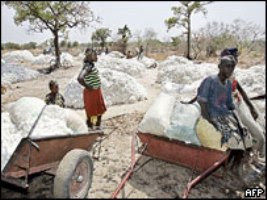
A poor country even by West African standards, landlocked Burkina Faso has suffered from recurring droughts, matched in number only by the military coups it has endured, especially during the 1980s. Today the country is, as with most of West African countries, severely affected by famine caused by yet another regionwide drought.

Burkina Faso has significant reserves of gold, but cotton production is the economic mainstay for many Burkinabes. The industry is vulnerable to changes in world prices.


[Sources: various]

Tuesday, 3 August 2010

1960-2010: The "Year of Africa" 50 Years On (XI)

This Day in 1960:

Part of the once powerful Sokoto Empire, Niger was annexed by France at the end of the nineteenth century. Long before the arrival of French influence and control in the area, Niger was an important economic crossroads, and the empires of Songhai, Mali, the Dendi Kingdom, Gao, and Kanem-Bornu, as well as a number of Hausa states, claimed control over portions of the area. During recent centuries, the nomadic Tuareg formed large confederations, pushed southward, and, siding with various Hausa states, clashed with the Fulani Empire of Sokoto, which had gained control of much of the Hausa territory in the late 18th century.

Niger's colonial history and development parallel that of other French West African territories. France administered its West African colonies through a governor general in Dakar, Senegal, and governors in the individual territories, including Niger. In addition to conferring French citizenship on the inhabitants of the territories, the 1946 French constitution provided for decentralization of power and limited participation in political life for local advisory assemblies.

A further revision in the organization of overseas territories occurred with the passage of the Overseas Reform Act (Loi Cadre) of July 23, 1956, followed by reorganizing measures enacted by the French Parliament early in 1957. In addition to removing voting inequalities, these laws provided for creation of governmental organs, assuring individual territories a large measure of self-government. After the establishment of the Fifth French Republic on December 4, 1958, Niger became an autonomous state within the French Community. This was followed by full independence on August 3, 1960.


This Day in 2010:

Today Niger celebrated the 50th anniversary of independence after the military ruler called for agricultural reforms under the shadow of a famine that threatens the lives of millions. General Salou Djibo said in a broadcast Monday that: "Our goal should be radically to transform the system of agricultural production to definitively bring Niger out of the disastrous consequences of unreliable climate change and the cycle of famine."

Crowds watched a military parade through the capital Niamey on Tuesday as Djibo took part in a "tree festival" that has become a feature of Niger's independence days. But with famine threatening seven million people - almost half the population, according to the United Nations - celebrations in the poor former French colony were low key. "Niger prefers to celebrate its 50th anniversary in a simple fashion to take account of the alarming food crisis," the governor of Niamey, Colonel Soumana, said at Tuesday's simple ceremony held on the outskirts of the capital, when trees were symbolically planted.

Niger is at the epicentre of a famine that also threatens Burkina Faso, Cameroon, Chad and Mali, after the past year's insufficient or irregular rains left poor crops and a desparate shortage of capital feed.


[Partially sourced from here - More details: here and here]