Showing posts with label PRESS. Show all posts

Monday, 24 May 2010

Questoes de Poder

Do Pravda ao Kremlin passando pelo CNCS


(...)
É de todo impensável que o MPLA assobie para o lado quando o JA destrata uma das mais importantes associações culturais deste país. A carta aberta de Jacques dos Santos já diz muita coisa...E seria de uma atroz ingenuidade pensar que tal documento exprime, apenas, os pontos de vista pessoais do seu subscritor. Há naquela associação gente demasiado importante que o ‹‹Kremlin››, seguramente, não trocaria pelo director do Jornal de Angola e o seu conhecido assessor. Mesmo porque o ‹‹EME›› tem pela frente importantes desafios que não vencerá contando apenas com os dois escribas do nosso ‹‹Pravda››. Vamos repetir: muito provavelmente o MPLA nunca dirá nada se o Jornal de Angola for a meio campo com o Conselho Nacional de Comunicação Social por causa da UNITA ou de qualquer outro partido da oposição. Mas seguramente nunca fechará os olhos a um conflito entre o Jornal de Angola e uma entidade com a dimensão cultural (e também politica) da Associação Chá de Caxinde. Há ali dentro gente demasiado valiosa para ser perdida por causa de um projecto editorial que cultiva cada vez mais a exclusão.
(...)
[GC in SA#368 p.11]


Ou de como, depois da questao do alegado 'mau comportamento' do "Pravda" ter sido, aparentemente, resolvida em sede propria (CNCS), o (quarto? ou sera' o quinto?) "poder" de uma das partes parece ainda requerer a intervencao do "Kremlin"... Nao se estara' aqui, de algum modo, a pretender menosprezar o CNCS e esvaziar o seu mandato?

[Mais detalhes aqui]


[N.B.: Talvez nao seja de todo inoportuno referir que Jose' Ribeiro e' o autor do extracto em destaque neste post e que Jacques dos Santos e' tambem articulista do Novo Jornal aqui discutido]
(...)
É de todo impensável que o MPLA assobie para o lado quando o JA destrata uma das mais importantes associações culturais deste país. A carta aberta de Jacques dos Santos já diz muita coisa...E seria de uma atroz ingenuidade pensar que tal documento exprime, apenas, os pontos de vista pessoais do seu subscritor. Há naquela associação gente demasiado importante que o ‹‹Kremlin››, seguramente, não trocaria pelo director do Jornal de Angola e o seu conhecido assessor. Mesmo porque o ‹‹EME›› tem pela frente importantes desafios que não vencerá contando apenas com os dois escribas do nosso ‹‹Pravda››. Vamos repetir: muito provavelmente o MPLA nunca dirá nada se o Jornal de Angola for a meio campo com o Conselho Nacional de Comunicação Social por causa da UNITA ou de qualquer outro partido da oposição. Mas seguramente nunca fechará os olhos a um conflito entre o Jornal de Angola e uma entidade com a dimensão cultural (e também politica) da Associação Chá de Caxinde. Há ali dentro gente demasiado valiosa para ser perdida por causa de um projecto editorial que cultiva cada vez mais a exclusão.
(...)
[GC in SA#368 p.11]


Ou de como, depois da questao do alegado 'mau comportamento' do "Pravda" ter sido, aparentemente, resolvida em sede propria (CNCS), o (quarto? ou sera' o quinto?) "poder" de uma das partes parece ainda requerer a intervencao do "Kremlin"... Nao se estara' aqui, de algum modo, a pretender menosprezar o CNCS e esvaziar o seu mandato?

[Mais detalhes aqui]


[N.B.: Talvez nao seja de todo inoportuno referir que Jose' Ribeiro e' o autor do extracto em destaque neste post e que Jacques dos Santos e' tambem articulista do Novo Jornal aqui discutido]

Monday, 3 May 2010

No Dia Mundial da Liberdade de Imprensa

“A Agencia”

Era assim:

- Havia varios desks - nacional, desporto, cultura e internacional – e cada um tinha o seu chefe, ao qual os staffers (sub-editores, jornalistas e/ou tradutores) submetiam as suas peças. O chefe, por sua vez, submetia as peças seleccionadas do seu desk ao editor de servico (chefe de turno) e este levava aquelas que passavam pelo seu 'crivo' ao desk dos controladores (um desk algo 'invisivel', mas que existia (!) e integrava alguns editores-chefes e representantes do partido e/ou de “outras agencias nao especificadas”). Estes, por sua vez, usavam os seus proprios “filtros” de seleccao das peças que iam para a sala de telex, de onde eram despachadas para os varios orgaos de “difusao massiva” ou “mass media”, hoje mais comumente designados “de comunicacao social” ou simplesmente “media” ou “midia”.

Entao, aconteceu assim:

- Num certo turno da manha (que normalmente comecava as 6 a.m. e era o que “apanhava” as noticias “mais quentes” da noite anterior ou as que iriam marcar o dia), no desk internacional (que usava como fontes os despachos das principais agencias noticiosas internacionais - Reuters, France Press, Tass, Novosti, Prensa Latina, Pana, etc.), esta staffer “apanhou” com um despacho da France Press assim entitulado:
“URSS invade Afeganistao”!
Tendo aquela sido a primeira noticia sobre o acontecimento, em nome de uma certa nocao de objectividade, nao lhe ocorreu fazer-lhe quaisquer “retoques ou efeitos especiais”, tendo-se limitado a traduzi-la do original em Frances.

- Passado um bocado, o chefe de turno (por sinal alguem que a tratava por 'comadre' e a quem ela tratava por 'compadre') veio dizer-lhe que ela tinha que reescrever aquela materia e entitula-la “URSS presta Ajuda Internacionalista ao Afeganistao”. Encontrando-se ela ja’ ocupada com outras materias, respondeu-lhe descontraidamente que seria melhor que o fizesse ele... Mas ele insistiu e depois de uma pequena discussao a volta dos conceitos de “invasao” e “ajuda internacionalista”, ele dirigiu-se ao desk dos controladores, de onde regressou acompanhado por representantes, um (A) do partido e outro (B) de uma das tais “agencias nao identificadas”...

- Comecou o A: “pois, eu ja’ ha’ muito venho reparando que esta camarada tem ideias muito diversionistas”! Acrescentou o B: “olhe, quem aqui nao esta’ de acordo com a linha politica do partido, nao pode trabalhar aqui”! E colocaram-lhe a peça a frente para que a “corrigisse”...

- A staffer, mal acreditando no que via e ouvia, pegou na peça, rasgou-a em pedacinhos e, sem uma palavra, dirigiu-se a sala do secretariado onde dactilografou e entregou o seu pedido de demissao, abandonando de seguida o edificio.

- Passados alguns dias, a staffer foi chamada pelo director da agencia, para lhe pedir que reconsiderasse a sua decisao, esquecesse o que se tinha passado e regressasse ao trabalho. Ao que ela respondeu que lamentava, mas a sua decisao era irrevogavel e apenas desejava que lhe passassem a devida carta de desvinculacao. Tal carta nunca lhe foi passada... pelo que, ironia das ironias, oficialmente “continua vinculada a agencia” ate’ hoje – Dia Mundial da Liberdade de Imprensa!

Bom, ironias a parte, passadas cerca de 3 decadas desde aquele infausto episodio (numa altura em que, curiosamente, o Afeganistao se encontra de novo "invadido"...), tem sido deveras interessante observar como personagens como B haveriam, nao muito mais tarde, de se notabilizar nas hostes propagandisticas do maior partido da oposicao, ou como alguns dos seus co-staffers de entao (que nunca 'tugiram nem mujiram' sobre aquele ou outros episodios similares - e nao pretendendo com este reparo retirar-lhes os meritos onde eles possam ser devidos!), se tornaram ao longo dos anos delegados da agencia ou adidos de imprensa nos mais diversos aeropagos internacionais, acessores governamentais ou presidenciais, deputados, auto-denominados “caes do partido”, premios nacionais disto ou daquilo, ou ainda, mais recentemente, “porta-estandartes da liberdade de imprensa e da democracia” (mais vale tarde do que nunca!)...

Mas, como diz o outro: Sarava’!
“A Agencia”

Era assim:

- Havia varios desks - nacional, desporto, cultura e internacional – e cada um tinha o seu chefe, ao qual os staffers (sub-editores, jornalistas e/ou tradutores) submetiam as suas peças. O chefe, por sua vez, submetia as peças seleccionadas do seu desk ao editor de servico (chefe de turno) e este levava aquelas que passavam pelo seu 'crivo' ao desk dos controladores (um desk algo 'invisivel', mas que existia (!) e integrava alguns editores-chefes e representantes do partido e/ou de “outras agencias nao especificadas”). Estes, por sua vez, usavam os seus proprios “filtros” de seleccao das peças que iam para a sala de telex, de onde eram despachadas para os varios orgaos de “difusao massiva” ou “mass media”, hoje mais comumente designados “de comunicacao social” ou simplesmente “media” ou “midia”.

Entao, aconteceu assim:

- Num certo turno da manha (que normalmente comecava as 6 a.m. e era o que “apanhava” as noticias “mais quentes” da noite anterior ou as que iriam marcar o dia), no desk internacional (que usava como fontes os despachos das principais agencias noticiosas internacionais - Reuters, France Press, Tass, Novosti, Prensa Latina, Pana, etc.), esta staffer “apanhou” com um despacho da France Press assim entitulado:
“URSS invade Afeganistao”!
Tendo aquela sido a primeira noticia sobre o acontecimento, em nome de uma certa nocao de objectividade, nao lhe ocorreu fazer-lhe quaisquer “retoques ou efeitos especiais”, tendo-se limitado a traduzi-la do original em Frances.

- Passado um bocado, o chefe de turno (por sinal alguem que a tratava por 'comadre' e a quem ela tratava por 'compadre') veio dizer-lhe que ela tinha que reescrever aquela materia e entitula-la “URSS presta Ajuda Internacionalista ao Afeganistao”. Encontrando-se ela ja’ ocupada com outras materias, respondeu-lhe descontraidamente que seria melhor que o fizesse ele... Mas ele insistiu e depois de uma pequena discussao a volta dos conceitos de “invasao” e “ajuda internacionalista”, ele dirigiu-se ao desk dos controladores, de onde regressou acompanhado por representantes, um (A) do partido e outro (B) de uma das tais “agencias nao identificadas”...

- Comecou o A: “pois, eu ja’ ha’ muito venho reparando que esta camarada tem ideias muito diversionistas”! Acrescentou o B: “olhe, quem aqui nao esta’ de acordo com a linha politica do partido, nao pode trabalhar aqui”! E colocaram-lhe a peça a frente para que a “corrigisse”...

- A staffer, mal acreditando no que via e ouvia, pegou na peça, rasgou-a em pedacinhos e, sem uma palavra, dirigiu-se a sala do secretariado onde dactilografou e entregou o seu pedido de demissao, abandonando de seguida o edificio.

- Passados alguns dias, a staffer foi chamada pelo director da agencia, para lhe pedir que reconsiderasse a sua decisao, esquecesse o que se tinha passado e regressasse ao trabalho. Ao que ela respondeu que lamentava, mas a sua decisao era irrevogavel e apenas desejava que lhe passassem a devida carta de desvinculacao. Tal carta nunca lhe foi passada... pelo que, ironia das ironias, oficialmente “continua vinculada a agencia” ate’ hoje –
Dia Mundial da Liberdade de Imprensa!

Bom, ironias a parte, passadas cerca de 3 decadas desde aquele infausto episodio (numa altura em que, curiosamente, o Afeganistao se encontra de novo "invadido"...), tem sido deveras interessante observar como personagens como B haveriam, nao muito mais tarde, de se notabilizar nas hostes propagandisticas do maior partido da oposicao, ou como alguns dos seus co-staffers de entao (que nunca 'tugiram nem mujiram' sobre aquele ou outros episodios similares - e nao pretendendo com este reparo retirar-lhes os meritos onde eles possam ser devidos!), se tornaram ao longo dos anos delegados da agencia ou adidos de imprensa nos mais diversos aeropagos internacionais, acessores governamentais ou presidenciais, deputados, auto-denominados “caes do partido”, premios nacionais disto ou daquilo, ou ainda, mais recentemente, “porta-estandartes da liberdade de imprensa e da democracia” (mais vale tarde do que nunca!)...

Mas, como diz o outro: Sarava’!

Monday, 1 December 2008

DESTAQUES (IRRESISTIVEIS…) DAS ULTIMAS EDICOES DOS SEMANARIOS ANGOLANOS

Tendo dito aqui que terminava a serie “Ecos da Imprensa Angolana”, tambem prometi na altura que continuaria, malgre tout, a dar conta neste blog das minhas leituras da dita imprensa. Assim, do que me chegou dos semanarios da ultima semana, nao resisto a postar aqui os seguintes registos:

O SA da-nos conta da instituicao de uma comissao mandatada pelo Presidente da Republica para divisar a criacao do primeiro Fundo Soberano Angolano (FSA), sobre o qual fonte abalizada me deixa saber que eu terei sido a primeira pessoa a sugerir na imprensa angolana (no meu artigo Que Fazer?):

[Aqui]

Ainda no SA, um relatorio compreensivo das conclusoes de uma auditoria da UNITA as ultimas eleicoes legislativas no pais, que se vem juntar a anteriores relatorios similares, nomeadamente o do Human Rights Watch, neste blog oportunamente apresentado e comentado:

[Aqui]
[Podera' tambem consultar o Relatorio Final da Missao de Observacao Eleitoral da Uniao Europeia aqui.]

E um comentario a vitoria do angolano Ricco no Big Brother Africa III:


O NJ tras esta ‘foto da semana’ que poderia ser entitulada “E’ Funge!”:


Ainda do NJ, os seguintes destaques:

Uma controversia a volta da “historia verdadeira de Cuba em Angola”, ocorrida durante a primeira edicao do FIC de Luanda, envolvendo alegados ‘problemas tecnicos’, ‘censura’ e a que podera’ ser tida como a ‘primeira tour de force’ da recem-nomeada Ministra da Cultura de Angola, Rosa Cruz e Silva:*

[Aqui]

E uma entrevista com Sara Moldoror, companheira de Mario Pinto de Andrade durante um periodo significativo da sua vida, cineasta e homenageada com o ‘Trofeu Homenagem’ do FIC, que lhe foi entregue pela acima citada Ministra da Cultura, pelo seu contributo ao cinema Angolano, nomeadamente com o filme “Sambizanga”:

[Aqui]

Entretanto, o novo semanario O Pais, que pode ser encontrado online aqui, ja' se encontra em circulacao e tras no seu primeiro numero uma interessante materia sobre a poligamia em Angola.

*****

*P.S.: Podera' encontrar aqui uma reportagem de O Pais sobre o FIC, onde se reporta que o alegadamente censurado documentario "Cuba - Uma Odisseia Africana" acabou por vencer o premio do certame para a sua categoria.

*P.P.S.: Finalmente, acabei por descobrir recentemente (Marco de 2009) em Luanda que este "Cuba - Uma Odisseia Africana" e', nem mais nem menos, o documentario que vi na BBC ha' dois anos, sob o titulo "Cuba!Africa!Revolution!", sobre o qual aqui reportei na altura.
Tendo dito aqui que terminava a serie “Ecos da Imprensa Angolana”, tambem prometi na altura que continuaria, malgre tout, a dar conta neste blog das minhas leituras da dita imprensa. Assim, do que me chegou dos semanarios da ultima semana, nao resisto a postar aqui os seguintes registos:

O SA da-nos conta da instituicao de uma comissao mandatada pelo Presidente da Republica para divisar a criacao do primeiro Fundo Soberano Angolano (FSA), sobre o qual fonte abalizada me deixa saber que eu terei sido a primeira pessoa a sugerir na imprensa angolana (no meu artigo Que Fazer?):

[Aqui]

Ainda no SA, um relatorio compreensivo das conclusoes de uma auditoria da UNITA as ultimas eleicoes legislativas no pais, que se vem juntar a anteriores relatorios similares, nomeadamente o do Human Rights Watch, neste blog oportunamente apresentado e comentado:

[Aqui]
[Podera' tambem consultar o Relatorio Final da Missao de Observacao Eleitoral da Uniao Europeia aqui.]

E um comentario a vitoria do angolano Ricco no Big Brother Africa III:


O NJ tras esta ‘foto da semana’ que poderia ser entitulada “E’ Funge!”:


Ainda do NJ, os seguintes destaques:

Uma controversia a volta da “historia verdadeira de Cuba em Angola”, ocorrida durante a primeira edicao do FIC de Luanda, envolvendo alegados ‘problemas tecnicos’, ‘censura’ e a que podera’ ser tida como a ‘primeira tour de force’ da recem-nomeada Ministra da Cultura de Angola, Rosa Cruz e Silva:*

[Aqui]

E uma entrevista com Sara Moldoror, companheira de Mario Pinto de Andrade durante um periodo significativo da sua vida, cineasta e homenageada com o ‘Trofeu Homenagem’ do FIC, que lhe foi entregue pela acima citada Ministra da Cultura, pelo seu contributo ao cinema Angolano, nomeadamente com o filme “Sambizanga”:

[Aqui]

Entretanto, o novo semanario O Pais, que pode ser encontrado online aqui, ja' se encontra em circulacao e tras no seu primeiro numero uma interessante materia sobre a poligamia em Angola.

*****

*P.S.: Podera' encontrar aqui uma reportagem de O Pais sobre o FIC, onde se reporta que o alegadamente censurado documentario "Cuba - Uma Odisseia Africana" acabou por vencer o premio do certame para a sua categoria.

*P.P.S.: Finalmente, acabei por descobrir recentemente (Marco de 2009) em Luanda que este "Cuba - Uma Odisseia Africana" e', nem mais nem menos, o documentario que vi na BBC ha' dois anos, sob o titulo "Cuba!Africa!Revolution!", sobre o qual aqui reportei na altura.

Friday, 17 October 2008

ECHOES FROM THE ANGOLAN PRESS (26 AND LAST)


Com um artigo meu que acaba de sair no ultimo numero do Semanario Angolense e ao qual dedicarei o proximo post, termino esta serie.

Deu-me muito prazer partilhar aqui as noticias da banda a medida que as ia lendo. Decidi faze-lo pelo prazer, mas tambem porque, vivendo como vivo ha' varios anos fora do pais, uma coisa que sempre me preocupa e' a forma como a informacao sobre Angola, e sobre Africa em geral, e' (mal)tratada em alguma (quase toda?) imprensa estrangeira (nao so' a ocidental).

Por isso tenho para mim que, apesar das insuficiencias de que a imprensa local possa sofrer neste ou naquele aspecto, ela deve ser, sempre que possivel, a primeira escolha para nos mantermos actualizados sobre o que realmente, mesmo que apenas atraves da leitura nas entrelinhas, se passa no terreno dos acontecimentos. Ela nao e', nem deve ser quanto a mim, a unica fonte de informacao sobre o pais, mas e' certamente uma fonte indispensavel.

Assim, espero ter contribuido com esta serie de alguma maneira para esse desiderato e tambem para demonstrar ao mundo (a dada altura pareceu-me que isso se tornara absolutamente necessario) que a imprensa Angolana, em particular a privada e/ou independente, is alive and kicking! O meu muito obrigada aos amigos que me facultaram essa possibilidade e espero que cada vez mais jornais e jornalistas Angolanos baseados em Angola passem a publicar online e a participar da blogosfera.

Blogosfera onde, by the way, ao contrario do que alguns parecem ter entendido, nunca me pretendi fazer passar por 'jornalista' - que de facto nao sou, nem pretendo ser, apesar da minha breve passagem pela profissao ha' ja' largos anos - e onde tambem ha' um debate muito interessante sobre as fronteiras entre o bloguismo e o jornalismo. Ja' agora gostaria de dizer que nao concordo inteiramente que se transporte completamente a pratica do jornalismo profissional dos jornais e de outros meios de informacao tradicionais para os blogs, a menos que tais meios de informacao tradicionais, como acontece com praticamente todos os jornais no ocidente, tenham os seus proprios sites online e a eles associem os seus blogs, continuando no entanto a pautar-se online pelos codigos e praticas do jornalismo tradicional e, sobretudo, mantendo-se sujeitos as normas deontologicas, eticas, morais e de responsabilizacao que devem reger a profissao, sob pena de incorrerem em penalizacao pelas igualmente tradicionais vias legais. Por isso julgo que a blogosfera, enquanto espaco de informacao e comunicacao atraves de um veiculo ainda quase completamente desregulado como e' a internet, se presta melhor a "fazer eco" do jornalismo do que propriamente a protagoniza-lo ou a emula-lo.

Continuarei, naturalmente, a ler a imprensa Angolana regularmente e disso darei aqui conta como sempre, mas penso que esta serie cumpriu o seu objectivo.

So, that's all folks, as far as the Echoes from the Angolan Press/Ecos da Imprensa Angolana are concerned. Hope you've enjoyed it!


Com um artigo meu que acaba de sair no ultimo numero do Semanario Angolense e ao qual dedicarei o proximo post, termino esta serie.

Deu-me muito prazer partilhar aqui as noticias da banda a medida que as ia lendo. Decidi faze-lo pelo prazer, mas tambem porque, vivendo como vivo ha' varios anos fora do pais, uma coisa que sempre me preocupa e' a forma como a informacao sobre Angola, e sobre Africa em geral, e' (mal)tratada em alguma (quase toda?) imprensa estrangeira (nao so' a ocidental).

Por isso tenho para mim que, apesar das insuficiencias de que a imprensa local possa sofrer neste ou naquele aspecto, ela deve ser, sempre que possivel, a primeira escolha para nos mantermos actualizados sobre o que realmente, mesmo que apenas atraves da leitura nas entrelinhas, se passa no terreno dos acontecimentos. Ela nao e', nem deve ser quanto a mim, a unica fonte de informacao sobre o pais, mas e' certamente uma fonte indispensavel.

Assim, espero ter contribuido com esta serie de alguma maneira para esse desiderato e tambem para demonstrar ao mundo (a dada altura pareceu-me que isso se tornara absolutamente necessario) que a imprensa Angolana, em particular a privada e/ou independente, is alive and kicking! O meu muito obrigada aos amigos que me facultaram essa possibilidade e espero que cada vez mais jornais e jornalistas Angolanos baseados em Angola passem a publicar online e a participar da blogosfera.

Blogosfera onde, by the way, ao contrario do que alguns parecem ter entendido, nunca me pretendi fazer passar por 'jornalista' - que de facto nao sou, nem pretendo ser, apesar da minha breve passagem pela profissao ha' ja' largos anos - e onde tambem ha' um debate muito interessante sobre as fronteiras entre o bloguismo e o jornalismo. Ja' agora gostaria de dizer que nao concordo inteiramente que se transporte completamente a pratica do jornalismo profissional dos jornais e de outros meios de informacao tradicionais para os blogs, a menos que tais meios de informacao tradicionais, como acontece com praticamente todos os jornais no ocidente, tenham os seus proprios sites online e a eles associem os seus blogs, continuando no entanto a pautar-se online pelos codigos e praticas do jornalismo tradicional e, sobretudo, mantendo-se sujeitos as normas deontologicas, eticas, morais e de responsabilizacao que devem reger a profissao, sob pena de incorrerem em penalizacao pelas igualmente tradicionais vias legais. Por isso julgo que a blogosfera, enquanto espaco de informacao e comunicacao atraves de um veiculo ainda quase completamente desregulado como e' a internet, se presta melhor a "fazer eco" do jornalismo do que propriamente a protagoniza-lo ou a emula-lo.

Continuarei, naturalmente, a ler a imprensa Angolana regularmente e disso darei aqui conta como sempre, mas penso que esta serie cumpriu o seu objectivo.

So, that's all folks, as far as the Echoes from the Angolan Press/Ecos da Imprensa Angolana are concerned. Hope you've enjoyed it!

Tuesday, 7 October 2008

JEUNE AFRIQUE: DOSSIER ANGOLA

Dès quelques mois, celui qu'on disait, au mieux, effacé et, au pire, sans charisme, a réussi à surprendre tous les observateurs politiques, faisant taire au passage les spéculations sur sa santé. En mai, après la 3e conférence nationale du Mouvement populaire pour la libération de l'Angola (MPLA), José Eduardo dos Santos a en effet lancé une véritable offensive de charme envers la jeunesse, dont le vote est toujours incertain, et envers les femmes, qui composent désormais plus de 60 % de l'électorat angolais. Ce qui a le plus surpris, y compris dans l'opposition, c'est la rapidité et la radicalité de la transfiguration présidentielle.
«Je suis le joueur d'une équipe qui gagne!» s'est-il exclamé le 29 août, devant des milliers de militants à Lubango. Entre l'homme taciturne, introverti, peu coutumier des grands gestes théâtraux - tout le contraire de feu Jonas Savimbi, fondateur de l'Union nationale pour l'indépendance totale de l'Angola (Unita) - et la star médiatique que l'on a vue pendant la campagne courir le pays au gré des inaugurations d'infrastructures publiques, il y a un monde.
Mais il faut se rappeler que celui qu'on a surnommé « Zédu » (contraction de José Eduardo) a dû très tôt apprendre, tel un joueur de poker, à dissimuler ses émotions. Pour mieux grimper l'échelle du pouvoir...

SA DERNIERE BATAILLE?

Après l ' indépendance, en 1975, il est très proche d'Agostinho Neto (fondateur du MPLA et premier président de l'Angola), qui lui confie plusieurs postes ministériels importants (Relations étrangères, Plan...). À la mort de ce dernier, en 1979, il est propulsé à la tête du MPLA et de l'État par le numéro deux du parti, Lucia Lara, qui refuse le poste suprême parce qu'il est «métis et que ce n'est pas le moment». De fait, une partie de l'élite blanche et métisse du nouveau parti-État pense que le technicien dos Santos n'est qu'une éphémère solution de transition. Vingt-neuf ans plus tard, l'avènement du multipartisme a eu lieu (1991), Jonas Savimbi est mort (2002), l'Angola est devenu la clé de voûte de l'équilibre régional...
Et dos Santos est toujours en place. Prêt à recevoir l'onction démocratique de l'élection présidentielle de 2009.

A Luanda, qui compte près d'un tiers des 8,3 millions d'électeurs du pays, des problèmes d'organisation ont eu lieu dans environ 10% des bureaux de vote: files interminables, retards du personnel et du matériel électoral...
Et le scrutin a dû être prolongé d'une journée. Tout en pointant ces incidents, les observateurs de l'Union européenne et ceux de l'Union africaine ont qualifié les élections d'«impartiales et crédibles», la Communauté de développement de l'Afrique australe (SADC) et celle des pays de langue portugaise (CPLP) les jugeant «pacifiques et transparentes». Isaias Samakuva, président de l'Unita, a, dans un premier temps, déploré leur «manque de crédibilité». Avec quelques autres de 14 partis et coalitions en présence, il a demandé un nouveau vote dans les bureaux où il avait eu des difficultés. Une requête aussitôt rejetée par Caetano de Sousa, président de la Commission nationale électorale (CNE). Et, dès le 8 septembre, l'Unita a pris acte de sa défaite et annoncé qu'elle ne contesterait pas les résultats définitifs du scrutin. «Est-ce que nous avons vraiment le choix? Pouvons-nous descendre dans la rue?» demande avec fatalité Alcides Sakala, l'ancien président du groupe parlementaire de l'Unita.

OBJECTIF : DEVENIR LE LEADER POLITIQUE DE LA SOUS-RÉGION

En route pour l'élection présidentielle de 2009 comme dos Santos, Zuma n'est que le dernier en date des leaders de la sous-région sur lesquels le président angolais exerce une forte ascendance. C'est lui qui, en 1997, a aidé Laurent-Désiré Kabila à renverser le régime mobutiste, allié de l'Unita, puis à se maintenir au pouvoir en RD Congo. La même année, au Congo, les forces armées angolaises ont aidé Denis Sassou Nguesso à reprendre Brazzaville à Pascal Lissouba, lui aussi soutien de Savimbi. De quoi garder des liens étroits avec les deux voisins congolais...
Depuis, l'Angola a poursuivi son offensive diplomatique avec des moyens plus politiquement corrects, en renforçant notamment sa présence dans les structures multilatérales africaines. En 2007, l'Angola a été nommé pour
trois ans au Conseil de paix et de sécurité de l'Union africaine et devrait prendre une part croissante dans les opérations de maintien de la paix sur le continent. Sa présence s'est renforcée au sein de la Communauté économique des États d'Afrique centrale (CEEAC, dont le secrétaire exécutif adjoint est angolais depuis 1999). Et il fait désormais partie du comité permanent de la Communauté de développement d'Afrique australe (SADC), dont il est le deuxième contributeur après l'Afrique du Sud (avec 2,8 milliards de dollars pour 2008-2009).

DES CHANTIERS PAR MILLIERS

L'Angola est en effet un immense chantier. Les projets à l'étude ou en cours de réalisation ne se comptent plus: ports (notamment à Luanda, où le temps d'attente avan déchargement est estimé à quarante jours, mais aussi à Namibe, Cabinda, Lubango, Soyo, Lobito), aéroports (400 millions de dollars sont prévus pour leur réhabilitation dans l'ensemble du pays), lignes ferroviaires (réseaux de Luanda, Malanje, Benguela Moçamedes)...
De même, l'immobilier public et privé se développe. Favorisan l'émergence d'une classe moyenne, l'État commence à financer des programmes de logement. Lesquels jouxtent des projets plus spéculatifs comme celui, pharaonique, de Kilamba Kiaxi, dans la banlieue de Luanda, où China International Trust and Investment Corporation (Citic) va construire d'ici à 2010 une ville entière de 710 immeubles et 20000 appartements, pour un investissement de 3,5 milliards de dollars !

L'EXPANSION SELON SONANGOL

Fonctionnant à la manière d'un fonds souverain, la société pétrolière nationale Sonangol est au centre d'une stratégie qui vise à délocaliser, de Lisbonne à Luanda, les centres de décision de grandes sociétés portugaises. Elle pourrait ainsi bientôt prendre le contrôle de Galp Energia, dont elle contrôle déjà 15%, en achetant la part de 7% que l'État portugais a décidé de vendre le 1er août. Le géant angolais possède déjà, dans le secteur bancaire, 49,9% de Millenium BCP Angola (filiale de BCP, la plus grande banque privée portugaise, dont Sonangol est le plus gros actionnaire avec 10% des parts), 49% de BPI et 25% de Totta-Angola. Entre autres... Déjà propriétaire d'une compagnie aérienne, Sonair (qui possède une flotte de 52 appareils), la Sonangol entend aussi investir dans la compagnie nationale portugaise TAP, que le gouvernement portugais a l'intention de privatiser. •

© Jeune Afrique - Hebdomadaire International Independent, No. 2488, Septembre 2008
Dès quelques mois, celui qu'on disait, au mieux, effacé et, au pire, sans charisme, a réussi à surprendre tous les observateurs politiques, faisant taire au passage les spéculations sur sa santé. En mai, après la 3e conférence nationale du Mouvement populaire pour la libération de l'Angola (MPLA), José Eduardo dos Santos a en effet lancé une véritable offensive de charme envers la jeunesse, dont le vote est toujours incertain, et envers les femmes, qui composent désormais plus de 60 % de l'électorat angolais. Ce qui a le plus surpris, y compris dans l'opposition, c'est la rapidité et la radicalité de la transfiguration présidentielle.
«Je suis le joueur d'une équipe qui gagne!» s'est-il exclamé le 29 août, devant des milliers de militants à Lubango. Entre l'homme taciturne, introverti, peu coutumier des grands gestes théâtraux - tout le contraire de feu Jonas Savimbi, fondateur de l'Union nationale pour l'indépendance totale de l'Angola (Unita) - et la star médiatique que l'on a vue pendant la campagne courir le pays au gré des inaugurations d'infrastructures publiques, il y a un monde.
Mais il faut se rappeler que celui qu'on a surnommé « Zédu » (contraction de José Eduardo) a dû très tôt apprendre, tel un joueur de poker, à dissimuler ses émotions. Pour mieux grimper l'échelle du pouvoir...

SA DERNIERE BATAILLE?

Après l ' indépendance, en 1975, il est très proche d'Agostinho Neto (fondateur du MPLA et premier président de l'Angola), qui lui confie plusieurs postes ministériels importants (Relations étrangères, Plan...). À la mort de ce dernier, en 1979, il est propulsé à la tête du MPLA et de l'État par le numéro deux du parti, Lucia Lara, qui refuse le poste suprême parce qu'il est «métis et que ce n'est pas le moment». De fait, une partie de l'élite blanche et métisse du nouveau parti-État pense que le technicien dos Santos n'est qu'une éphémère solution de transition. Vingt-neuf ans plus tard, l'avènement du multipartisme a eu lieu (1991), Jonas Savimbi est mort (2002), l'Angola est devenu la clé de voûte de l'équilibre régional...
Et dos Santos est toujours en place. Prêt à recevoir l'onction démocratique de l'élection présidentielle de 2009.

A Luanda, qui compte près d'un tiers des 8,3 millions d'électeurs du pays, des problèmes d'organisation ont eu lieu dans environ 10% des bureaux de vote: files interminables, retards du personnel et du matériel électoral...
Et le scrutin a dû être prolongé d'une journée. Tout en pointant ces incidents, les observateurs de l'Union européenne et ceux de l'Union africaine ont qualifié les élections d'«impartiales et crédibles», la Communauté de développement de l'Afrique australe (SADC) et celle des pays de langue portugaise (CPLP) les jugeant «pacifiques et transparentes». Isaias Samakuva, président de l'Unita, a, dans un premier temps, déploré leur «manque de crédibilité». Avec quelques autres de 14 partis et coalitions en présence, il a demandé un nouveau vote dans les bureaux où il avait eu des difficultés. Une requête aussitôt rejetée par Caetano de Sousa, président de la Commission nationale électorale (CNE). Et, dès le 8 septembre, l'Unita a pris acte de sa défaite et annoncé qu'elle ne contesterait pas les résultats définitifs du scrutin. «Est-ce que nous avons vraiment le choix? Pouvons-nous descendre dans la rue?» demande avec fatalité Alcides Sakala, l'ancien président du groupe parlementaire de l'Unita.

OBJECTIF : DEVENIR LE LEADER POLITIQUE DE LA SOUS-RÉGION

En route pour l'élection présidentielle de 2009 comme dos Santos, Zuma n'est que le dernier en date des leaders de la sous-région sur lesquels le président angolais exerce une forte ascendance. C'est lui qui, en 1997, a aidé Laurent-Désiré Kabila à renverser le régime mobutiste, allié de l'Unita, puis à se maintenir au pouvoir en RD Congo. La même année, au Congo, les forces armées angolaises ont aidé Denis Sassou Nguesso à reprendre Brazzaville à Pascal Lissouba, lui aussi soutien de Savimbi. De quoi garder des liens étroits avec les deux voisins congolais...
Depuis, l'Angola a poursuivi son offensive diplomatique avec des moyens plus politiquement corrects, en renforçant notamment sa présence dans les structures multilatérales africaines. En 2007, l'Angola a été nommé pour
trois ans au Conseil de paix et de sécurité de l'Union africaine et devrait prendre une part croissante dans les opérations de maintien de la paix sur le continent. Sa présence s'est renforcée au sein de la Communauté économique des États d'Afrique centrale (CEEAC, dont le secrétaire exécutif adjoint est angolais depuis 1999). Et il fait désormais partie du comité permanent de la Communauté de développement d'Afrique australe (SADC), dont il est le deuxième contributeur après l'Afrique du Sud (avec 2,8 milliards de dollars pour 2008-2009).

DES CHANTIERS PAR MILLIERS

L'Angola est en effet un immense chantier. Les projets à l'étude ou en cours de réalisation ne se comptent plus: ports (notamment à Luanda, où le temps d'attente avan déchargement est estimé à quarante jours, mais aussi à Namibe, Cabinda, Lubango, Soyo, Lobito), aéroports (400 millions de dollars sont prévus pour leur réhabilitation dans l'ensemble du pays), lignes ferroviaires (réseaux de Luanda, Malanje, Benguela Moçamedes)...
De même, l'immobilier public et privé se développe. Favorisan l'émergence d'une classe moyenne, l'État commence à financer des programmes de logement. Lesquels jouxtent des projets plus spéculatifs comme celui, pharaonique, de Kilamba Kiaxi, dans la banlieue de Luanda, où China International Trust and Investment Corporation (Citic) va construire d'ici à 2010 une ville entière de 710 immeubles et 20000 appartements, pour un investissement de 3,5 milliards de dollars !

L'EXPANSION SELON SONANGOL

Fonctionnant à la manière d'un fonds souverain, la société pétrolière nationale Sonangol est au centre d'une stratégie qui vise à délocaliser, de Lisbonne à Luanda, les centres de décision de grandes sociétés portugaises. Elle pourrait ainsi bientôt prendre le contrôle de Galp Energia, dont elle contrôle déjà 15%, en achetant la part de 7% que l'État portugais a décidé de vendre le 1er août. Le géant angolais possède déjà, dans le secteur bancaire, 49,9% de Millenium BCP Angola (filiale de BCP, la plus grande banque privée portugaise, dont Sonangol est le plus gros actionnaire avec 10% des parts), 49% de BPI et 25% de Totta-Angola. Entre autres... Déjà propriétaire d'une compagnie aérienne, Sonair (qui possède une flotte de 52 appareils), la Sonangol entend aussi investir dans la compagnie nationale portugaise TAP, que le gouvernement portugais a l'intention de privatiser. •

© Jeune Afrique - Hebdomadaire International Independent, No. 2488, Septembre 2008

Thursday, 18 September 2008

ECHOES FROM THE ANGOLAN PRESS (25)

Today’s Jornal de Angola publishes the final count of the election results, by province, announced yesterday by the National Electoral Commission (CNE), under the headline “MPLA’s qualified majority is a synonym of stability”.

The results, which still need to be confirmed by the Constitutional Court, are being contested, on different grounds, by the political parties UNITA and FpD. They give 81,64% of the votes to the MPLA (191 seats), 10.39% to UNITA (16), 3,17% to the PRS (8), 1,2% to the ND (2) and 1,11% to the FNLA (3). The full results can be checked here.

The Novo Jornal (NJ) published a special dossier on the elections, of which these are some highlights:

 The MPLA issued a declaration of victory in which it assures that will continue to respect the right to the difference and to promote the freedoms of expression and opinion. It also states that will welcome proposals aiming at improving the living conditions of the Angolan people and the launching of the country toward sustainable development, while expecting a constructive and responsible opposition;

 The future of Isaias Samakuva as the leader of UNITA might be discussed at a high level party meeting scheduled for next month;

 The blank votes, taken as “protest votes”, amounted to 3,26% of the total in this election translating into a third place in the overall results, after the votes for MPLA and UNITA;

 Benedito Manuel, campaign director of the PRS claims that “the international observers are conflating the maturity and goodwill of the Angolan people with transparency in the election.” He expressed his party’s concern with the international observers’ almost unanimity in calling the election “fair, free and transparent” because his party has been calling attention to some irregularities since the start of the campaign;

 Quintino de Moreira, the leader of the coalition Nova Democracia (ND), the star of this election by emerging in fourth place as a previously virtually unknown political force, explains the secrets of their success: “We worked with humility and took our electoral manifesto and programme to all Angolan citizens in cities, municipalities, communities and big or small villages, while getting in touch with the traditional authorities and community leaders. All this in conjunction with the good performance of our activists led to this result. (…) The ND is not a coalition of elites but of masses, and while many parties focused their campaign on the media airtime spots, we opted for the direct contact with the electors independently of their party allegiances.”

 The leader of the FNLA, traditionally the third major party in the country, but emerging in fifth place out of this election, attributes his party’s poor results to two main factors: the blockage of the party’s bank account by the government for the last 10 years and the sabotage of voting intentions on the party by Lucas Ngonda, the leader of a splitting faction of the FNLA barred from contesting the election by the Constitutional Court;

 Eight of the fourteen contestants in this election face extinction for not having achieved the minimum 0,5% of votes required by law to continue their activity as political parties, namely: FOFAC - Fórum Fraternal Coligação (0,18%); PPE – Plataforma Política Eleitoral (0,18%); PRD – Partido Renovador Democrático (0,21%); PAJOCA – Partido Aliança da Juventude, Operários e Camponeses de Angola (0.24%), PADEPA – Partido de Apoio Democrático e Progresso de Angola (0,26%); FpD – Frente para a Democracia (0,26%); AD – Angola Democrática – Coligação (0,30%); PLD – Partido Liberal Democrático (0,32%);

 Analia de Victoria Pereira, the only female party leader in the Angolan political spectrum, who run for the country’s Presidency in 1992, says that in spite of her party, the PLD, now facing extinction given its poor results in these legislatives, she still has hopes of running again in next year’s presidential elections;

 Filomeno Vieira Lopes, president of the FpD, another of the parties facing extinction, says that its militants might form a new party, adding that “Angola lost a great opportunity to overhaul the political system and the FpD in parliament would certainly make the difference”.

The paper also features an interview with an interesting figure of the contemporary Angolan political scene, economist Fatima Roque:

Roque could arguably be described as “a coveted war trophy between the MPLA and UNITA”: married to a prominent Portuguese banker and having been Savimbi’s economic adviser, she was expelled from UNITA in 1997 after losing his trust for, as she says, “having insisted on Savimbi taking the position of Angola’s Vice-President offered to him in the aftermath of the 1992 elections.” Then she was away from the political scene and the country until recently when she returned, by MPLA’s invitation, expressly to take a symbolic part in its electoral campaign, having appeared at its closing ceremony dressed in the party colours and wearing its symbols.

As expected, a number of analysts came to the fore to express their opinion on the election results:

Noelma d’Abreu, a psychologist, argues that the election results amount to an “Emotional Democracy”: “I’ve been questioning myself whether we can speak among us of a conscious and rational choice of our parliamentary representatives, or if such choice is still based on emotions or purely affective sentiments. With this, I don’t mean to say that affections are necessarily irrational, but that they generally imply a diminution of the judging capacity through reason and logic. After hearing a lady saying of the campaign “the people is tired of truths,… only wants promises”, adding that this phrase was running widely in the city, I’ve interpreted it as the reflection of a defense mechanism of denial of the reality which often happens in immature human beings or that have experienced great pain or suffering. (…) The election result puts us in face of a situation worth pondering about, (…) we might still be at an embryonic stage of this exercise of choice and because of that we might be voting solely on the basis of primary survival instincts and the concretisation of desires that simply reveal the affectivity of primary needs.”

Guilherme Santos, president of the Association for Rural Development and the Environment (ADRA), asserts that the “Massive vote on the MPLA reflects a lack of democratic maturity by Angolan electors”:

“I think that from the point of view of expectation, aspiration, interest and conscience of the need for Angolans to vote, to exercise their right to vote, yes we’ve grown, (…) but that doesn’t necessarily translate into maturity. If we talk of maturity we might incorporate various dimensions to it, namely the psychological, political or social. I don’t know if there is any people who is politically mature given that politics is a phenomenon in permanent change, but I believe that this widespread notion of maturity is not a reality, it’s a farce, it’s a trap.”

Other features:

In its economy pages, the NJ echoes an interview by Angolan Finance Minister, Jose’ Pedro de Morais, to the Portuguese Jornal de Negocios.

In spite of having been awarded at the beginning of this year the accolade of ‘Africa’s Best Finance Minister’ by the British magazine “The Banker”, Pedro de Morais is widely rumoured to be replaced in the new government to come out of these elections and says that his continuation in the role will depend on the MPLA.

“The programme that the MPLA presented to the elections was to continue the process of national reconstruction through a strong investment in the modernisation of infrastructures in order to leverage the non-oil economy. There is also a strong component, both in qualitative and quantitative terms, of the expenditure in social sectors, specially in health and education. The next four years will be of consolidation of this social policy,” he stated. As far as the economic forecasts are concerned, the minister predicts growth rates “of 20% in the non-oil sector and 12% in the oil sector, with a global growth rate of 16% for this year and of 15% for the next.”

He also spoke of the growing investment intentions in Angola by the Portuguese, who he says have a lower risk perception of the country than other European investors, particularly in sectors such as the civil construction and services, including the hospitality industry, where he believes “they will never have competitors from other countries.”

Pedro de Morais also tried to dispel the widespread perceptions of corruption in the country by international investors: “There are various kinds of that type of accusation. There are those which are profoundly imbued of a ideological character, because, some time ago, the MPLA professed a certain ideology and then changed course. Then there is another kind which relates to the lack of transparency in procedures and economic management. There we are perfectly at ease to be confronted with the best practices in the world. For instance, we have transparency rules which have been commended by all oil operators. We have significantly improved our fiscal execution procedures and have been praised by the IMF for that. Today the situation in Angola in terms of economic transparency is much better than it was four or five years ago.”

Still in the economy section, the news that Desiderio Costa, Angola’s Oil Minister, has been named president of the Organisation of Petroleum Exporting Countries (OPEC) for 2009:

Since the start of this year, Angola, currently the biggest Sub-Saharan Africa oil producer, has been subjected by OPEC to a daily production quota of 1,9 million barrels. The Angolan oil production increased by 18% last year to an average 1,61 million barrels a day, according to the International Energy Agency. The country is the source of 5% of US oil imports and during the first quarter of this year was the first supplier to China, having surpassed Saudi Arabia in that position, due to a 55%increase of its exports to that country.

And finally…

[Cartoon: Lito Silva, Semanario Angolense]

Today’s Jornal de Angola publishes the final count of the election results, by province, announced yesterday by the National Electoral Commission (CNE), under the headline “MPLA’s qualified majority is a synonym of stability”.

The results, which still need to be confirmed by the Constitutional Court, are being contested, on different grounds, by the political parties UNITA and FpD. They give 81,64% of the votes to the MPLA (191 seats), 10.39% to UNITA (16), 3,17% to the PRS (8), 1,2% to the ND (2) and 1,11% to the FNLA (3). The full results can be checked here.

The Novo Jornal (NJ) published a special dossier on the elections, of which these are some highlights:

 The MPLA issued a declaration of victory in which it assures that will continue to respect the right to the difference and to promote the freedoms of expression and opinion. It also states that will welcome proposals aiming at improving the living conditions of the Angolan people and the launching of the country toward sustainable development, while expecting a constructive and responsible opposition;

 The future of Isaias Samakuva as the leader of UNITA might be discussed at a high level party meeting scheduled for next month;

 The blank votes, taken as “protest votes”, amounted to 3,26% of the total in this election translating into a third place in the overall results, after the votes for MPLA and UNITA;

 Benedito Manuel, campaign director of the PRS claims that “the international observers are conflating the maturity and goodwill of the Angolan people with transparency in the election.” He expressed his party’s concern with the international observers’ almost unanimity in calling the election “fair, free and transparent” because his party has been calling attention to some irregularities since the start of the campaign;

 Quintino de Moreira, the leader of the coalition Nova Democracia (ND), the star of this election by emerging in fourth place as a previously virtually unknown political force, explains the secrets of their success: “We worked with humility and took our electoral manifesto and programme to all Angolan citizens in cities, municipalities, communities and big or small villages, while getting in touch with the traditional authorities and community leaders. All this in conjunction with the good performance of our activists led to this result. (…) The ND is not a coalition of elites but of masses, and while many parties focused their campaign on the media airtime spots, we opted for the direct contact with the electors independently of their party allegiances.”

 The leader of the FNLA, traditionally the third major party in the country, but emerging in fifth place out of this election, attributes his party’s poor results to two main factors: the blockage of the party’s bank account by the government for the last 10 years and the sabotage of voting intentions on the party by Lucas Ngonda, the leader of a splitting faction of the FNLA barred from contesting the election by the Constitutional Court;

 Eight of the fourteen contestants in this election face extinction for not having achieved the minimum 0,5% of votes required by law to continue their activity as political parties, namely: FOFAC - Fórum Fraternal Coligação (0,18%); PPE – Plataforma Política Eleitoral (0,18%); PRD – Partido Renovador Democrático (0,21%); PAJOCA – Partido Aliança da Juventude, Operários e Camponeses de Angola (0.24%), PADEPA – Partido de Apoio Democrático e Progresso de Angola (0,26%); FpD – Frente para a Democracia (0,26%); AD – Angola Democrática – Coligação (0,30%); PLD – Partido Liberal Democrático (0,32%);

 Analia de Victoria Pereira, the only female party leader in the Angolan political spectrum, who run for the country’s Presidency in 1992, says that in spite of her party, the PLD, now facing extinction given its poor results in these legislatives, she still has hopes of running again in next year’s presidential elections;

 Filomeno Vieira Lopes, president of the FpD, another of the parties facing extinction, says that its militants might form a new party, adding that “Angola lost a great opportunity to overhaul the political system and the FpD in parliament would certainly make the difference”.

The paper also features an interview with an interesting figure of the contemporary Angolan political scene, economist Fatima Roque:

Roque could arguably be described as “a coveted war trophy between the MPLA and UNITA”: married to a prominent Portuguese banker and having been Savimbi’s economic adviser, she was expelled from UNITA in 1997 after losing his trust for, as she says, “having insisted on Savimbi taking the position of Angola’s Vice-President offered to him in the aftermath of the 1992 elections.” Then she was away from the political scene and the country until recently when she returned, by MPLA’s invitation, expressly to take a symbolic part in its electoral campaign, having appeared at its closing ceremony dressed in the party colours and wearing its symbols.

As expected, a number of analysts came to the fore to express their opinion on the election results:

Noelma d’Abreu, a psychologist, argues that the election results amount to an “Emotional Democracy”: “I’ve been questioning myself whether we can speak among us of a conscious and rational choice of our parliamentary representatives, or if such choice is still based on emotions or purely affective sentiments. With this, I don’t mean to say that affections are necessarily irrational, but that they generally imply a diminution of the judging capacity through reason and logic. After hearing a lady saying of the campaign “the people is tired of truths,… only wants promises”, adding that this phrase was running widely in the city, I’ve interpreted it as the reflection of a defense mechanism of denial of the reality which often happens in immature human beings or that have experienced great pain or suffering. (…) The election result puts us in face of a situation worth pondering about, (…) we might still be at an embryonic stage of this exercise of choice and because of that we might be voting solely on the basis of primary survival instincts and the concretisation of desires that simply reveal the affectivity of primary needs.”

Guilherme Santos, president of the Association for Rural Development and the Environment (ADRA), asserts that the “Massive vote on the MPLA reflects a lack of democratic maturity by Angolan electors”:

“I think that from the point of view of expectation, aspiration, interest and conscience of the need for Angolans to vote, to exercise their right to vote, yes we’ve grown, (…) but that doesn’t necessarily translate into maturity. If we talk of maturity we might incorporate various dimensions to it, namely the psychological, political or social. I don’t know if there is any people who is politically mature given that politics is a phenomenon in permanent change, but I believe that this widespread notion of maturity is not a reality, it’s a farce, it’s a trap.”

Other features:

In its economy pages, the NJ echoes an interview by Angolan Finance Minister, Jose’ Pedro de Morais, to the Portuguese Jornal de Negocios.

In spite of having been awarded at the beginning of this year the accolade of ‘Africa’s Best Finance Minister’ by the British magazine “The Banker”, Pedro de Morais is widely rumoured to be replaced in the new government to come out of these elections and says that his continuation in the role will depend on the MPLA.

“The programme that the MPLA presented to the elections was to continue the process of national reconstruction through a strong investment in the modernisation of infrastructures in order to leverage the non-oil economy. There is also a strong component, both in qualitative and quantitative terms, of the expenditure in social sectors, specially in health and education. The next four years will be of consolidation of this social policy,” he stated. As far as the economic forecasts are concerned, the minister predicts growth rates “of 20% in the non-oil sector and 12% in the oil sector, with a global growth rate of 16% for this year and of 15% for the next.”

He also spoke of the growing investment intentions in Angola by the Portuguese, who he says have a lower risk perception of the country than other European investors, particularly in sectors such as the civil construction and services, including the hospitality industry, where he believes “they will never have competitors from other countries.”

Pedro de Morais also tried to dispel the widespread perceptions of corruption in the country by international investors: “There are various kinds of that type of accusation. There are those which are profoundly imbued of a ideological character, because, some time ago, the MPLA professed a certain ideology and then changed course. Then there is another kind which relates to the lack of transparency in procedures and economic management. There we are perfectly at ease to be confronted with the best practices in the world. For instance, we have transparency rules which have been commended by all oil operators. We have significantly improved our fiscal execution procedures and have been praised by the IMF for that. Today the situation in Angola in terms of economic transparency is much better than it was four or five years ago.”

Still in the economy section, the news that Desiderio Costa, Angola’s Oil Minister, has been named president of the Organisation of Petroleum Exporting Countries (OPEC) for 2009:

Since the start of this year, Angola, currently the biggest Sub-Saharan Africa oil producer, has been subjected by OPEC to a daily production quota of 1,9 million barrels. The Angolan oil production increased by 18% last year to an average 1,61 million barrels a day, according to the International Energy Agency. The country is the source of 5% of US oil imports and during the first quarter of this year was the first supplier to China, having surpassed Saudi Arabia in that position, due to a 55%increase of its exports to that country.

And finally…

[Cartoon: Lito Silva, Semanario Angolense]

Wednesday, 3 September 2008

ECHOES FROM THE ANGOLAN PRESS (24)

Starting with some features from Novo Jornal (NJ):

Picture of the week

Sounds and Colours of the Campaign

A campaign that is truly a campaign also has lots of partying in the middle. The ideology counts, of course, but the music, the walkings, the eatings and drinkings are also part of the electoral period: they give it another colour and help to pass the message. In Angola it’s not different. It’s just seeing them walking the streets trying to “sell their fish” with loudspeakers in hand, horns firmly pressed down and ‘sound systems’ with decibels well high up. It’s a symphony of colour and sound showing that here too the election campaign can be a party of all, for all.

A Woman for Prime Minister?

Speculations mount about the probability that the next Angolan Prime Minister might be a woman: “the future government to come out of these elections might have a woman as Prime Minister, the NJ has learned from various sources linked to the different legislative candidatures. Neither the MPLA nor UNITA confirm, although none of them dismisses the possibility. ‘It’s a competency of the President of the Republic’, they say.
The name of Ana Dias Lourenco, currently the Minister of Planning, is being aired for that position as a result of her association with the “Economic Team”, comprised among others of Finance Minister Pedro de Morais and Vice-Prime Minister Aguinaldo Jaime, a team hailed as the maker of the curent ‘macro-economic stability’ and high rates of GDP growth in the country. However, neither Lourenco nor any of the other members of the team belong to the MPLA’s Political Bureau, which leaves the question out in the open, perhaps to be filled-in by a man so far operating in the shadows, Manuel Nunes Junior, who, thanks to his position as that party organ’s Secretary for Economic and Social Affairs, might be more likely to be named for the role. He says, however, that he hasn’t been approached so far about the issue.

Moving to other papers:

In an interview to the A Capital, Reginaldo Silva, a.k.a. Wilson Dada, comments on the prospect of a political bipolarisation of the country between the MPLA and UNITA:

“I honestly believe that the political future of Angola, bearing in mind the need to safeguard all the interests cohabiting in our large and diversified geographic square, will be best served by a scenario of party equilibrium, even if it is based on a Legislative Assembly clearly bipolarised. In its more than thirty years of independence, Angola has always lived under a political regime controlled by one single political force, despite all the cosmetic nuances observed during the Second Republic, with its pathetic GURN (Government of Unity and National Reconciliation).
I think that it is time for Angolans to experience a more open regime, in respect to an effective compromise and consistent political dialogue among its protagonists, which should not allow any of the parties to take major national decisions alone. This need makes all sense in a country that, in all truth, still hasn’t democratised itself structurally or even psychologically, this being extensive equally to the institutions and the people.
Among us, I know that the adepts of the regime of absolute majority are more than many, most of whom take that position more out of an ‘epidermic’ (emotional) option than of a rational one, if I am allowed to enter others’ field. Some of these adepts think that it is only possible to govern with efficacy without dependence on consensuses with the other political forces. I believe that it is much more easy to govern that way. But it is also more easy to misgovern and commit all sorts of tampering with the law and abuses of power, ‘products’ well known to Angolans.”

Jose’ Kaliengue, in the Semanario Angolense, reports that the Luanda provincial command of the police presented to the public, last Wednesday, the presumable authors of the sordid “Frescura massacre” happened last July in the neighbourhood of Sambizanga:

“They were policeman. The revelation did not surprise anyone. Firstly, because the killers were identified on location. Secondly, because the hurry with which the second commander of the local police went to Radio Ecclesia to announce the event is not at all common in Angola. Thirdly, because the assassins used a unidentifiable car, acted with the coldness of who has the situation under control and doesn’t fear the police and, fourthly, because the locals told the media that at the time of the killings there were police cars patrolling the area that did not react, did not follow the murderers’ car and, therefore, could only be there to protect them. The police was left without any exit option except to admit that the assassins were among themselves. For that, it must be said, the pressure from the private media and the civil society was instrumental.”

Back to the NJ:

The Angolan BB Africa III contestant

Ricardo Venâncio “Ricco”, 23, a university student born in Luanda, is the Angolan representative at the third edition of the popular contest. More than a hundred people gathered in one of the leisure hangouts in the Island of Luanda showed their solidarity to him.
He is the first male contestant from Angola to enter the most supervised house in Africa, where for three months the participants’ behaviour, attitudes and personalities will be evaluated. At the end there will be only one winner.
The house has been open for five days already and until November we will see what will be Ricardo’s story. His friends and relatives who watched the contest’s opening ceremony in Luanda expect a higher level of participation from him than those protagonised in past editions by Bruna Tatiana and Tatiana Durao.


Some interesting news on the football field


While Manucho Goncalves is presented as Ferguson’s bet to reinforce the Manchester team this season, Santana says: “My dream is to play in England”.

Santana, a 24 year old leading Angolan striker, reveals to the NJ that he gets his inspiration from Thierry Henry and dreams of wearing the Arsenal shirt.

{… I also have a Santana like that around here… actually he was responsible for taking me for the first time in my life to watch a football match at a big stadium… more precisely, the Arsenal stadium!}


And finally…

Starting with some features from Novo Jornal (NJ):

Picture of the week

Sounds and Colours of the Campaign

A campaign that is truly a campaign also has lots of partying in the middle. The ideology counts, of course, but the music, the walkings, the eatings and drinkings are also part of the electoral period: they give it another colour and help to pass the message. In Angola it’s not different. It’s just seeing them walking the streets trying to “sell their fish” with loudspeakers in hand, horns firmly pressed down and ‘sound systems’ with decibels well high up. It’s a symphony of colour and sound showing that here too the election campaign can be a party of all, for all.

A Woman for Prime Minister?

Speculations mount about the probability that the next Angolan Prime Minister might be a woman: “the future government to come out of these elections might have a woman as Prime Minister, the NJ has learned from various sources linked to the different legislative candidatures. Neither the MPLA nor UNITA confirm, although none of them dismisses the possibility. ‘It’s a competency of the President of the Republic’, they say.
The name of Ana Dias Lourenco, currently the Minister of Planning, is being aired for that position as a result of her association with the “Economic Team”, comprised among others of Finance Minister Pedro de Morais and Vice-Prime Minister Aguinaldo Jaime, a team hailed as the maker of the curent ‘macro-economic stability’ and high rates of GDP growth in the country. However, neither Lourenco nor any of the other members of the team belong to the MPLA’s Political Bureau, which leaves the question out in the open, perhaps to be filled-in by a man so far operating in the shadows, Manuel Nunes Junior, who, thanks to his position as that party organ’s Secretary for Economic and Social Affairs, might be more likely to be named for the role. He says, however, that he hasn’t been approached so far about the issue.

Moving to other papers:

In an interview to the A Capital, Reginaldo Silva, a.k.a. Wilson Dada, comments on the prospect of a political bipolarisation of the country between the MPLA and UNITA:

“I honestly believe that the political future of Angola, bearing in mind the need to safeguard all the interests cohabiting in our large and diversified geographic square, will be best served by a scenario of party equilibrium, even if it is based on a Legislative Assembly clearly bipolarised. In its more than thirty years of independence, Angola has always lived under a political regime controlled by one single political force, despite all the cosmetic nuances observed during the Second Republic, with its pathetic GURN (Government of Unity and National Reconciliation).
I think that it is time for Angolans to experience a more open regime, in respect to an effective compromise and consistent political dialogue among its protagonists, which should not allow any of the parties to take major national decisions alone. This need makes all sense in a country that, in all truth, still hasn’t democratised itself structurally or even psychologically, this being extensive equally to the institutions and the people.
Among us, I know that the adepts of the regime of absolute majority are more than many, most of whom take that position more out of an ‘epidermic’ (emotional) option than of a rational one, if I am allowed to enter others’ field. Some of these adepts think that it is only possible to govern with efficacy without dependence on consensuses with the other political forces. I believe that it is much more easy to govern that way. But it is also more easy to misgovern and commit all sorts of tampering with the law and abuses of power, ‘products’ well known to Angolans.”

Jose’ Kaliengue, in the Semanario Angolense, reports that the Luanda provincial command of the police presented to the public, last Wednesday, the presumable authors of the sordid “Frescura massacre” happened last July in the neighbourhood of Sambizanga:

“They were policeman. The revelation did not surprise anyone. Firstly, because the killers were identified on location. Secondly, because the hurry with which the second commander of the local police went to Radio Ecclesia to announce the event is not at all common in Angola. Thirdly, because the assassins used a unidentifiable car, acted with the coldness of who has the situation under control and doesn’t fear the police and, fourthly, because the locals told the media that at the time of the killings there were police cars patrolling the area that did not react, did not follow the murderers’ car and, therefore, could only be there to protect them. The police was left without any exit option except to admit that the assassins were among themselves. For that, it must be said, the pressure from the private media and the civil society was instrumental.”

Back to the NJ:

The Angolan BB Africa III contestant

Ricardo Venâncio “Ricco”, 23, a university student born in Luanda, is the Angolan representative at the third edition of the popular contest. More than a hundred people gathered in one of the leisure hangouts in the Island of Luanda showed their solidarity to him.
He is the first male contestant from Angola to enter the most supervised house in Africa, where for three months the participants’ behaviour, attitudes and personalities will be evaluated. At the end there will be only one winner.
The house has been open for five days already and until November we will see what will be Ricardo’s story. His friends and relatives who watched the contest’s opening ceremony in Luanda expect a higher level of participation from him than those protagonised in past editions by Bruna Tatiana and Tatiana Durao.


Some interesting news on the football field


While Manucho Goncalves is presented as Ferguson’s bet to reinforce the Manchester team this season, Santana says: “My dream is to play in England”.

Santana, a 24 year old leading Angolan striker, reveals to the NJ that he gets his inspiration from Thierry Henry and dreams of wearing the Arsenal shirt.

{… I also have a Santana like that around here… actually he was responsible for taking me for the first time in my life to watch a football match at a big stadium… more precisely, the Arsenal stadium!}


And finally…

Wednesday, 20 August 2008

ECHOES FROM THE ANGOLAN PRESS (22)


Today’s Jornal de Angola informs of the passing yesterday of Zambian President Levy Mwanawasa
,
at the Parisian hospital where he had been interned since last July after suffering a cerebral thrombosis in Egypt on the eve of a African Union Summit meeting.

Trained as a lawyer, Mwanawasa was the third Zambian President after the country’s independence from Britain in 1964 and the first without links to liberation movements.
According to the country’s constitution, elections are to be held in 90 days to establish a new President.


In the A Capital, journalist Mario Paiva evaluates the forces at presence in the current legislative elections campaign and asks whether the country is facing "aged hopes or vulgar changes":

The performance of the opposition suggests an unpreparedness for a long-run race: while UNITA throws itself to the “consolidation of the electoral markets”, a handful of politicians doesn’t assume any ambitious objective; the vulgarization of “change”, the absence of confrontation of ideas and the lack of political assertiveness only helps to reinforce the banality of the supposed lesser evil: the status quo.
The MPLA, as the situation party, armed itself with an expected luggage: the alleged economic performance of the post-war, insufficient to claim governance efficiency credits but enough to insufflate the common place of the acquired experience and turn hopes even more aged and vague. Three decades of government, mostly under the first Republic, the one-party system and the absolute power, brought about the experience that made the party state a heavy reality in Angola.
To begin with, the governing party was on an advantageous starting position, due to the disproportion of material, financial and human resources, albeit weakened by the prolonged exercise of power, stained by authoritarianism and corruption. A careful propaganda campaign based on the recently attained peace, the multiplicity of public works and the take-off of some younger so-called technocrat executives, among other factors, did the rest.

Still in the same paper, an interview with Fernando Pacheco, president of the Consultative Board of the Angolan NGO ‘Action for the Rural Development and the Environment’ (ADRA):

According to Fernando Pacheco, Third World government officials are more concerned with their access to power and clientelism once they get there than with achieving the Millennium Development Goals (MDGs). He further asserts that, in the Angolan case, such disregard for the MDGs is compounded by the politicians’ lack of awareness of its main items. For him, the MDGs will only start to be seriously debated in Angola when President Eduardo dos Santos decides to talk about them, as happened with the bio-fuels: “The political parties should talk more often about the MDGs. They should incorporate that concern in their programs.”
Asked whether he thought the country could meet the 2015 target year to achieve the MDGs, Fernando Pacheco expressed his scepticism, arguing that it would require a rapid change of government policies in some sectors of the economy to fight poverty: “This is an issue of government ethics and policy. More attention needs to be paid to family agriculture. There is need to create services and access to services can only be guaranteed by the state. It is necessary above all, to improve the living standards of the population. (…) There is need to improve schooling levels and the gender balance, because the more women have access to services, particularly to education, the more able they will be to contribute to GDP and to improve their family’s incomes and living conditions.”

The Novo Jornal reproduces an article first appeared in the Portuguese newspaper Diario Economico, about the expansion of business interests of the Angolan state oil company, Sonangol, in Portugal:

The most powerful Angolan company, Sonangol, already has deciding stakes in some of the biggest Portuguese companies, such as BCP, Galp and Amorim Energia and wants to buy into EDP, PT and ZON, in a strategy led by a discreet and implacable engineer with precious allies, Manuel Vicente. As a result of that strategy, in less than a year, Sonangol became the second biggest stakeholder of Millennium BCP bank, with a 7% stake, which it already announced its intention to increase. Besides the bank, the company has been investing in the main strategic sectors of the Portuguese economy: it controls 15% of Galp (through a 45% stake in Amorim Energy), has a partnership with Portugal Telecom (PT) at Unitel (an Angolan telecommunications operator) and has already expressed interest in entering the energy and natural gas sectors. ZON Multimedia, according to several sources in the market, is the next target.
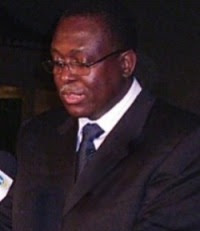
Manuel Vicente has been at the helm of Sonangol and leading the company’s internationalisation for the last ten years. However, in spite of centralising all decisions, he doesn’t go ahead without President Dos Santos’ clearance. Almost every week, Manuel Vicente goes to the presidential palace, in Luanda, to dispatch personally with the President on the most important business of the Angolan most powerful company. This reveals a lot: first, that all strategic decisions of the company, including investments in Portugal, go through José Eduardo dos Santos; second, that Manuel Vicente is a man who has the trust of the politician.

Finally, also in the Novo Jornal, an interview with John Marcum, an American political scientist who is a close observer of Angolan politics since 1962 and was recently in the country to attend a Conference on Politics and Civil Society organised by the Catholic University of Angola:


You once wrote that “Angola was destined to be the experimental field of the desire and power of the post-Vietnam America.” Why Angola?

At independence, the military power had collapsed. There was no perspective of elections, much less of a coalition government. At the same time, there was the Cold War and the question was thus posed: either support one side or the other. For quite a long time I positioned myself publicly against the US support to UNITA or to any other party, because to me an intervention in this country didn’t make any sense. The American policy in relation to Angola, like that of the entire international community, was a huge failure. Later, in 1992, the United Nations supposedly should disarm the MPLA and UNITA forces, create a unique army and organise local elections. However, instead of that, it left the military situation in the open, promoted elections where “the winner took all and the loser took nothing”, and didn’t go ahead with the suffrage at the local level, important to establish “bottom-up” power structures. We all know the consequences.

16 years later, how do you evaluate Angola’s relationship with the international community?

Today the Angolan context is substantially different, although paradoxical. The external factor is not as strong in terms of governance. But there are the effects of the so-called “Dutch disease”, which happens when a country with immense resources is rich from the macro-economic viewpoint , but its richness is irresponsibly managed by those in power (I am not making any specific allegation, that’s what happens in global terms). The US and Europe are very dependent on oil, therefore they do not pressurise the producing countries to change their policies, because they don’t want to “offend” them. But, at the same time, it’s those resources which finance, for instance, the construction of buildings in Luanda and other projects. However, the areas of production must be diversified.

But that’s exactly the government’s official discourse, although, in practice the results are still below expectations.

That’s the opinion of the analysts. Sometimes money speaks louder.

Were these the values the old liberation movements fought for?

At the Accra Conference (the first Conference of African Peoples, in Ghana, which reunited leaders such as Patrice Lumumba and Kwame Nkrumah, in 1958) the delegates were very optimistic in relation to Africa’s capacity to institute truly democratic regimes and avoid civil wars. Nobody expected this underdevelopment and authoritarianism. But there was no tradition of opposition and the European governments, and above all the Portuguese, didn’t develop the population’s analytical capacity. However, if we look retrospectively to the years I’ve been in Angola (1962, 1984,1992, and now), I would say that some things are evolving in a very constructive way, that time will heal the wounds and education will be expanded. Human beings want to be free and that’s what will prevail. But it won’t be easy.

Today’s Jornal de Angola informs of the passing yesterday of Zambian President Levy Mwanawasa
,
at the Parisian hospital where he had been interned since last July after suffering a cerebral thrombosis in Egypt on the eve of a African Union Summit meeting.

Trained as a lawyer, Mwanawasa was the third Zambian President after the country’s independence from Britain in 1964 and the first without links to liberation movements.
According to the country’s constitution, elections are to be held in 90 days to establish a new President.


In the A Capital, journalist Mario Paiva evaluates the forces at presence in the current legislative elections campaign and asks whether the country is facing "aged hopes or vulgar changes":

The performance of the opposition suggests an unpreparedness for a long-run race: while UNITA throws itself to the “consolidation of the electoral markets”, a handful of politicians doesn’t assume any ambitious objective; the vulgarization of “change”, the absence of confrontation of ideas and the lack of political assertiveness only helps to reinforce the banality of the supposed lesser evil: the status quo.
The MPLA, as the situation party, armed itself with an expected luggage: the alleged economic performance of the post-war, insufficient to claim governance efficiency credits but enough to insufflate the common place of the acquired experience and turn hopes even more aged and vague. Three decades of government, mostly under the first Republic, the one-party system and the absolute power, brought about the experience that made the party state a heavy reality in Angola.
To begin with, the governing party was on an advantageous starting position, due to the disproportion of material, financial and human resources, albeit weakened by the prolonged exercise of power, stained by authoritarianism and corruption. A careful propaganda campaign based on the recently attained peace, the multiplicity of public works and the take-off of some younger so-called technocrat executives, among other factors, did the rest.

Still in the same paper, an interview with Fernando Pacheco, president of the Consultative Board of the Angolan NGO ‘Action for the Rural Development and the Environment’ (ADRA):

According to Fernando Pacheco, Third World government officials are more concerned with their access to power and clientelism once they get there than with achieving the Millennium Development Goals (MDGs). He further asserts that, in the Angolan case, such disregard for the MDGs is compounded by the politicians’ lack of awareness of its main items. For him, the MDGs will only start to be seriously debated in Angola when President Eduardo dos Santos decides to talk about them, as happened with the bio-fuels: “The political parties should talk more often about the MDGs. They should incorporate that concern in their programs.”
Asked whether he thought the country could meet the 2015 target year to achieve the MDGs, Fernando Pacheco expressed his scepticism, arguing that it would require a rapid change of government policies in some sectors of the economy to fight poverty: “This is an issue of government ethics and policy. More attention needs to be paid to family agriculture. There is need to create services and access to services can only be guaranteed by the state. It is necessary above all, to improve the living standards of the population. (…) There is need to improve schooling levels and the gender balance, because the more women have access to services, particularly to education, the more able they will be to contribute to GDP and to improve their family’s incomes and living conditions.”

The Novo Jornal reproduces an article first appeared in the Portuguese newspaper Diario Economico, about the expansion of business interests of the Angolan state oil company, Sonangol, in Portugal:

The most powerful Angolan company, Sonangol, already has deciding stakes in some of the biggest Portuguese companies, such as BCP, Galp and Amorim Energia and wants to buy into EDP, PT and ZON, in a strategy led by a discreet and implacable engineer with precious allies, Manuel Vicente. As a result of that strategy, in less than a year, Sonangol became the second biggest stakeholder of Millennium BCP bank, with a 7% stake, which it already announced its intention to increase. Besides the bank, the company has been investing in the main strategic sectors of the Portuguese economy: it controls 15% of Galp (through a 45% stake in Amorim Energy), has a partnership with Portugal Telecom (PT) at Unitel (an Angolan telecommunications operator) and has already expressed interest in entering the energy and natural gas sectors. ZON Multimedia, according to several sources in the market, is the next target.

Manuel Vicente has been at the helm of Sonangol and leading the company’s internationalisation for the last ten years. However, in spite of centralising all decisions, he doesn’t go ahead without President Dos Santos’ clearance. Almost every week, Manuel Vicente goes to the presidential palace, in Luanda, to dispatch personally with the President on the most important business of the Angolan most powerful company. This reveals a lot: first, that all strategic decisions of the company, including investments in Portugal, go through José Eduardo dos Santos; second, that Manuel Vicente is a man who has the trust of the politician.

Finally, also in the Novo Jornal, an interview with John Marcum, an American political scientist who is a close observer of Angolan politics since 1962 and was recently in the country to attend a Conference on Politics and Civil Society organised by the Catholic University of Angola:


You once wrote that “Angola was destined to be the experimental field of the desire and power of the post-Vietnam America.” Why Angola?

At independence, the military power had collapsed. There was no perspective of elections, much less of a coalition government. At the same time, there was the Cold War and the question was thus posed: either support one side or the other. For quite a long time I positioned myself publicly against the US support to UNITA or to any other party, because to me an intervention in this country didn’t make any sense. The American policy in relation to Angola, like that of the entire international community, was a huge failure. Later, in 1992, the United Nations supposedly should disarm the MPLA and UNITA forces, create a unique army and organise local elections. However, instead of that, it left the military situation in the open, promoted elections where “the winner took all and the loser took nothing”, and didn’t go ahead with the suffrage at the local level, important to establish “bottom-up” power structures. We all know the consequences.

16 years later, how do you evaluate Angola’s relationship with the international community?

Today the Angolan context is substantially different, although paradoxical. The external factor is not as strong in terms of governance. But there are the effects of the so-called “Dutch disease”, which happens when a country with immense resources is rich from the macro-economic viewpoint , but its richness is irresponsibly managed by those in power (I am not making any specific allegation, that’s what happens in global terms). The US and Europe are very dependent on oil, therefore they do not pressurise the producing countries to change their policies, because they don’t want to “offend” them. But, at the same time, it’s those resources which finance, for instance, the construction of buildings in Luanda and other projects. However, the areas of production must be diversified.

But that’s exactly the government’s official discourse, although, in practice the results are still below expectations.

That’s the opinion of the analysts. Sometimes money speaks louder.

Were these the values the old liberation movements fought for?

At the Accra Conference (the first Conference of African Peoples, in Ghana, which reunited leaders such as Patrice Lumumba and Kwame Nkrumah, in 1958) the delegates were very optimistic in relation to Africa’s capacity to institute truly democratic regimes and avoid civil wars. Nobody expected this underdevelopment and authoritarianism. But there was no tradition of opposition and the European governments, and above all the Portuguese, didn’t develop the population’s analytical capacity. However, if we look retrospectively to the years I’ve been in Angola (1962, 1984,1992, and now), I would say that some things are evolving in a very constructive way, that time will heal the wounds and education will be expanded. Human beings want to be free and that’s what will prevail. But it won’t be easy.

Wednesday, 13 August 2008

ECHOES FROM THE ANGOLAN PRESS (21)

This week’s articles are all extracted from the Cultural Supplement of Novo Jornal, ‘Mutamba’ (named after Luanda’s main downtown square), which presents this as its ‘picture of the week’:

Their 'person of the week' is Ossanda Liber, a young Angolan film-maker living between Lisbon and Luanda, who owns the company Liber Media Productions. She is about to complete her latest documentary, about Luanda’s popular mega-market “Roque Santeiro”, which she considers her biggest cinematic challenge:

“The ‘Roque Santeiro’ market represents a Stock Exchange of a kind. It used to manage so many millions a day that everything was decided there, including the exchange rate USD-Kwanza.
(…)
Three or four years from now I would like to do two things: first, a magazine for Angolan women, because in Angola the big problem at present is that there’s only women; the men died in the war and now there’s on average 10 women for each man. I believe that Angola will be a country governed by women, they are very present in the family and domestic life and all that would be material for a female publication. Then I would also like to take an acting course, because I was told by a producer friend of mine that I could be a good actress. I don’t know if he was joking or not, but what is certain is that I started to think seriously about it.”

Also featured, an account of the celebrations in Luanda of 45 years of Bonga’s artistic life. One of the country’s major musical references – as a singer, composer, instrumentalist and performer – Bonga distinguishes himself by his closeness to his Angolan cultural roots, in spite of having lived permanently outside the country for the last around forty years:

“Two galas and a show for the youth were more than enough to confirm (if that was still needed) the power of Bonga’s music and the arguments that make him one of the most ‘internationalised’ Angolan musicians. The events were part of the artist’s 45-year musical career, which also included the release of a new record, ‘Bairro’. In the three events, Barceló de Carvalho, or simply Bonga, confirmed that all authentic product must be well consumed. Known as one of the great defenders of Africanity and, in particular, of the musical genre Semba, the musician interacted with the audience through a variety of sounds and conversations. Many attended: just in one of the shows, at ‘Estádio dos Coqueiros’, there were almost 15 thousand fans.”


News as well of a project led by researchers from the Faculty of Science and Technology of the University of Coimbra, Portugal, supported by the economic group ESCOM and coordinated by the Portuguese Ministry of Culture, aimed at the study of unpublished documentation about Angola and the Lunda-Cokwe cultural area in particular:

The project is part of the program of reopening of the Anthropological Museum of Dundo – an important Central Africa research centre in the areas of entomology, archaeology and ethnography, which is internationally known for its collection of
Cokwe art. It is geared toward the investigation, digitalization and conservation of historical documents related to Angola covering about half a century of colonial occupation of the area, namely those of the Cultural Services of the former Company of Diamonds of Angola, Diamang – the initiator of diamonds’ exploration in the country in 1917 and once considered ‘a state within a state’, whose documental estate was acquired by the Museum in 1986 – and of Marie Louise Bastin, a specialist in
Cokwe art.

Finally, echoes of the recent passing of Nobel Prize of Literature Alexander Soljenitsyne – “An anti-soviet who died Russian at 89”:

In a telegram of condolences addressed to the family, President Dmitri Medvedev referred to Soljenitsyne as ‘one of the 20th century most important thinkers, writers and humanists.’ Mikhail Gorbatchev, the father of Perestroika who provoked a political turn in the East and the fall of the Berlin Wall, had already referred to him as ‘a man with a unique destiny who was one of the first to soundly denounce the inhumane character of the Stalinist regime, having faced difficult probes together with millions of his country citizens who experienced the communist concentration camps.’
Having chosen the autobiographical novel as his main vehicle of expression, he wrote ‘The Gulag Archipelago’ and ‘A Day in the Life of Ivan Denissovitch’, based on daily life reports of prisoners, for which he was awarded the Nobel Prize of Literature in 1970. However, he preferred not to go to Stockholm to receive it for fear of not being allowed to travel back to Russia.
But not everything was worthy of a positive evaluation in Soljenitsyne’s life. His support of fascist dictatorships, such as Pinochet’s and Franco’s, cost him tough criticism. Also controversial were his words of approval of the second Tchetchenia war and his calls for the death penalty for the independents in the region.

This week’s articles are all extracted from the Cultural Supplement of Novo Jornal, ‘Mutamba’ (named after Luanda’s main downtown square), which presents this as its ‘picture of the week’:

Their 'person of the week' is Ossanda Liber, a young Angolan film-maker living between Lisbon and Luanda, who owns the company Liber Media Productions. She is about to complete her latest documentary, about Luanda’s popular mega-market “Roque Santeiro”, which she considers her biggest cinematic challenge:

“The ‘Roque Santeiro’ market represents a Stock Exchange of a kind. It used to manage so many millions a day that everything was decided there, including the exchange rate USD-Kwanza.
(…)
Three or four years from now I would like to do two things: first, a magazine for Angolan women, because in Angola the big problem at present is that there’s only women; the men died in the war and now there’s on average 10 women for each man. I believe that Angola will be a country governed by women, they are very present in the family and domestic life and all that would be material for a female publication. Then I would also like to take an acting course, because I was told by a producer friend of mine that I could be a good actress. I don’t know if he was joking or not, but what is certain is that I started to think seriously about it.”

Also featured, an account of the celebrations in Luanda of 45 years of Bonga’s artistic life. One of the country’s major musical references – as a singer, composer, instrumentalist and performer – Bonga distinguishes himself by his closeness to his Angolan cultural roots, in spite of having lived permanently outside the country for the last around forty years:

“Two galas and a show for the youth were more than enough to confirm (if that was still needed) the power of Bonga’s music and the arguments that make him one of the most ‘internationalised’ Angolan musicians. The events were part of the artist’s 45-year musical career, which also included the release of a new record, ‘Bairro’. In the three events, Barceló de Carvalho, or simply Bonga, confirmed that all authentic product must be well consumed. Known as one of the great defenders of Africanity and, in particular, of the musical genre Semba, the musician interacted with the audience through a variety of sounds and conversations. Many attended: just in one of the shows, at ‘Estádio dos Coqueiros’, there were almost 15 thousand fans.”


News as well of a project led by researchers from the Faculty of Science and Technology of the University of Coimbra, Portugal, supported by the economic group ESCOM and coordinated by the Portuguese Ministry of Culture, aimed at the study of unpublished documentation about Angola and the Lunda-Cokwe cultural area in particular:

The project is part of the program of reopening of the Anthropological Museum of Dundo – an important Central Africa research centre in the areas of entomology, archaeology and ethnography, which is internationally known for its collection of
Cokwe art. It is geared toward the investigation, digitalization and conservation of historical documents related to Angola covering about half a century of colonial occupation of the area, namely those of the Cultural Services of the former Company of Diamonds of Angola, Diamang – the initiator of diamonds’ exploration in the country in 1917 and once considered ‘a state within a state’, whose documental estate was acquired by the Museum in 1986 – and of Marie Louise Bastin, a specialist in
Cokwe art.

Finally, echoes of the recent passing of Nobel Prize of Literature Alexander Soljenitsyne – “An anti-soviet who died Russian at 89”:

In a telegram of condolences addressed to the family, President Dmitri Medvedev referred to Soljenitsyne as ‘one of the 20th century most important thinkers, writers and humanists.’ Mikhail Gorbatchev, the father of Perestroika who provoked a political turn in the East and the fall of the Berlin Wall, had already referred to him as ‘a man with a unique destiny who was one of the first to soundly denounce the inhumane character of the Stalinist regime, having faced difficult probes together with millions of his country citizens who experienced the communist concentration camps.’
Having chosen the autobiographical novel as his main vehicle of expression, he wrote ‘The Gulag Archipelago’ and ‘A Day in the Life of Ivan Denissovitch’, based on daily life reports of prisoners, for which he was awarded the Nobel Prize of Literature in 1970. However, he preferred not to go to Stockholm to receive it for fear of not being allowed to travel back to Russia.
But not everything was worthy of a positive evaluation in Soljenitsyne’s life. His support of fascist dictatorships, such as Pinochet’s and Franco’s, cost him tough criticism. Also controversial were his words of approval of the second Tchetchenia war and his calls for the death penalty for the independents in the region.