Wednesday, 13 August 2008

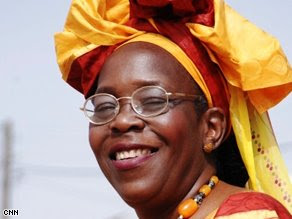
What African Women Need - 1


[Find out here]

[Find out here]

ECHOES FROM THE ANGOLAN PRESS (21)

This week’s articles are all extracted from the Cultural Supplement of Novo Jornal, ‘Mutamba’ (named after Luanda’s main downtown square), which presents this as its ‘picture of the week’:

Their 'person of the week' is Ossanda Liber, a young Angolan film-maker living between Lisbon and Luanda, who owns the company Liber Media Productions. She is about to complete her latest documentary, about Luanda’s popular mega-market “Roque Santeiro”, which she considers her biggest cinematic challenge:

“The ‘Roque Santeiro’ market represents a Stock Exchange of a kind. It used to manage so many millions a day that everything was decided there, including the exchange rate USD-Kwanza.
(…)
Three or four years from now I would like to do two things: first, a magazine for Angolan women, because in Angola the big problem at present is that there’s only women; the men died in the war and now there’s on average 10 women for each man. I believe that Angola will be a country governed by women, they are very present in the family and domestic life and all that would be material for a female publication. Then I would also like to take an acting course, because I was told by a producer friend of mine that I could be a good actress. I don’t know if he was joking or not, but what is certain is that I started to think seriously about it.”

Also featured, an account of the celebrations in Luanda of 45 years of Bonga’s artistic life. One of the country’s major musical references – as a singer, composer, instrumentalist and performer – Bonga distinguishes himself by his closeness to his Angolan cultural roots, in spite of having lived permanently outside the country for the last around forty years:

“Two galas and a show for the youth were more than enough to confirm (if that was still needed) the power of Bonga’s music and the arguments that make him one of the most ‘internationalised’ Angolan musicians. The events were part of the artist’s 45-year musical career, which also included the release of a new record, ‘Bairro’. In the three events, Barceló de Carvalho, or simply Bonga, confirmed that all authentic product must be well consumed. Known as one of the great defenders of Africanity and, in particular, of the musical genre Semba, the musician interacted with the audience through a variety of sounds and conversations. Many attended: just in one of the shows, at ‘Estádio dos Coqueiros’, there were almost 15 thousand fans.”


News as well of a project led by researchers from the Faculty of Science and Technology of the University of Coimbra, Portugal, supported by the economic group ESCOM and coordinated by the Portuguese Ministry of Culture, aimed at the study of unpublished documentation about Angola and the Lunda-Cokwe cultural area in particular:

The project is part of the program of reopening of the Anthropological Museum of Dundo – an important Central Africa research centre in the areas of entomology, archaeology and ethnography, which is internationally known for its collection of
Cokwe art. It is geared toward the investigation, digitalization and conservation of historical documents related to Angola covering about half a century of colonial occupation of the area, namely those of the Cultural Services of the former Company of Diamonds of Angola, Diamang – the initiator of diamonds’ exploration in the country in 1917 and once considered ‘a state within a state’, whose documental estate was acquired by the Museum in 1986 – and of Marie Louise Bastin, a specialist in
Cokwe art.

Finally, echoes of the recent passing of Nobel Prize of Literature Alexander Soljenitsyne – “An anti-soviet who died Russian at 89”:

In a telegram of condolences addressed to the family, President Dmitri Medvedev referred to Soljenitsyne as ‘one of the 20th century most important thinkers, writers and humanists.’ Mikhail Gorbatchev, the father of Perestroika who provoked a political turn in the East and the fall of the Berlin Wall, had already referred to him as ‘a man with a unique destiny who was one of the first to soundly denounce the inhumane character of the Stalinist regime, having faced difficult probes together with millions of his country citizens who experienced the communist concentration camps.’
Having chosen the autobiographical novel as his main vehicle of expression, he wrote ‘The Gulag Archipelago’ and ‘A Day in the Life of Ivan Denissovitch’, based on daily life reports of prisoners, for which he was awarded the Nobel Prize of Literature in 1970. However, he preferred not to go to Stockholm to receive it for fear of not being allowed to travel back to Russia.
But not everything was worthy of a positive evaluation in Soljenitsyne’s life. His support of fascist dictatorships, such as Pinochet’s and Franco’s, cost him tough criticism. Also controversial were his words of approval of the second Tchetchenia war and his calls for the death penalty for the independents in the region.

This week’s articles are all extracted from the Cultural Supplement of Novo Jornal, ‘Mutamba’ (named after Luanda’s main downtown square), which presents this as its ‘picture of the week’:

Their 'person of the week' is Ossanda Liber, a young Angolan film-maker living between Lisbon and Luanda, who owns the company Liber Media Productions. She is about to complete her latest documentary, about Luanda’s popular mega-market “Roque Santeiro”, which she considers her biggest cinematic challenge:

“The ‘Roque Santeiro’ market represents a Stock Exchange of a kind. It used to manage so many millions a day that everything was decided there, including the exchange rate USD-Kwanza.
(…)
Three or four years from now I would like to do two things: first, a magazine for Angolan women, because in Angola the big problem at present is that there’s only women; the men died in the war and now there’s on average 10 women for each man. I believe that Angola will be a country governed by women, they are very present in the family and domestic life and all that would be material for a female publication. Then I would also like to take an acting course, because I was told by a producer friend of mine that I could be a good actress. I don’t know if he was joking or not, but what is certain is that I started to think seriously about it.”

Also featured, an account of the celebrations in Luanda of 45 years of Bonga’s artistic life. One of the country’s major musical references – as a singer, composer, instrumentalist and performer – Bonga distinguishes himself by his closeness to his Angolan cultural roots, in spite of having lived permanently outside the country for the last around forty years:

“Two galas and a show for the youth were more than enough to confirm (if that was still needed) the power of Bonga’s music and the arguments that make him one of the most ‘internationalised’ Angolan musicians. The events were part of the artist’s 45-year musical career, which also included the release of a new record, ‘Bairro’. In the three events, Barceló de Carvalho, or simply Bonga, confirmed that all authentic product must be well consumed. Known as one of the great defenders of Africanity and, in particular, of the musical genre Semba, the musician interacted with the audience through a variety of sounds and conversations. Many attended: just in one of the shows, at ‘Estádio dos Coqueiros’, there were almost 15 thousand fans.”


News as well of a project led by researchers from the Faculty of Science and Technology of the University of Coimbra, Portugal, supported by the economic group ESCOM and coordinated by the Portuguese Ministry of Culture, aimed at the study of unpublished documentation about Angola and the Lunda-Cokwe cultural area in particular:

The project is part of the program of reopening of the Anthropological Museum of Dundo – an important Central Africa research centre in the areas of entomology, archaeology and ethnography, which is internationally known for its collection of
Cokwe art. It is geared toward the investigation, digitalization and conservation of historical documents related to Angola covering about half a century of colonial occupation of the area, namely those of the Cultural Services of the former Company of Diamonds of Angola, Diamang – the initiator of diamonds’ exploration in the country in 1917 and once considered ‘a state within a state’, whose documental estate was acquired by the Museum in 1986 – and of Marie Louise Bastin, a specialist in
Cokwe art.

Finally, echoes of the recent passing of Nobel Prize of Literature Alexander Soljenitsyne – “An anti-soviet who died Russian at 89”:

In a telegram of condolences addressed to the family, President Dmitri Medvedev referred to Soljenitsyne as ‘one of the 20th century most important thinkers, writers and humanists.’ Mikhail Gorbatchev, the father of Perestroika who provoked a political turn in the East and the fall of the Berlin Wall, had already referred to him as ‘a man with a unique destiny who was one of the first to soundly denounce the inhumane character of the Stalinist regime, having faced difficult probes together with millions of his country citizens who experienced the communist concentration camps.’
Having chosen the autobiographical novel as his main vehicle of expression, he wrote ‘The Gulag Archipelago’ and ‘A Day in the Life of Ivan Denissovitch’, based on daily life reports of prisoners, for which he was awarded the Nobel Prize of Literature in 1970. However, he preferred not to go to Stockholm to receive it for fear of not being allowed to travel back to Russia.
But not everything was worthy of a positive evaluation in Soljenitsyne’s life. His support of fascist dictatorships, such as Pinochet’s and Franco’s, cost him tough criticism. Also controversial were his words of approval of the second Tchetchenia war and his calls for the death penalty for the independents in the region.

Tuesday, 12 August 2008

ISAAC HAYES (R.I.P.)


Humanity got poorer


Soulsville - Isaac Hayes

[BIO AND OBITUARY]


Humanity got poorer


Soulsville - Isaac Hayes

[BIO AND OBITUARY]

E JA' K'ESTAMOS EM MARE' DE (DES)KONSTRUCOES...

[AKI]
[AKI]

Sunday, 10 August 2008

OH XENTE!

O Kinaxixe…

Vai virar Quinaxixe!

Mas nao se xateiem muito nao (pelo menos nao mais do ke eu ja’ me xatiei desde ke esses planos foram anunciados ha’ varios anos – xaticia essa ke manifestei em eskrito publikado algures…) porke:

… assim ke dizem ke as novas torres a beira-mar plantadas, komo essa ai da Baia, vao ruir porke o mar gosta de reklamar o ke e’ seu, akela Kianda do Kinaxixi ke nunka ke ainda fez ruir nenhum predio ali no largo – nem o ‘meu’ ke fika mesmo ao lado da kacimba dela e onde ke ainda tem la’ mo kubiku ke me kassumbularam kum ele nuns tuga bue' malaikes e buerere' karrulas ainda por cima e ke agora dizem ke tem la’ uns xinokas (ja’ viram so’ o mo azar? Esses anos todos se eles me pagassem so' mbora mo kumbu essa hora eu ja’ ke podia subir tambem na torre da Baia, ne’? Pelo menos ate' ela ruir...); nem akele eskeleto ke lhe plantaram mesmo em cima da kacimba dela e ke por isso mesmo ela nunka ke deixou ke lhe kompletassem – num sei se ela vai deixar esse novo Quinaxixe dai vingar (ou sera’ Quinachiche?)… num sei nao!

Mas se kalhar essa e' uma maka pra Kianda e a Mma Nzinga resolverem la' no Kinaxixi delas, ne'?

[Mais dikas aki e aki]
O Kinaxixe…

Vai virar Quinaxixe!

Mas nao se xateiem muito nao (pelo menos nao mais do ke eu ja’ me xatiei desde ke esses planos foram anunciados ha’ varios anos – xaticia essa ke manifestei em eskrito publikado algures…) porke:

… assim ke dizem ke as novas torres a beira-mar plantadas, komo essa ai da Baia, vao ruir porke o mar gosta de reklamar o ke e’ seu, akela Kianda do Kinaxixi ke nunka ke ainda fez ruir nenhum predio ali no largo – nem o ‘meu’ ke fika mesmo ao lado da kacimba dela e onde ke ainda tem la’ mo kubiku ke me kassumbularam kum ele nuns tuga bue' malaikes e buerere' karrulas ainda por cima e ke agora dizem ke tem la’ uns xinokas (ja’ viram so’ o mo azar? Esses anos todos se eles me pagassem so' mbora mo kumbu essa hora eu ja’ ke podia subir tambem na torre da Baia, ne’? Pelo menos ate' ela ruir...); nem akele eskeleto ke lhe plantaram mesmo em cima da kacimba dela e ke por isso mesmo ela nunka ke deixou ke lhe kompletassem – num sei se ela vai deixar esse novo Quinaxixe dai vingar (ou sera’ Quinachiche?)… num sei nao!

Mas se kalhar essa e' uma maka pra Kianda e a Mma Nzinga resolverem la' no Kinaxixi delas, ne'?

[Mais dikas aki e aki]

BERNIE MAC (R.I.P.)

My favourite Bernie’s comedy scene:

He says to an Irish ‘baddy’ who would only let Irish people into their premises:

“What you mean I’m not Irish?!
I and my family came to America in boats!
Most of our lives all we had to eat was one potato a day! What do you mean I’m not Irish!!!”

Well, the Irish 'baddy' just let him in!
(in Charlie’s Angels: Full Throttle, 2003)

Rest in peace Bernie.

My favourite Bernie’s comedy scene:

He says to an Irish ‘baddy’ who would only let Irish people into their premises:

“What you mean I’m not Irish?!
I and my family came to America in boats!
Most of our lives all we had to eat was one potato a day! What do you mean I’m not Irish!!!”

Well, the Irish 'baddy' just let him in!
(in Charlie’s Angels: Full Throttle, 2003)

Rest in peace Bernie.

Friday, 8 August 2008

Thursday, 7 August 2008

ECHOES FROM THE ANGOLAN PRESS (20.a)

Correction (to the note below): On a second thought, I figured that doing two parts of this series would be just too demanding on my time and availability. So, what I decided instead was to do just one take with summaries in English. This would serve both Portuguese and English readers, since the original articles are in Portuguese anyway.

***
From now on, and as far as possible, I will be presenting this series in two parts: one with summaries in English (a) of some of the articles featured and other, as usual, in Portuguese (b).

***

Today the Jornal de Angola publishes President Jose Eduardo dos Santos’s address to the nation to mark the beginning of the campaign for the legislative elections:

Today marks the beginning of the election campaign by the political parties and party coalitions that will dispute the 220 seats in the National Assembly at the legislative elections to take place on the 5th September 2008. (…) This moment represents an unprecedented step towards the normalisation of the political and institutional life in the country and the strengthening of the legitimate Democratic State of Rights. From now on, the legislative elections will be organised regularly, with periodical renewal every four years, according to the Constitutional Law. We fought hard to get to this stage and all, without exception, made sacrifices for our country’s stability and territorial integrity.
(…)
Free, fair and competitive elections require the rejection of all forms of intimidation, insult, violation of rights and political destabilisation. I call on all citizens, political parties and party coalitions to maintain a responsible standing, respect the law and the established order, so that the election campaign and the electoral act take place within high standards of civility. Angola can give an example to our continent and the world at large, about how to hold democratic, free and transparent elections. We must not yield to provocations. We will frustrate the predictions of those who, without any basis, say that we will live a climate of insecurity and destabilization. The forces of Public Order are taking all the necessary steps to ensure tranquillity and security throughout the electoral process.
(…)
There is no reason for us to foster any pessimistic or defeatist thoughts. We are a peaceful and freedom-loving people. A people conscious that all great achievements in the political, economic and social domain are only possible with peace, stability and social understanding. The campaign must not be marred by violence. In this competition there are no enemies, just political adversaries, with different political programs and proposals, which will try to obtain the highest number of votes to win the power and exercise it with legitimacy.
(…)
If the political parties in their electoral activities are to respect the legal norms in vigour, we will all win and contribute to the construction of the democratic country of our dreams. I am sure that that is how it will be and that Angola will win.
Viva Angola!

Keneth Muangi, Semanario Angolense’s (SA) correspondent in Johannesburg, writes, in “JES extends hand to Mbeki”, about how the Zimbabwean crisis acted as a bridge to bring Angola and South Africa – two major regional powers often at odds on key policy issues – and their respective Presidents – often perceived as personal rivals – closer to each other and to a clearer standing on their respective roles vis-à-vis the resolution of that crisis:

“(…) For some time Angolan and South African diplomats had been making an effort to reach out to each other. That effort paid off at the AU Summit in Sharm El Sheik, Egypt, when the Angolan delegation indicated that Mbeki’s role as sole mediator (of the Zimbabwean crisis) would be respected, even if against MDC president Morgan Tsivangirai’s will. According to our sources, it was partly because of that stance by Angola that the MDC, whose president was recently received in Luanda by Jose’ Eduardo dos Santos, gave up on its demand that the mediation be enlarged to other countries: “Morgan knows that Jose’ Eduardo dos Santos is someone with whom he can talk.”
(…)
Meanwhile, last week, Joao Miranda, Angolan Foreign Affairs Minister, called on the EU to lift all sanctions on Zimbabwe, arguing that “when the main protagonists are negotiating, all obstacles likely to endanger the course of the negotiating process must be removed. Therefore, the European Union should lift all sanctions hanging over Zimbabwe and its leaders.”
The A Capital announces that, for the first time in their political history, Civil Society Organisations will act as observers in the upcoming legislative elections:

“(…) To that aim, the following organisations joined forces to form an Electoral Observatory: Search for Common Ground (SFCG), Plataforma Eleitoral, Universidade Católica de Angola (UCAN), Development Workshop, Open Society, Centro Nacional de Aconselhamento (NCC), Associação Justiça Paz e Democracia (AJPD) e a Rede Eleitoral Angola.”

Finally, Wilson Dada, a veteran Angolan journalist recently turned blogger, in “We, Mr. Keyros' Janitors”, joins other Angolan journalists in expressing outrage at racially insulting articles in the Jornal de Angola, addressed to another Angolan journalist, Victor Silva, the director of Novo Jornal, by Portuguese journalist Artur Queiroz, recently returned to Angola after more than three decades:

“Yes, it is us, the janitors, or the boys, as they used to like (and still like) to call us, who started little by little entering and gradually darkening the editorial rooms, which, meanwhile, were becoming deserted, because they, the “mr. journalists”, had decided to return to where they’d come from.
This happened more than 30 years ago when all here started to change and they, the “mr. journalists”, also started to pack their boxes, trunks and containers because they started to fear the chaos coming from the jungles in the point of the liberating fusils of the “manos kambutas” (guerrillas).
(…)
We (thus) do not criticise anyone that went away to greener pastures. However, we cannot accept, in any way whatsoever, to be condemned for having stayed here in our own land and for embracing journalism as a profession, without having to ask permission to the “senhores” that went away. Even more difficult to tolerate is that one of these “retornados” now with statute of “regressado”, comes here, more than 30 years later, to insult, or try to diminish us, with inconsistent, untrue and dishonest references made all the more grievous by their profoundly racist overtones, considering the value that was (not) given to the figure of the janitor in the colonial dictionary.

Correction (to the note below): On a second thought, I figured that doing two parts of this series would be just too demanding on my time and availability. So, what I decided instead was to do just one take with summaries in English. This would serve both Portuguese and English readers, since the original articles are in Portuguese anyway.

***
From now on, and as far as possible, I will be presenting this series in two parts: one with summaries in English (a) of some of the articles featured and other, as usual, in Portuguese (b).

***

Today the Jornal de Angola publishes President Jose Eduardo dos Santos’s address to the nation to mark the beginning of the campaign for the legislative elections:

Today marks the beginning of the election campaign by the political parties and party coalitions that will dispute the 220 seats in the National Assembly at the legislative elections to take place on the 5th September 2008. (…) This moment represents an unprecedented step towards the normalisation of the political and institutional life in the country and the strengthening of the legitimate Democratic State of Rights. From now on, the legislative elections will be organised regularly, with periodical renewal every four years, according to the Constitutional Law. We fought hard to get to this stage and all, without exception, made sacrifices for our country’s stability and territorial integrity.
(…)
Free, fair and competitive elections require the rejection of all forms of intimidation, insult, violation of rights and political destabilisation. I call on all citizens, political parties and party coalitions to maintain a responsible standing, respect the law and the established order, so that the election campaign and the electoral act take place within high standards of civility. Angola can give an example to our continent and the world at large, about how to hold democratic, free and transparent elections. We must not yield to provocations. We will frustrate the predictions of those who, without any basis, say that we will live a climate of insecurity and destabilization. The forces of Public Order are taking all the necessary steps to ensure tranquillity and security throughout the electoral process.
(…)
There is no reason for us to foster any pessimistic or defeatist thoughts. We are a peaceful and freedom-loving people. A people conscious that all great achievements in the political, economic and social domain are only possible with peace, stability and social understanding. The campaign must not be marred by violence. In this competition there are no enemies, just political adversaries, with different political programs and proposals, which will try to obtain the highest number of votes to win the power and exercise it with legitimacy.
(…)
If the political parties in their electoral activities are to respect the legal norms in vigour, we will all win and contribute to the construction of the democratic country of our dreams. I am sure that that is how it will be and that Angola will win.
Viva Angola!

Keneth Muangi, Semanario Angolense’s (SA) correspondent in Johannesburg, writes, in “JES extends hand to Mbeki”, about how the Zimbabwean crisis acted as a bridge to bring Angola and South Africa – two major regional powers often at odds on key policy issues – and their respective Presidents – often perceived as personal rivals – closer to each other and to a clearer standing on their respective roles vis-à-vis the resolution of that crisis:

“(…) For some time Angolan and South African diplomats had been making an effort to reach out to each other. That effort paid off at the AU Summit in Sharm El Sheik, Egypt, when the Angolan delegation indicated that Mbeki’s role as sole mediator (of the Zimbabwean crisis) would be respected, even if against MDC president Morgan Tsivangirai’s will. According to our sources, it was partly because of that stance by Angola that the MDC, whose president was recently received in Luanda by Jose’ Eduardo dos Santos, gave up on its demand that the mediation be enlarged to other countries: “Morgan knows that Jose’ Eduardo dos Santos is someone with whom he can talk.”
(…)
Meanwhile, last week, Joao Miranda, Angolan Foreign Affairs Minister, called on the EU to lift all sanctions on Zimbabwe, arguing that “when the main protagonists are negotiating, all obstacles likely to endanger the course of the negotiating process must be removed. Therefore, the European Union should lift all sanctions hanging over Zimbabwe and its leaders.”
The A Capital announces that, for the first time in their political history, Civil Society Organisations will act as observers in the upcoming legislative elections:

“(…) To that aim, the following organisations joined forces to form an Electoral Observatory: Search for Common Ground (SFCG), Plataforma Eleitoral, Universidade Católica de Angola (UCAN), Development Workshop, Open Society, Centro Nacional de Aconselhamento (NCC), Associação Justiça Paz e Democracia (AJPD) e a Rede Eleitoral Angola.”

Finally, Wilson Dada, a veteran Angolan journalist recently turned blogger, in “We, Mr. Keyros' Janitors”, joins other Angolan journalists in expressing outrage at racially insulting articles in the Jornal de Angola, addressed to another Angolan journalist, Victor Silva, the director of Novo Jornal, by Portuguese journalist Artur Queiroz, recently returned to Angola after more than three decades:

“Yes, it is us, the janitors, or the boys, as they used to like (and still like) to call us, who started little by little entering and gradually darkening the editorial rooms, which, meanwhile, were becoming deserted, because they, the “mr. journalists”, had decided to return to where they’d come from.
This happened more than 30 years ago when all here started to change and they, the “mr. journalists”, also started to pack their boxes, trunks and containers because they started to fear the chaos coming from the jungles in the point of the liberating fusils of the “manos kambutas” (guerrillas).
(…)
We (thus) do not criticise anyone that went away to greener pastures. However, we cannot accept, in any way whatsoever, to be condemned for having stayed here in our own land and for embracing journalism as a profession, without having to ask permission to the “senhores” that went away. Even more difficult to tolerate is that one of these “retornados” now with statute of “regressado”, comes here, more than 30 years later, to insult, or try to diminish us, with inconsistent, untrue and dishonest references made all the more grievous by their profoundly racist overtones, considering the value that was (not) given to the figure of the janitor in the colonial dictionary.

Wednesday, 6 August 2008

ECOS DA IMPRENSA ANGOLANA (20.b)

O SA apresenta os partidos concorrentes as legislativas, defendendo que
Votar é melhor que o «não valapenismo»...


Dadas as circunstâncias criadas pelo que pode estar a ser visto como falta de alternativas credíveis, muitos eleitores podem ter sido já tomados pela atitude resignada de que não vale a pena votar porque nada vai mudar, e o MPLA vai continuar na mesma, com os mesmos defeitos e virtudes. A relação que alguns dos partidos agora perfilados mantém com o dinheiro também pode contribuir para essa atitude dos eleitores, vezes sem conta levados a concluir que atingindo o poder, as lideranças de outras organizações políticas estariam mais preocupados com o seu enriquecimento fácil e rápido do que com a governação.
Então, esse tipo de eleitor decide deixar as coisas como estão, sem, contudo, as caucionar com o seu voto. Em teoria, a verdade é outra, bem diferente. Teoricamente tem-se que ao votar, o eleitor está a responsabilizar de forma expressa aqueles que receberam a sua confiança nas urnas, obrigando-os a cumprir as promessas e a aplicar os programas que propuseram.

... e continuou a sua serie sobre os programas eleitorais do MPLA e da UNITA:


A despeito de qualquer polemicazinha, prosseguimos esta semana com o nosso vôo rasante sobre os ninhos de cucos que são os Programas de Governo dos dois gigantes da política nacional. A intenção era abordar agora o que ambos propõem em matéria de Reforma da Justiça e Previdência Social. Mas o disse-que-não-disse em torno da política económica fez-nos optar por ir por um atalho e chamar o tópico que pretendíamos que ficasse para o fim. Afinal, hoje em dia – diz-nos a «realpolitik» – a economia é aquela bola que saltita e comanda o mundo. Portanto, é política económica no cardápio. Chamamos a atenção, contudo, para o facto de apenas termos os comentários de dois corajosos médicos e intelectuais, que também são dirigentes da UNITA: Xavier Jaime e Maurilio Luiele. Do MPLA, não há ninguém, facto que, à primeira vista, coloca o Semanário Angolense numa situação de certo modo desconfortável e sob suspeita de algum favorecimento à UNITA.

Entretanto, em entrevista ao Novo Jornal, o Bispo da Igreja Metodista Emilio de Carvalho afirmava que “Eleições não mudarão a realidade do povo angolano”


Autor, tradutor e escritor, o Bispo Emílio de Carvalho dá a sua opinião sobre a política em Angola e fala sobre a Igreja Metodista que dirigiu ao longo de 28 anos. Hoje, aposentado, ainda marca a sua influência na sociedade.

Voltando ao SA, Emilio Londa defende um 'plano de desenvolvimento para a província do Zaire’


A província do Zaire é, em Angola, a que possui o mais alto índice de produção. Do total da produção petrolífera de 2006, 65% proveio dos blocos petrolíferos localizados nesta província (Blocos 2, 3, 15, 17, e em onshore). Para além de petróleo, nesta província desenvolvem-se outras actividades primárias, tais como a agricultura e a pesca. Porém, em escala insignificante. Segundo pesquisas da INDIAMA, são grandes as probabilidades de existir nesta província, em quantidades económicas, Kimberlitos de diamantes. Entretanto, contrariando a pujança mineral do território, os formuladores de políticas (tanto a nível local, quanto central) não têm tido sucesso na transformação deste status quo económico. A província apresenta indicadores extremamente baixos em todas as dimensões económico sociais, podendo contar-se em índices de escolaridade muito abaixo da média do país, níveis altos de pobreza e de desemprego, imigração descontrolada com origem na República Democrática do Congo, altas taxas de prevalência do AIDS, etc.

Aderito Miranda prossegue a sua serie sobre Cultura Bantu:


A teoria do conhecimento é um capítulo da Filosofia. Ela levanta a questão de saber se é possível conhecer, ou seja, se o homem conhece as coisas neste mundo ou se num outro mundo, numa vida anterior a esta e já conheceu tudo o que neste mundo existe e agora apenas está a reconhecer, não havendo conhecimento no verdadeiro sentido da palavra. Os que defendem que é possível conhecer dividem-se em dois grupos.
(…)
Os filósofos que defendem que é possível conhecer tais gestos são designados por gnosticistas, os que defendem o contrário são os agnósticos. Uma terceira corrente acha que o homem não tem conhecimentos inatos. Para ela, a mente do homem ao nascer está limpa de conhecimentos. Esta teoria é chamada teoria da tábua rasa. Vejamos a posição do bantu sobre essas questões.

Luis Kandjimbo apresenta mais um capitulo da sua resenha sobre tendencias e escolas na Filosofia Africana:


O subtítulo deste texto podia ser redigido de modo a remeter para o principal tema de que se ocupa o filósofo congolês Ngoma-Binda no seu livro publicado em 2004, Philosophie et Pouvoir Politique en Afrique (Filosofia e Poder Político em África). P. Ngoma-Binda é cidadão da República Democrática do Congo.Professor da Universidade de Kinshasa. Fundador e Director Geral do Instituto de Formação e de Estudos Políticos. Foi bolseiro de diversas instituições europeias e americanas. Tem vários livros publicados.
Ao situar no centro da sua reflexão o poder político, tópico que goza primazia numa filosofia de natureza inflexional, o filósofo congolês vai criando vários círculos concêntricos em que se inscrevem elementos que garantem a consistência de um pensamento cujos pilares são os princípios da teoria inflexional, já apresentados no texto anterior.


E, finalmente:


O SA apresenta os partidos concorrentes as legislativas, defendendo que
Votar é melhor que o «não valapenismo»...


Dadas as circunstâncias criadas pelo que pode estar a ser visto como falta de alternativas credíveis, muitos eleitores podem ter sido já tomados pela atitude resignada de que não vale a pena votar porque nada vai mudar, e o MPLA vai continuar na mesma, com os mesmos defeitos e virtudes. A relação que alguns dos partidos agora perfilados mantém com o dinheiro também pode contribuir para essa atitude dos eleitores, vezes sem conta levados a concluir que atingindo o poder, as lideranças de outras organizações políticas estariam mais preocupados com o seu enriquecimento fácil e rápido do que com a governação.
Então, esse tipo de eleitor decide deixar as coisas como estão, sem, contudo, as caucionar com o seu voto. Em teoria, a verdade é outra, bem diferente. Teoricamente tem-se que ao votar, o eleitor está a responsabilizar de forma expressa aqueles que receberam a sua confiança nas urnas, obrigando-os a cumprir as promessas e a aplicar os programas que propuseram.

... e continuou a sua serie sobre os programas eleitorais do MPLA e da UNITA:


A despeito de qualquer polemicazinha, prosseguimos esta semana com o nosso vôo rasante sobre os ninhos de cucos que são os Programas de Governo dos dois gigantes da política nacional. A intenção era abordar agora o que ambos propõem em matéria de Reforma da Justiça e Previdência Social. Mas o disse-que-não-disse em torno da política económica fez-nos optar por ir por um atalho e chamar o tópico que pretendíamos que ficasse para o fim. Afinal, hoje em dia – diz-nos a «realpolitik» – a economia é aquela bola que saltita e comanda o mundo. Portanto, é política económica no cardápio. Chamamos a atenção, contudo, para o facto de apenas termos os comentários de dois corajosos médicos e intelectuais, que também são dirigentes da UNITA: Xavier Jaime e Maurilio Luiele. Do MPLA, não há ninguém, facto que, à primeira vista, coloca o Semanário Angolense numa situação de certo modo desconfortável e sob suspeita de algum favorecimento à UNITA.

Entretanto, em entrevista ao Novo Jornal, o Bispo da Igreja Metodista Emilio de Carvalho afirmava que “Eleições não mudarão a realidade do povo angolano”


Autor, tradutor e escritor, o Bispo Emílio de Carvalho dá a sua opinião sobre a política em Angola e fala sobre a Igreja Metodista que dirigiu ao longo de 28 anos. Hoje, aposentado, ainda marca a sua influência na sociedade.

Voltando ao SA, Emilio Londa defende um 'plano de desenvolvimento para a província do Zaire’


A província do Zaire é, em Angola, a que possui o mais alto índice de produção. Do total da produção petrolífera de 2006, 65% proveio dos blocos petrolíferos localizados nesta província (Blocos 2, 3, 15, 17, e em onshore). Para além de petróleo, nesta província desenvolvem-se outras actividades primárias, tais como a agricultura e a pesca. Porém, em escala insignificante. Segundo pesquisas da INDIAMA, são grandes as probabilidades de existir nesta província, em quantidades económicas, Kimberlitos de diamantes. Entretanto, contrariando a pujança mineral do território, os formuladores de políticas (tanto a nível local, quanto central) não têm tido sucesso na transformação deste status quo económico. A província apresenta indicadores extremamente baixos em todas as dimensões económico sociais, podendo contar-se em índices de escolaridade muito abaixo da média do país, níveis altos de pobreza e de desemprego, imigração descontrolada com origem na República Democrática do Congo, altas taxas de prevalência do AIDS, etc.

Aderito Miranda prossegue a sua serie sobre Cultura Bantu:


A teoria do conhecimento é um capítulo da Filosofia. Ela levanta a questão de saber se é possível conhecer, ou seja, se o homem conhece as coisas neste mundo ou se num outro mundo, numa vida anterior a esta e já conheceu tudo o que neste mundo existe e agora apenas está a reconhecer, não havendo conhecimento no verdadeiro sentido da palavra. Os que defendem que é possível conhecer dividem-se em dois grupos.
(…)
Os filósofos que defendem que é possível conhecer tais gestos são designados por gnosticistas, os que defendem o contrário são os agnósticos. Uma terceira corrente acha que o homem não tem conhecimentos inatos. Para ela, a mente do homem ao nascer está limpa de conhecimentos. Esta teoria é chamada teoria da tábua rasa. Vejamos a posição do bantu sobre essas questões.

Luis Kandjimbo apresenta mais um capitulo da sua resenha sobre tendencias e escolas na Filosofia Africana:


O subtítulo deste texto podia ser redigido de modo a remeter para o principal tema de que se ocupa o filósofo congolês Ngoma-Binda no seu livro publicado em 2004, Philosophie et Pouvoir Politique en Afrique (Filosofia e Poder Político em África). P. Ngoma-Binda é cidadão da República Democrática do Congo.Professor da Universidade de Kinshasa. Fundador e Director Geral do Instituto de Formação e de Estudos Políticos. Foi bolseiro de diversas instituições europeias e americanas. Tem vários livros publicados.
Ao situar no centro da sua reflexão o poder político, tópico que goza primazia numa filosofia de natureza inflexional, o filósofo congolês vai criando vários círculos concêntricos em que se inscrevem elementos que garantem a consistência de um pensamento cujos pilares são os princípios da teoria inflexional, já apresentados no texto anterior.


E, finalmente:


Tuesday, 5 August 2008

SPEAKING OF HIPPOS…

As I finally managed to get rid of all my (let me be frank about it: less than rewarding in every conceivable sense - quite the contrary!) commitments with other outlets in the blogosphere, I gained now some time to get back to basics as far as my normal, simple, life is concerned: e.g. get to revisit my long neglected 'African files' and some of the pictures in them…

I took these pictures on some lazy afternoon somewhere in Swaziland, in 2001, during a break from my work on the establishment of the regional legal and institutional framework for the implementation of the SADC Trade Protocol.
To me, they say it all about these gentle giants: right there and then I fell in love with them!

That they've come to get such a damning reputation in recent times, thanks to the hasty followers of some economist – who, in fact might be blissfully unaware of all the nonsense being generated by some of his ideas - is something that totally escapes me and, I have no doubt, these innocent pachyderms as well…

Apparently, they are ‘accused’ of being ‘complacent’, ‘lazy’ and of ‘always blaming all the evils plaguing their present lives on bad old colonialism’… On which they are pitched against the 'cheetahs' (I actually took some pictures of these in Botswana, which I still need to find, – they were caged, though…) which apparently behave as their ‘antipodes’! To such extent that some of the most ‘red-blooded’ among those hasty followers of said economist got to self-proclaiming themselves ‘cheetahs’ and the only hope for the future of Africa, while singing all the way to the bank or to the bright new dawns they promise to bring to the continent from far afield, whichever comes first, #we are the world, we are the children#… Oh, how they get me moved, amused, and bemused!

Seriously, though, while I am not sure if this is true of the said economist (just as I am not sure if Mandela is fully aware that many understand his legacy as meaning to give full rein to the most despicable forms of white racism in the name of forgiveness…), what I have no doubt about is that some of his followers seem to have a poor, if any, grip on the path-dependent nature of Economic Development on History, as Nobel Prize of Economics Douglass North has so clearly shown …

The madness got to such a point that these worriers and young turks, in their belief that they are indeed 'cheetahs' (when to me all they manage to look like is hyenas – no offence intended to these…), got to leaping over history, science and rationality altogether and to confusing (...just as they confuse 'diplomacy' with 'subservience'...) any argument based on Economic History with “blaming colonialism for all the evils plaguing Africa in the present”, for which they have no qualms in trying “by all means necessary” to silence whoever dares to speak about African economic development in historical perspective… How appropriate and convenient this is for the contemporary versions of the “white man’s burden” and his “loyal servants”, isn’t it?!

However, as such “dedicated followers of fashion” as they are, some seem to start seeing some “profit” in reading historical narratives about even such until recently “damned and godforsaken territory” as Zimbabwe… How interesting, isn’t it?! Could it be that this sudden “revolution” has something to do with the recently signed framework agreement between the two contending parties in that country, about which they’ve been so conspicuously silent?!

Anyway, whatever happens next (... they might even get to such unthinkable things as start supporting Obama, who knows?...), I’ll keep my faith in my hippos! You see, just like me, in spite of their huge eyes, they are often blind to all the evil surrounding them and, while being as unforgetful as elephants, they are so forgiving...


As I finally managed to get rid of all my (let me be frank about it: less than rewarding in every conceivable sense - quite the contrary!) commitments with other outlets in the blogosphere, I gained now some time to get back to basics as far as my normal, simple, life is concerned: e.g. get to revisit my long neglected 'African files' and some of the pictures in them…

I took these pictures on some lazy afternoon somewhere in Swaziland, in 2001, during a break from my work on the establishment of the regional legal and institutional framework for the implementation of the SADC Trade Protocol.
To me, they say it all about these gentle giants: right there and then I fell in love with them!

That they've come to get such a damning reputation in recent times, thanks to the hasty followers of some economist – who, in fact might be blissfully unaware of all the nonsense being generated by some of his ideas - is something that totally escapes me and, I have no doubt, these innocent pachyderms as well…

Apparently, they are ‘accused’ of being ‘complacent’, ‘lazy’ and of ‘always blaming all the evils plaguing their present lives on bad old colonialism’… On which they are pitched against the 'cheetahs' (I actually took some pictures of these in Botswana, which I still need to find, – they were caged, though…) which apparently behave as their ‘antipodes’! To such extent that some of the most ‘red-blooded’ among those hasty followers of said economist got to self-proclaiming themselves ‘cheetahs’ and the only hope for the future of Africa, while singing all the way to the bank or to the bright new dawns they promise to bring to the continent from far afield, whichever comes first, #we are the world, we are the children#… Oh, how they get me moved, amused, and bemused!

Seriously, though, while I am not sure if this is true of the said economist (just as I am not sure if Mandela is fully aware that many understand his legacy as meaning to give full rein to the most despicable forms of white racism in the name of forgiveness…), what I have no doubt about is that some of his followers seem to have a poor, if any, grip on the path-dependent nature of Economic Development on History, as Nobel Prize of Economics Douglass North has so clearly shown …

The madness got to such a point that these worriers and young turks, in their belief that they are indeed 'cheetahs' (when to me all they manage to look like is hyenas – no offence intended to these…), got to leaping over history, science and rationality altogether and to confusing (...just as they confuse 'diplomacy' with 'subservience'...) any argument based on Economic History with “blaming colonialism for all the evils plaguing Africa in the present”, for which they have no qualms in trying “by all means necessary” to silence whoever dares to speak about African economic development in historical perspective… How appropriate and convenient this is for the contemporary versions of the “white man’s burden” and his “loyal servants”, isn’t it?!

However, as such “dedicated followers of fashion” as they are, some seem to start seeing some “profit” in reading historical narratives about even such until recently “damned and godforsaken territory” as Zimbabwe… How interesting, isn’t it?! Could it be that this sudden “revolution” has something to do with the recently signed framework agreement between the two contending parties in that country, about which they’ve been so conspicuously silent?!

Anyway, whatever happens next (... they might even get to such unthinkable things as start supporting Obama, who knows?...), I’ll keep my faith in my hippos! You see, just like me, in spite of their huge eyes, they are often blind to all the evil surrounding them and, while being as unforgetful as elephants, they are so forgiving...


Saturday, 2 August 2008

BE MY GUEST! (IV. VERONICA HENRY)

Women of The African Diaspora

Women. We are the nurturers, the supporters, the givers. We are mothers, daughters, sisters, friends and mates. We are the beginning.It is in recognition of these most basic facts that I ponder our role as women of the African Diaspora.


In discovering my own shared African Ancestry with the people of Sierra Leone, my partner and I started the ‘My African Diaspora’ project.

We started this project because we recognized the strength of a united Diaspora - the combined knowledge, skills, history */and/* the struggles that bind us together, no matter how far and wide our blood has scattered. We hope to start a movement - one that will see us once again a united people. A people that can and will flourish if given the proper platform to bridge some of the gaps that exist between us today. I firmly believe that the women of the African Diaspora are not only critical to the success of this movement, but may in fact be the primary initiators. For without us, as the backbones of our societies, and also the first teacher of our children, no change can occur. We should stand side by side with our men - not behind in ensuring the success and the re-connection of our current and future generations.

What will change look like? I'm not altogether sure, but I believe communication is key. As a descendant of slaves in America , I can speak firsthand to the damaging effects of slavery that so many of us still suffer today. The negative attitudes about Africa have been fed to us since the day we stepped off (or rather, were dragged off) the boat. Some of those attitudes linger. And they must be addressed and abolished.In that same respect, it isn't difficult to believe that some of my brothers and sisters in the African Diaspora may have been fed similarly negative and erroneous images and information about African Americans. They too, must be confronted and dispelled. The truth is, while we do have issues - probably issues that are more alike than we know, only */we/* have the power to address them.

How do we start the movement? Same answer - communication. Reach out and talk to someone outside of your comfort zone. Someone in another part of the world that nonetheless has the same skin and the same blood as you. Teach, destroy the myths and become involved. Barter, trade and support black business, educate our children, visit another part of the world and see things for yourself. By inviting guest bloggers into her domain, our host at Koluki has already begun to do her part.I call on my sisters of the African Diaspora to join me and start the movement that will see us again united, again strong and again powerful.

Veronica Henry aka Exquisitely Black


[Veronica bloggs @ My African Diaspora]
Women of The African Diaspora

Women. We are the nurturers, the supporters, the givers. We are mothers, daughters, sisters, friends and mates. We are the beginning.It is in recognition of these most basic facts that I ponder our role as women of the African Diaspora.


In discovering my own shared African Ancestry with the people of Sierra Leone, my partner and I started the ‘My African Diaspora’ project.

We started this project because we recognized the strength of a united Diaspora - the combined knowledge, skills, history */and/* the struggles that bind us together, no matter how far and wide our blood has scattered. We hope to start a movement - one that will see us once again a united people. A people that can and will flourish if given the proper platform to bridge some of the gaps that exist between us today. I firmly believe that the women of the African Diaspora are not only critical to the success of this movement, but may in fact be the primary initiators. For without us, as the backbones of our societies, and also the first teacher of our children, no change can occur. We should stand side by side with our men - not behind in ensuring the success and the re-connection of our current and future generations.

What will change look like? I'm not altogether sure, but I believe communication is key. As a descendant of slaves in America , I can speak firsthand to the damaging effects of slavery that so many of us still suffer today. The negative attitudes about Africa have been fed to us since the day we stepped off (or rather, were dragged off) the boat. Some of those attitudes linger. And they must be addressed and abolished.In that same respect, it isn't difficult to believe that some of my brothers and sisters in the African Diaspora may have been fed similarly negative and erroneous images and information about African Americans. They too, must be confronted and dispelled. The truth is, while we do have issues - probably issues that are more alike than we know, only */we/* have the power to address them.

How do we start the movement? Same answer - communication. Reach out and talk to someone outside of your comfort zone. Someone in another part of the world that nonetheless has the same skin and the same blood as you. Teach, destroy the myths and become involved. Barter, trade and support black business, educate our children, visit another part of the world and see things for yourself. By inviting guest bloggers into her domain, our host at Koluki has already begun to do her part.I call on my sisters of the African Diaspora to join me and start the movement that will see us again united, again strong and again powerful.

Veronica Henry aka Exquisitely Black


[Veronica bloggs @ My African Diaspora]

Thursday, 31 July 2008

MY LAST ARTICLE FOR AFRICANPATH

DEVELOPMENT AID TO AFRICA: QUO VADIS? (Part II)


Poverty is in the eye of the beholder _ Amartya Sen, Nobel Prize of Economics

A year has passed since the much talked about issue of Vanity Fair on Africa, with its spectacular twenty different covers. It has also been a year since I wrote my first take on it, expressed my reticences about the Sachs v. Easterly debate and promised to come back to Sachs’ ‘Big Dream’ for Africa… I finally decided to come back to it, but I’m afraid only to reiterate my initial reticences. This is, therefore, my last take on the issue – which is only appropriate since this is also my last article for Africanpath.


I wrote in that first take that my reticences stemmed mainly from the realisation that most of the issues raised by that and other related debates were not essentially about economics but about charitable aid. And that I maintain. So, why write about it again? Well, firstly, because I always make it a point to keep my promises (even if only a year later…) and, secondly, because there are, nevertheless, a few considerations I deem worthy of making about the world of “development aid” or, to be more precise, the world of the “charitable aid industry” to Africa and Africans, from an economic perspective.

From the top of my head I can think of a few established “engines of growth” in the developing world, such as ‘infrastructure development’, ‘technology transfer’, ‘seed capital’, ‘value-addition to raw materials’, ‘comparative advantages-based trade’, ‘self-sustained agriculture’, ‘redistribution of assets’, ‘small business development’, ‘social enterprise’, ‘primary and secondary education’, ‘vocational training’, ‘learning by doing’, 'women's political and economic empowerment', ‘institutional strengthening and organisational streamlining’, etc., among a range of inputs across the various economic sectors that can significantly contribute to endogenous economic, human and social development.

However, I never came across one single development model where ‘charity’ plays any meaningful role as an “engine of growth”, whichever way we approach it. That said, I recognise that it is extremely difficult to achieve any significant level of development when large segments of the population of a country or region are affected by HIV/AIDS, Tuberculosis or Malaria – and here Sachs’ projects and the money he is able to raise for them play a role in saving lives and improving the living conditions of such affected populations, thereby securing the basis upon which to build strong economies in the continent.

Unfortunately, though, there is a major drawback to that kind of projects which ultimately prevents them, in most cases, from being taken as reliable and sustainable inputs to development: they are randomly located and funded and, more importantly, exogenously determined and disconnected from the targeted regions and countries’ economic, political and institutional structures. At this point, I am compelled to return to that Vanity Fair issue to recast the tale of that African Health Minister who was so grateful to Sachs for the extra money she got for her ministry’s budget and Sachs’ expressed outrage at the “ridiculously small budget allocated to health” in that and other African countries.

Of course he was right about that. I wonder, however, how much of the current African governments’ budgetary strife in the education, health and other social sectors could have been prevented if Sachs had expressed the same level of outrage when he was in a position to do so throughout the 80s and 90s when the ‘Structural Adjustment Programmes’ for Africa, spearheaded by the Bretton Woods Institutions, were being inspired and actively guided by his “universal shock therapy” prescriptions?

That question leads me to one critical ‘entry point’ to the understanding of the ever growing “charitable aid industry” to Africa and its current branching out to NGOs operating in virtually all sectors of policy making in the continent – yes, it is an industry: it increasingly operates as an employer of choice for the masses of young, and the not so young, unemployed or under-employed people flocking to Africa to fulfill all sorts of needs, dreams and fantasies (including this one, or those which led to this report), while crowding-out the masses of unemployed and under-employed Africans who, more often than not, end up in the West as immigrants invariably treated as a ‘burden’ to the host countries’ public budgets, which are themselves continuously ‘balanced’ by the transfers and remittances from their aid organisations and workers in Africa and the relief of part of the budgetary pressures induced by their domestic levels of unemployment; and it is self-justified: with very few notable exceptions, it tends to lack openness and transparency as far as its raison d’etre and modus operandi are concerned, hardly contributes to any transfer of know-how or technology relevant to its target groups or countries’ self-reliance and, in order to maintain the continuous influx of donations and public funding it relies upon, often resorts to over-dramatising, thus reinforcing, the problems it was supposed to help solve in the first place.

That critical ‘entry point’ refers to the, concealed or overly assumed, sense of ‘guilt’ apparently moving its main protagonists and determining the way poverty in Africa is seen through the eyes of their beholders – the same eyes which appear wide shut to such realities as the one reported just two days ago by the Black AIDS Institute, according to which the incidence of HIV/AIDS in the US is higher than that observed in some of the African countries most affected by the epidemic, such as Botswana or Uganda. It is this sense of (just misguided or simply irrational?) ‘guilt’ which is acting as a “engine of growth” for that self-justified industry and, with its self-centered, self-righteous captains often perceived in the recipient countries as the ‘new colonisers’ or the ‘new missionaries’ (yes, “The White Man’s Burden” is back with a vengeance…), perpetuating the dependency structures that have characterised for centuries the relationship between the West and Africa – a continent many invariably conceive as an abstract entity only awaiting their arrival to materialise itself into real countries with real (if frequently failing) governments, real people with dreams and aspirations of their own, real cities and villages with their own rhythms and paces, real cultures and institutions with their own history, in short, a real continent with its own place in the world. Thus all seems to suggest that the “charitable aid industry” has been more effective as a guilt relief engine than a poverty relief one.

I would like to finish on a positive note, though, by calling your attention to this young African and the inspiration and faith in the future of the continent he has been inspiring: now, that’s what I call a ‘Cheetah’!

DEVELOPMENT AID TO AFRICA: QUO VADIS? (Part II)


Poverty is in the eye of the beholder _ Amartya Sen, Nobel Prize of Economics

A year has passed since the much talked about issue of Vanity Fair on Africa, with its spectacular twenty different covers. It has also been a year since I wrote my first take on it, expressed my reticences about the Sachs v. Easterly debate and promised to come back to Sachs’ ‘Big Dream’ for Africa… I finally decided to come back to it, but I’m afraid only to reiterate my initial reticences. This is, therefore, my last take on the issue – which is only appropriate since this is also my last article for Africanpath.


I wrote in that first take that my reticences stemmed mainly from the realisation that most of the issues raised by that and other related debates were not essentially about economics but about charitable aid. And that I maintain. So, why write about it again? Well, firstly, because I always make it a point to keep my promises (even if only a year later…) and, secondly, because there are, nevertheless, a few considerations I deem worthy of making about the world of “development aid” or, to be more precise, the world of the “charitable aid industry” to Africa and Africans, from an economic perspective.

From the top of my head I can think of a few established “engines of growth” in the developing world, such as ‘infrastructure development’, ‘technology transfer’, ‘seed capital’, ‘value-addition to raw materials’, ‘comparative advantages-based trade’, ‘self-sustained agriculture’, ‘redistribution of assets’, ‘small business development’, ‘social enterprise’, ‘primary and secondary education’, ‘vocational training’, ‘learning by doing’, 'women's political and economic empowerment', ‘institutional strengthening and organisational streamlining’, etc., among a range of inputs across the various economic sectors that can significantly contribute to endogenous economic, human and social development.

However, I never came across one single development model where ‘charity’ plays any meaningful role as an “engine of growth”, whichever way we approach it. That said, I recognise that it is extremely difficult to achieve any significant level of development when large segments of the population of a country or region are affected by HIV/AIDS, Tuberculosis or Malaria – and here Sachs’ projects and the money he is able to raise for them play a role in saving lives and improving the living conditions of such affected populations, thereby securing the basis upon which to build strong economies in the continent.

Unfortunately, though, there is a major drawback to that kind of projects which ultimately prevents them, in most cases, from being taken as reliable and sustainable inputs to development: they are randomly located and funded and, more importantly, exogenously determined and disconnected from the targeted regions and countries’ economic, political and institutional structures. At this point, I am compelled to return to that Vanity Fair issue to recast the tale of that African Health Minister who was so grateful to Sachs for the extra money she got for her ministry’s budget and Sachs’ expressed outrage at the “ridiculously small budget allocated to health” in that and other African countries.

Of course he was right about that. I wonder, however, how much of the current African governments’ budgetary strife in the education, health and other social sectors could have been prevented if Sachs had expressed the same level of outrage when he was in a position to do so throughout the 80s and 90s when the ‘Structural Adjustment Programmes’ for Africa, spearheaded by the Bretton Woods Institutions, were being inspired and actively guided by his “universal shock therapy” prescriptions?

That question leads me to one critical ‘entry point’ to the understanding of the ever growing “charitable aid industry” to Africa and its current branching out to NGOs operating in virtually all sectors of policy making in the continent – yes, it is an industry: it increasingly operates as an employer of choice for the masses of young, and the not so young, unemployed or under-employed people flocking to Africa to fulfill all sorts of needs, dreams and fantasies (including this one, or those which led to this report), while crowding-out the masses of unemployed and under-employed Africans who, more often than not, end up in the West as immigrants invariably treated as a ‘burden’ to the host countries’ public budgets, which are themselves continuously ‘balanced’ by the transfers and remittances from their aid organisations and workers in Africa and the relief of part of the budgetary pressures induced by their domestic levels of unemployment; and it is self-justified: with very few notable exceptions, it tends to lack openness and transparency as far as its raison d’etre and modus operandi are concerned, hardly contributes to any transfer of know-how or technology relevant to its target groups or countries’ self-reliance and, in order to maintain the continuous influx of donations and public funding it relies upon, often resorts to over-dramatising, thus reinforcing, the problems it was supposed to help solve in the first place.

That critical ‘entry point’ refers to the, concealed or overly assumed, sense of ‘guilt’ apparently moving its main protagonists and determining the way poverty in Africa is seen through the eyes of their beholders – the same eyes which appear wide shut to such realities as the one reported just two days ago by the Black AIDS Institute, according to which the incidence of HIV/AIDS in the US is higher than that observed in some of the African countries most affected by the epidemic, such as Botswana or Uganda. It is this sense of (just misguided or simply irrational?) ‘guilt’ which is acting as a “engine of growth” for that self-justified industry and, with its self-centered, self-righteous captains often perceived in the recipient countries as the ‘new colonisers’ or the ‘new missionaries’ (yes, “The White Man’s Burden” is back with a vengeance…), perpetuating the dependency structures that have characterised for centuries the relationship between the West and Africa – a continent many invariably conceive as an abstract entity only awaiting their arrival to materialise itself into real countries with real (if frequently failing) governments, real people with dreams and aspirations of their own, real cities and villages with their own rhythms and paces, real cultures and institutions with their own history, in short, a real continent with its own place in the world. Thus all seems to suggest that the “charitable aid industry” has been more effective as a guilt relief engine than a poverty relief one.

I would like to finish on a positive note, though, by calling your attention to this young African and the inspiration and faith in the future of the continent he has been inspiring: now, that’s what I call a ‘Cheetah’!

THIS MONTH LAST YEAR - 7

Olhando para os posts de Julho do ano passado, parece que aquele foi o mes em que a ‘emotional roller-coaster ride’ que tem caracterizado este blog mais objectivamente se fez explicitar: tanto quanto houve momentos extremamente desagradaveis (expressos em “A Fuga ou o Insondavel Misterio da Nacionalidade Surripiada”; “Well Actually…”; “Sobre a Inveja e o Odio”), houve momentos de descontracao e alegria (“Beaux Dimanches”; “Free at Last”), permeados por momentos de duvida e reflexao (“Live Earth, Or… What’s This All About?”; “Just for The Record…”; “The Democracy & Humanity Within”).

Mas sempre houve espaco e tempo para as coisas que de facto fazem mover este blog: a informacao (“On How the First African Slaves in the US Were Angolan…”, “A Rota dos Escravos”, “Recent Publications on ‘Lusophone Africa"); a analise e discussao (“Development Aid To Africa: Quo Vadis? (Part I)”, “Zimbabwean Sculpture”) e a amizade e interaccao (“Introducing This Blog’s Polling Station”, “Todos ao Atlantico Azul”).

E quando as coisas acontecem por entre momentos extremados, nao ha’ melhor ‘conduto’ do que a musica. Por isso ela se fez tao presente naquele mes, em nada menos do que quatro posts: “An Introduction to Kind of Blue” (Miles Davies), “Put a Face to Your Somebody” (Stevie Wonder), “Sunday Dreads” (Bob Marley) e “Amazing Grace!” (Soweto Gospel Choir).

Highlights? Ufff… Nunca tive tanta dificuldade em escolher! Por isso, e para celebrar o lancamento da “Polling Station” naquele mes, peco a vossa ajuda para seleccionar duas dentre as quatro escolhas que la’ coloquei a vossa disposicao. Mas se tiver outra preferencia podera' indica-la aqui no espaco de comentarios. Obrigada.


RESULTADO DA VOTACAO:

Bom, digamos que a ajuda nao foi muita, mas sempre houve 7 votos... 2 para cada proposta, excepto uma. Tenho entao que exercer o meu direito de voto de... empate! Coloco-o, portanto, no 'An Introduction to Kind of Blue' e ficam os quatro posts seleccionados como 'highlights'. Pronto.
Olhando para os posts de Julho do ano passado, parece que aquele foi o mes em que a ‘emotional roller-coaster ride’ que tem caracterizado este blog mais objectivamente se fez explicitar: tanto quanto houve momentos extremamente desagradaveis (expressos em “A Fuga ou o Insondavel Misterio da Nacionalidade Surripiada”; “Well Actually…”; “Sobre a Inveja e o Odio”), houve momentos de descontracao e alegria (“Beaux Dimanches”; “Free at Last”), permeados por momentos de duvida e reflexao (“Live Earth, Or… What’s This All About?”; “Just for The Record…”; “The Democracy & Humanity Within”).

Mas sempre houve espaco e tempo para as coisas que de facto fazem mover este blog: a informacao (“On How the First African Slaves in the US Were Angolan…”, “A Rota dos Escravos”, “Recent Publications on ‘Lusophone Africa"); a analise e discussao (“Development Aid To Africa: Quo Vadis? (Part I)”, “Zimbabwean Sculpture”) e a amizade e interaccao (“Introducing This Blog’s Polling Station”, “Todos ao Atlantico Azul”).

E quando as coisas acontecem por entre momentos extremados, nao ha’ melhor ‘conduto’ do que a musica. Por isso ela se fez tao presente naquele mes, em nada menos do que quatro posts: “An Introduction to Kind of Blue” (Miles Davies), “Put a Face to Your Somebody” (Stevie Wonder), “Sunday Dreads” (Bob Marley) e “Amazing Grace!” (Soweto Gospel Choir).

Highlights? Ufff… Nunca tive tanta dificuldade em escolher! Por isso, e para celebrar o lancamento da “Polling Station” naquele mes, peco a vossa ajuda para seleccionar duas dentre as quatro escolhas que la’ coloquei a vossa disposicao. Mas se tiver outra preferencia podera' indica-la aqui no espaco de comentarios. Obrigada.


RESULTADO DA VOTACAO:

Bom, digamos que a ajuda nao foi muita, mas sempre houve 7 votos... 2 para cada proposta, excepto uma. Tenho entao que exercer o meu direito de voto de... empate! Coloco-o, portanto, no 'An Introduction to Kind of Blue' e ficam os quatro posts seleccionados como 'highlights'. Pronto.

Monday, 28 July 2008

ECOS DA IMPRENSA ANGOLANA (19)

A comecar, no SA, um acontecimento que, nos ultimos dias, abalou Luanda e o pais:

Começaram novamente os fuzilamentos sumários?
Chacina no «Santo Rosa»

Homens desconhecidos em composição indeterminada chegaram, num Hiace, à zona da «Frescura», uma «mutamba» de jovens desse bairro do Sambizanga, onde se puseram
a disparar contra tudo e todos. Resultado: oito mortos. A Polícia dizia que não
sabia quem foram os autores. Mas, os familiares e amigos das vítimas garantem que
foram agentes da corporação à paisana. Há indícios nesse sentido…


A seguir, um ‘sujeito’ que tem estado, nas ultimas duas semanas, a convulsionar a praca jornalistica Angolana: Artur Queiroz…


Depois de ha pouco tempo, na “Maka de um Jose’ contra 3 Antonios mais os Mukuaxis”, ter conseguido a proeza de colocar contra si praticamente todos os ‘replicantes’ que, em tudo o resto, pareciam convergir para um virtual consenso contra as afirmacoes do ‘implicante’, eis que o ‘sujeito’ consegue mais uma vez reunir (quase?) consenso dos jornalistas Angolanos contra as suas mais recentes diatribes, publicadas no Jornal de Angola, desta vez tendo como 'objecto' Victor Silva, director do Novo Jornal… Da maka nos dao conta o SA e Wilson Dada na sua Kuluna.


Ainda no SA, a segunda parte da serie sobre as propostas eleitorais do MPLA e da UNITA, desta vez com foco nas areas de habitacao, emprego e formacao profissional:


José Eduardo dos Santos causou sensação quando, em Maio último, na abertura da III Conferência do MPLA, declarou que em caso de reeleição o partido que lidera construiria, num só mandato, um milhão de casas e proporcionaria condições para a criação de cerca de 400 mil postos de trabalho. A mensagem foi dirigida, directamente, a um segmento do eleitorado: a população jovem. E boa parte dela exultou, na expectativa de que a promessa do líder do partido no poder, que também é o Chefe de Estado, se venha a concretizar.

Está aí um claro exemplo do que é a política em tempo de eleições. Se não poucas pessoas levaram a sério essas promessas, muitas outras torceram o nariz e outras tantas não hesitaram em taxá-las de demagógicas. Mas não há remédio: esta é a natureza da política. O que se espera é que os eleitores votem conforme lhes ditar a consciência.
Nesta edição, o Semanário Angolense mostra, mais detalhadamente, o que o MPLA tenciona fazer em matéria de política habitacional e do emprego e formação profissional, para que as pessoas possam tirar ilações mais concretas.

[Aqui]

Deixando os dois maiores partidos, o SA da-nos ainda conta dos resultados dos ‘exames’ a que os partidos da oposicao tiveram que ser submetidos pelo Tribunal Constitucional, com destaque para a FpD:

Já sob o fecho desta edição, na noite de quinta-feira, 24, ainda não havia garantias de que os principais responsáveis da Frente para a Democracia (FpD), designadamente o seu presidente, Filomeno Vieira Lopes, e Nelson Pestana «Bonavena», tido como o ideólogo dessa formação política, tivessem ultrapassado o impasse que encontraram no Tribunal Constitucional (TC). Além desta parelha de «pesos-pesados», a candidatura de Palmira Africano, uma das principais figuras femininas do partido, encontrava-se também na «corda bamba» devido a alegadas inconformidades.

Segundo apurou o Semanário Angolense, o mandatário da lista, Justino Pinto de Andrade esteve a fazer algumas diligências junto do Tribunal Constitucional, onde apresentou um recurso para atestar a conformidade dos documentos exigidos por esse órgão judicial.
A participação da FpD nas próximas legislativas esteve envolta em incertezas até à noite de quarta-feira, 23, depois de terem sido postas a circular informações segundo as quais essa formação política não havia passado no «teste» do TC. Tudo ficou dissipado já noite adentro quando o mandatário desse partido recebeu, finalmente, a confirmação de que a FpD estava habilitada a participar nas próximas eleições legislativas.

[Aqui]

O Jornal de Angola de hoje da-nos conta da participacao de Angola na Exposição Internacional de Saragoça (Expo 2008)

Uma caravana artística angolana deixa hoje à noite o país com destino a Saragoça, Espanha, onde vai animar vários espectáculos músico-culturais, inseridos no programa cultural do comissariado de Angola na Exposição Internacional de Saragoça (Expo 2008), que encerra a 14 de Setembro próximo.O elenco artístico, do qual fazem parte grandes nomes do “music hall” nacional, animará entre outras actividades, o espectáculo dedicado ao Dia da Mulher Africana, a realizar-se quinta-feira, a partir das 10 horas, no pavilhão de Angola na Expo, e as actividades alusivas ao Dia Nacional do país na exposição internacional de Saragoça, que se assinala a 7 de Agosto. A actividade do 31 de Julho, “Dia da Mulher Africana”, no pavilhão de Angola na Expo 2008, reserva ainda vários momentos como as actuações dos músicos Dalu Roger, Junice Coortezan, Armanda Cunha e Patrice Ngangula. Está igualmente reservado para este dia momentos de poesia, cujos intervenientes serão Albina Assis, comissária de Angola no evento, a escritora Amélia Dalomba, entre outros.

[Aqui]

Finalmente, no Novo Jornal, uma entrevista com Marcolino Moco:

Os antigos primeiros-ministros Lopo do Nascimento e França Van Dúnem constam da lista dos candidatos a deputados do MPLA. Como interpreta a sua exclusão?

Não fui informado sobre o assunto pelo órgão de decisão, pelo que tenho, naturalmente, dificuldade em responder à sua questão. Mas, provavelmente como eu sou o mais novo dos três, pode ser que esperem que ganhe juízo por mais algum tempo (estou a brincar). O que penso (agora falando a sério) é que, em termos políticos, a elaboração da lista de futuros deputados foi uma faculdade que coube à direcção do Partido e que, para o meu caso, possa haver muitas outras coisas para se fazer, neste país enorme e multifacetado.
(…)
Não guardo nenhum ressentimento contra o MPLA. Talvez alguém ande ressentido comigo mas este não é meu problema nem me tira o sono...

[Aqui]
A comecar, no SA, um acontecimento que, nos ultimos dias, abalou Luanda e o pais:

Começaram novamente os fuzilamentos sumários?
Chacina no «Santo Rosa»

Homens desconhecidos em composição indeterminada chegaram, num Hiace, à zona da «Frescura», uma «mutamba» de jovens desse bairro do Sambizanga, onde se puseram
a disparar contra tudo e todos. Resultado: oito mortos. A Polícia dizia que não
sabia quem foram os autores. Mas, os familiares e amigos das vítimas garantem que
foram agentes da corporação à paisana. Há indícios nesse sentido…


A seguir, um ‘sujeito’ que tem estado, nas ultimas duas semanas, a convulsionar a praca jornalistica Angolana: Artur Queiroz…


Depois de ha pouco tempo, na “Maka de um Jose’ contra 3 Antonios mais os Mukuaxis”, ter conseguido a proeza de colocar contra si praticamente todos os ‘replicantes’ que, em tudo o resto, pareciam convergir para um virtual consenso contra as afirmacoes do ‘implicante’, eis que o ‘sujeito’ consegue mais uma vez reunir (quase?) consenso dos jornalistas Angolanos contra as suas mais recentes diatribes, publicadas no Jornal de Angola, desta vez tendo como 'objecto' Victor Silva, director do Novo Jornal… Da maka nos dao conta o SA e Wilson Dada na sua Kuluna.


Ainda no SA, a segunda parte da serie sobre as propostas eleitorais do MPLA e da UNITA, desta vez com foco nas areas de habitacao, emprego e formacao profissional:


José Eduardo dos Santos causou sensação quando, em Maio último, na abertura da III Conferência do MPLA, declarou que em caso de reeleição o partido que lidera construiria, num só mandato, um milhão de casas e proporcionaria condições para a criação de cerca de 400 mil postos de trabalho. A mensagem foi dirigida, directamente, a um segmento do eleitorado: a população jovem. E boa parte dela exultou, na expectativa de que a promessa do líder do partido no poder, que também é o Chefe de Estado, se venha a concretizar.

Está aí um claro exemplo do que é a política em tempo de eleições. Se não poucas pessoas levaram a sério essas promessas, muitas outras torceram o nariz e outras tantas não hesitaram em taxá-las de demagógicas. Mas não há remédio: esta é a natureza da política. O que se espera é que os eleitores votem conforme lhes ditar a consciência.
Nesta edição, o Semanário Angolense mostra, mais detalhadamente, o que o MPLA tenciona fazer em matéria de política habitacional e do emprego e formação profissional, para que as pessoas possam tirar ilações mais concretas.

[Aqui]

Deixando os dois maiores partidos, o SA da-nos ainda conta dos resultados dos ‘exames’ a que os partidos da oposicao tiveram que ser submetidos pelo Tribunal Constitucional, com destaque para a FpD:

Já sob o fecho desta edição, na noite de quinta-feira, 24, ainda não havia garantias de que os principais responsáveis da Frente para a Democracia (FpD), designadamente o seu presidente, Filomeno Vieira Lopes, e Nelson Pestana «Bonavena», tido como o ideólogo dessa formação política, tivessem ultrapassado o impasse que encontraram no Tribunal Constitucional (TC). Além desta parelha de «pesos-pesados», a candidatura de Palmira Africano, uma das principais figuras femininas do partido, encontrava-se também na «corda bamba» devido a alegadas inconformidades.

Segundo apurou o Semanário Angolense, o mandatário da lista, Justino Pinto de Andrade esteve a fazer algumas diligências junto do Tribunal Constitucional, onde apresentou um recurso para atestar a conformidade dos documentos exigidos por esse órgão judicial.
A participação da FpD nas próximas legislativas esteve envolta em incertezas até à noite de quarta-feira, 23, depois de terem sido postas a circular informações segundo as quais essa formação política não havia passado no «teste» do TC. Tudo ficou dissipado já noite adentro quando o mandatário desse partido recebeu, finalmente, a confirmação de que a FpD estava habilitada a participar nas próximas eleições legislativas.

[Aqui]

O Jornal de Angola de hoje da-nos conta da participacao de Angola na Exposição Internacional de Saragoça (Expo 2008)

Uma caravana artística angolana deixa hoje à noite o país com destino a Saragoça, Espanha, onde vai animar vários espectáculos músico-culturais, inseridos no programa cultural do comissariado de Angola na Exposição Internacional de Saragoça (Expo 2008), que encerra a 14 de Setembro próximo.O elenco artístico, do qual fazem parte grandes nomes do “music hall” nacional, animará entre outras actividades, o espectáculo dedicado ao Dia da Mulher Africana, a realizar-se quinta-feira, a partir das 10 horas, no pavilhão de Angola na Expo, e as actividades alusivas ao Dia Nacional do país na exposição internacional de Saragoça, que se assinala a 7 de Agosto. A actividade do 31 de Julho, “Dia da Mulher Africana”, no pavilhão de Angola na Expo 2008, reserva ainda vários momentos como as actuações dos músicos Dalu Roger, Junice Coortezan, Armanda Cunha e Patrice Ngangula. Está igualmente reservado para este dia momentos de poesia, cujos intervenientes serão Albina Assis, comissária de Angola no evento, a escritora Amélia Dalomba, entre outros.

[Aqui]

Finalmente, no Novo Jornal, uma entrevista com Marcolino Moco:

Os antigos primeiros-ministros Lopo do Nascimento e França Van Dúnem constam da lista dos candidatos a deputados do MPLA. Como interpreta a sua exclusão?

Não fui informado sobre o assunto pelo órgão de decisão, pelo que tenho, naturalmente, dificuldade em responder à sua questão. Mas, provavelmente como eu sou o mais novo dos três, pode ser que esperem que ganhe juízo por mais algum tempo (estou a brincar). O que penso (agora falando a sério) é que, em termos políticos, a elaboração da lista de futuros deputados foi uma faculdade que coube à direcção do Partido e que, para o meu caso, possa haver muitas outras coisas para se fazer, neste país enorme e multifacetado.
(…)
Não guardo nenhum ressentimento contra o MPLA. Talvez alguém ande ressentido comigo mas este não é meu problema nem me tira o sono...

[Aqui]