
Showing posts with label JAZZ. Show all posts
Showing posts with label JAZZ. Show all posts
Tuesday, 15 May 2012


Monday, 1 August 2011
"Uma 'duplicidade' sem nome"...
"Nos meios denominados cultos, com acesso ao saber, se nota isso claramente; há doutos, mestres, especialistas e professores extremamente arrogantes. Aqui, a mesma funciona como um divisor social, algo que está dizendo: “eu sei mais do que você, portanto, sou superior à você”. Premissa discutível, conclusão sem sentido. A arrogância é uma doença social, endêmica, com o apetite de um divisor territorial. “Não me incomode”, diria o pretencioso insolente, “minha graduação e meu conhecimento são superiores, são maiores que os seus.” Argumento de fantoche, pura desinteligência cognitiva e social a retroalimentar um sistema de castas e de tristes e duvidosas exclusividades que insuflam egos e fomentam distanciamentos de todo indesejáveis.
Contrário da solidariedade, contrário da aprendizagem, a arrogância se subsume a ela própria. Assim, de tal maneira e por isso a arrogância não é privativa da ignorância, mas pode ser localizada entre aqueles que, por circunstâncias variadas, tiveram maior acesso e oportunidades dentro de uma sociedade pautada pela aparência e pela hipocrisia.
Ignorância, burrice e arrogância são três infelicitações que mais não fazem do que interferir negativamente no processo de aprendizagem, no relacionamento social e no acesso aos meios de cultura.
Admitamos: somos todos um pouco burros, um pouco ignorantes, um pouco arrogantes. Mas tem gente que é bem mais. Não nos coformemos, contudo; embora a pós-modernidade pregue em tudo o individualismo, resistamos e banquemos La Passionaria. O mundo, de modo geral, agradece."
... "?Contrario O Seria Ou"


"A onda em si mesma não me parece grave; grave afigura-se-me o apoio de sectores que deveriam ter algum cuidado e o paternalismo com que a onda tem sido acarinhada e promovida a patamares preocupantes. As pessoas sem memória são como navegadores sem bússola. Trata-se das piores maldições que existem. Em 1974, 1975 e 1976, para silenciar um grupo de intelectuais descontentes, um esforçado mas modesto professor primário foi promovido a Teórico do Marxismo, mas deixar-nos-ia em 1977. Ainda hoje existem entre nós feridas por cicatrizar."
Jeronimo Belo
(in Novo Jornal, sobre a "actual onda de Kuduro")


"Poetry is unreliable
Poetry will always jump the fence
just when you think poets are behind you
they show up somewhere off the beaten path
absent without leave, beckoning for you
to take your boots off and listen to the birds"
[Kalamu ya Salaam]
Posts Relacionados:
Ainda Sobre Aquele Meu Curso em Portugal
Falando de Intelectualismos
Falando de Geracoes
Em Terra de Cegos
Ordem no Circo Musical da Banda
On Women's Month Dee Dee Sings Lady Day
(ainda) o 27 de Maio e as Feridas (ainda) Por Sarar
A Confissao
Bonga Par Lui-Meme
3rd Luanda International Jazz Festival
"A (radio)(bio)logi(c)a de uma (outra) Kampanha"...
Terra Queimada


Friday, 29 July 2011


Saturday, 12 March 2011
On Women's Month: Dee Dee Sings Lady Day {w/ Adenda}*

[Lady Sings The Blues]
“Young people take note of this woman’s life,
This woman’s bravery, so you too can learn to stand up,
and not be afraid to speak in your own voice.
Children, stand tall and dare to be a Billie Holiday!”
Dee Dee Bridgewater
[Good Morning Heartache]

[Don't Explain]
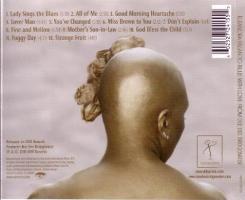
[Foggy Day]

[Strange Fruit]
{discover more here}
*Adenda
"Someone's got to have the balls to stand up and say, that's enough. That... is... enough." Printed words do not convey the force accompanying this sentiment from a woman who admits to having once thrown a man across a room.
"We're going to try to unite all the female black jazz-singers," she says, "and make a political stand." Woe betide anyone who tries to oppose her. "When I get really angry, I feel my blood boil, I see red, literally, and then I get physical. Don't mess with my babies, my albums. Don't mess with me. I'll turn into an angry, black 'ghettified' sister who will kick your effing ass."

Today (14/03/11), while perusing through some old papers looking for a poem I wrote some years ago dedicated to Lady Day (still couldn't find it), I came across this flyer for the one and only Dee Dee Bridgewater show I went to see (on May 2002, at the Barbican) so far - and what a show! I was totally immersed in the vibrancy of her strong voice and enthralled by the energy of her scatting: it was the first time I experienced live what I had only heard before on some of Ella Fitzgerald's or Sarah Vaughan's recordings - a woman's voice turned into an instrument, mainly the trumpet, but also, incidentally, the piano, or the bass. I still can feel some of that energy now more than 10 years passed...
Then I went to look up the Net for echoes of that show and found the article from which I've taken the extracts bellow. I was totally unaware of that row about Dianna Krall (and, in passing, Norah Jones) at the time ... and now I must rethink my 'singing her praises', though not necessarily repent because I only dit it once, and half-heartedly at that, namely in a comment posted here, and in a context that I suppose was perfectly understandable (and ... I pray that sista Dee Dee, if she ever reads this, doesn't feel like kicking my effing ass for having mentioning her name alongside Krall's...)!
That context being one, it might be worth noting, in which I was (only mildly and respectfully enough...) making some remarks and suggestions to some Angolan national “jazz pundit” for promoting exclusively white Portuguese jazz musicians’ tours to the country, as can be gathered here… and it just so happens that he recently voiced an overt, sinister, death threat (!) to me, apparently because of it and of my ‘tolerance’ (not even unconditional support…) for some new trends in Angolan contemporary music, such as HIPHOP and Kuduro, basing my position on the darker side of Jazz History as exemplified here… All, as he sees it, against the background of the 27 May 1977 - a political tragedy with clear racist overtones on all sides which caused thousands of victims and has left open, unhealed wounds in the fabric of Angolan society to this day - and on which some of my views vis-a-vis the Marxist theory and practice aluded to by him are expressed on this post and on comments to this one...
Ah! And also, directly or indirectly, because of my stance on issues like this, protagonised by some white blond barbie doll who, funnily enough, recently rose overnight from virtually total obscurity in that country’s media - after a forced retreat caused by an open letter by Angolan citizens accusing her of blatant racism! - thanks to unashamedly aping, for her 'rebirth so-called contemporary dance show', Cassandra Wilson’s “(un)vest”, for lack of a better word, on the cover of her New Moon Daughter album pictured here…
Now, just briefly, about Norah Jones: in the beginning of 2003, a female friend (and in the Angolan context this can be highly relevant: a mixed-race one) in Luanda asked me what I thought about her and I replied, totally absentmindedly and unaware of Dee Dee’s outburst a few months earlier, something like this: look, to be perfectly honest, I don’t know what the fuss around her is all about; her most celebrated song so far seems to be all around something like “don’t know why I didn’t come”, which apparently invokes (unfulfilled) sex… so, if that’s all there is to her success I can’t really figure out where she stands as a jazz singer, writer, or musician…
Another thing that touched me in Dee Dee's outburst was the way in which she used the word antiseptic - I often use the word asseptic (e.g. here) to describe similar cases and contexts... But, above all, it was warming to know of her sisterly allegiance with Cassandra Wilson and other black jazz singers around it at the time... which, in some ways, takes me to this other sort of 'sisterly allegiance' (albeit circumstancial and distant), where it becomes apparent that some people in Angola, somewhere, somehow, and for whatever racially and/or culturally-based reason(s) have been trying (for far too long!) to, to use Dee Dee's word, exterminate me and my work, humble and unconceited as it is...
So, really, these discoveries today made my DAY! And, inDEEd inDEEd, my WOMEN'S MONTH!

Dee Dee Bridgewater is one of those people who is slow to anger, normally exuding the kind of calm associated with green tea, eucalyptus oil and tinkly-binkly music. At the age of 51, her skin is almost unnaturally smooth, and her conversation is low and beguiling, often sinking to a whisper. Her career has included stints with the Thad Jones-Mel Lewis Jazz Orchestra, stage shows about Ella Fitzgerald and Billie Holiday, and forays into pop; a trio of her earlier recordings has recently been reissued. She is delighted with her latest project, an album of Kurt Weill songs, which she will perform tonight at the Barbican. All would seem very well for Ms Bridgewater.
Yet the contented façade barely contains a volcano of rage that she admits she is struggling to keep the lid on. Bridgewater fears that the big record companies are trying to exterminate her and the tradition she represents, to replace them with insipid Barbie dolls with mass-market, lucrative appeal. The idea that jazz singing should be in a frail state may initially seem odd. Aren't the likes of her Verve label-mate Diana Krall and Norah Jones achieving the elusive position of being genuinely popular jazz artists, with posters on billboards and television ad campaigns, just like, well, pop singers? As Bridgewater points out, that achievement does not come without a cost.
"The Diana Krall phenomenon is based on material that's 30 or 40 years old," she says. "The treatment is cold, there's no emotion. It's only working because the jazz has been watered down, it's not abrasive – it's antiseptic." Bridgewater herself is a wonderful interpreter of old standards, although there is a world of difference between her punchy, gutsy style and the pale-honey smooth Krall – you could never accuse Dee Dee of being antiseptic. But there is more than just a difference of stylistic opinion here. "This is the era of the white female jazz singer," she says. "Even though jazz singing has traditionally been associated with the black female voice, it has never been at the elimination of the white female singer. Why, all of a sudden, are we supposed to be eliminated because the labels are scrambling to find their own Diana Krall wannabes? It's upsetting and frightening."
There's nothing grey about Dee Dee, or her contemporary Cassandra Wilson, both of whom search for the individual rather than a lower common-denominator. They resist the pressure to make radio-friendly recordings, and as a result, feel their music is not being treated seriously by an industry looking for a fast, sizeable return. "We were both in New York," says Dee Dee, "and Cassandra said, 'I can't get anybody interested in my projects, they keep putting Krall's name in my face. What are we supposed to do? Look at us, we've got our dreadlocks!'"
This is happening not only in America, but also in France, until recently Bridgewater's adopted home. "I've always employed French musicians, I've been burned for taking them to New York. But I can't get any reviews in French jazz papers. They've decided that Diana Krall is the beginning, the end and the in-between. To have the French jazz community turn its back on me because they've got some blonde, blue-eyed chick that can sing halfway decent and can play the piano – I'm livid."
She is determined that her anger will not make her bitter, though. A solution is forming in her mind. "Someone's got to have the balls to stand up and say, that's enough. That... is... enough." Printed words do not convey the force accompanying this sentiment from a woman who admits to having once thrown a man across a room.
"We're going to try to unite all the female black jazz-singers," she says, "and make a political stand." Woe betide anyone who tries to oppose her. "When I get really angry, I feel my blood boil, I see red, literally, and then I get physical. Don't mess with my babies, my albums. Don't mess with me. I'll turn into an angry, black 'ghettified' sister who will kick your effing ass."
"I always felt that I had to scat, to be another musician" – in her case, a trumpeter. "My father was, my first husband was, I had a boyfriend who was. Dizzy, Miles, Clark Terry – all my heroes were trumpeters." Now she is happy to concentrate on the lyric. "I thought, why don't I just sing the whole song, which I haven't done for years because I've been working so hard on getting my scatting to a level where I felt I was really being an instrument."
This is her route now. Bored by standards, which she says she might return to when she's 60 but not before, Weill has opened up a new vista for her; she's even contemplating resuscitating some of his operas. Her record company would do well to realise what a prodigious talent it has in Dee Dee Bridgewater – an artist worth a hundred Diana Kralls. If they don't, she will certainly be off – but not before she's kicked their effing asses.
{extracted from here}
Related posts:
Happy Hour!!!
A Minha Patria Nao E' a Lingua Portuguesa




Tuesday, 1 February 2011


Friday, 12 November 2010
London Jazz Festival
This was supposed to be my London Jazz Festival 2010...

Hugh Masekela & The Mahotella Queens
...But: SOLD OUT!
[Parece incrivel, mas com tantas passagens e estadias na Africa do Sul e arredores, nunca tive uma oportunidade de ver este que e' um dos meus maiores idolos do Jazz Africano (depois do nosso eterno Manu Dibango) ao vivo... e, parece mentira, mas ainda nao foi desta!]

...But: SOLD OUT!
[Vi-o ao vivo ha' ja' alguns anos em Lisboa no Centro Cultural de Belem, numa noite absolutamente inesquecivel, com a Paula Tavares, a Luisa de Almeida, o Jean-Yves e a Zarito (esta, por quem tenho grande estima e que e' irma de um certo minion de triste memoria neste blog... Lembro-me de, por aqueles dias, enquanto tomavamos o pequeno almoco de domingo numa esplanada nos jardins de Belem, perante as minhas repetidas queixas sobre o comportamento - estupido, crapula e cabotino, para dizer o minimo - do seu irmao para comigo, ela me ter dito: "Porque que nao cortas com ele? Corta, Paula!"...
 {Zarito e Jean-Yves no meu quintal de limoeiro, nespreira e roseiras-trepadeiras em Belem - algures na ponta final dos anos 80 ou no inicio dos 90 (a toalha de mesa ainda (r)existe after all these years...) - foto JEA}
... Pois, mas levou-me todos estes anos ate' ao ano passado - desde que, com a criacao deste blog, ele nao perdeu a primeira oportunidade para manifestar mais uma vez a sua pequenez incuravel, so' que desta vez atraves do tal de NJ de igualmente triste memoria neste blog - para que eu me decidisse definitivamente a acatar o sabio conselho da Zarito... O que tambem se deveu ao facto de nao ter tido qualquer contacto com ele durante estas ultimas quase duas decadas, excepto brevemente quando estive em Luanda em 2001, ocasiao que tambem nao me deixou particularmente boas memorias dele... (e, by the way, nessa ocasiao ainda tive a insensatez - na verdade na altura disse de mim para cumim: "isto e' perola para porco"... - de lhe oferecer como prenda de Natal um CD que e' uma verdadeira enciclopedia de vida, musica e cultura dos Khoisan, do que muito me haveria de arrepender porque nunca mais consegui encontrar e comprar outro para mim!...).
E' que, quando alguem, como eu, valoriza sobremaneira, ainda que frequentemente incompreendida, a amizade e a familia - por uma questao dos agora tao "badalados" valores e principios! -, esta' sujeito a engolir muitos sapos, porque familiares e amigos ha' que, perante a nossa aparentemente infinita compreensao e tolerancia, acabam por tornar-se absolutamente insuportaveis, ate' que... o "corte" se torna inevitavel!
Mas, nao pretendo, com esta triste recordacao, estragar completamente a memoria de uma noite inesquecivel ao som vibrante do Sonny Rollins com aqueles que naquela altura eram alguns dos meus amigos mais proximos em Lisboa. Portanto, que fique apenas registada a pena de nao o poder ver e ouvir mais uma vez nesta que talvez tenha sido a ultima oportunidade de o fazer - e' que ele esta' a celebrar os seus 80 anos...] Herbie Hancock...
[Tambem o vi ao vivo em Lisboa no mesmo Coliseu em que vi o Miles Davis, com o meu filho, nos dois ultimos concertos que deu naquela cidade, em 1989 e 1991 (tendo sido este ultimo no mesmo ano em que, alguns meses mais tarde, ele deixaria este mundo e em que, como aqui se da' conta, se estaria a programar uma sua possivel ida a Angola: “Nós tínhamos combinado levá-lo a Angola, estávamos a tratar disso para 1992 porque tínhamos pessoas em Luanda que queriam. Era demais. Fantástico.”)
Gostava de ver Herbie mais uma vez (nao sei se ainda terei muitas oportunidades futuras para o fazer uma vez que ele tambem ja' esta' nos seus 70...), mas porque tinha em mente as 'prioridades' acima nao o pude, infelizmente, incluir no meu programa inicial... and now it's too late!
Mas ouvi-o ontem numa entrevista em directo para o programa Jazz on 3 da BBC Radio 3, que cobriu ao vivo o lancamento deste festival a partir do legendario Ronnie Scott's (tambem a celebrar os seus 50 anos): fiquei assim a saber que o Herbie, apesar da sua "idade avancada", continua "tao bem parecido, energetico e criativo como sempre" (segundo o entrevistador, obviamente...) , o que ele, por entre uma sonora gargalhada, atribui a "evitar o stress", e que a piece de resistance da sua participacao neste festival e' o seu Imagine Project, baseado na obra do John Lennon e em que ele integra piano snippets by Kongo traditional musicians - I can't wait to check it out on CD!]
So, I'm now looking forward to this one:
Terence Blanchard Band + Robert Glasper Trio
[Terence Blanchard: um nome incontornavel do Jazz Contemporaneo. Nunca o vi ao vivo e devo confessar que o meu maior interesse em ve-lo e ouvi-lo deve-se aos seus film scores para o Spike Lee e ao seu ultimo album, Choices, com a participacao do "meu amigo" Cornel West...
I can't wait to see him tomorrow in the same Barbican where I saw, over a decade ago, our eternal African Jazz legend, Manu Dibango, for the first time - the second was at the 2006 edition of the Cape Town International Jazz Festival pictured here]
 THAT WAS GREAT!
After a sizzling warm-up at the FreeStage brought to us fresh from New Orleans by the Soul Rebels Brass Band, we had just about three hours of some of the best contemporary jazz - before us was what Terence Blanchard said is the future of jazz to his mind (although also adding something like "people speculate all the time about the future of jazz, but to me there's no point in that: the future of jazz will be what it's going to be"...): opening for him, The Robert Glasper Trio (Glasper – whose artistic world is said to be “where the iconic record label Blue Note gets back to the streets, marrying hip-hop with the free flow of a classic piano trio, merging jazz and contemporary sounds”, and who also served us Herbie Hancock's "I Have A Dream" and Nirvana's "Smells Like Teen Spirit" – on piano; Derrick Hodge on bass and Mark Colenburg on drums) and, then, alongside himself on trumpet and Bruce Wilson on tenor saxophone, the three young players on his own Quintet (Fabian Almazan on piano, Joshua Crumbly on bass and Kendrick Scott on drums).
[There was something funny in between the two group's performance: another drummer, Chris Dave, replaced Mark Colenburg and Terence Blanchard just came on the stage and started playing his thing unannounced with the Glasper's Trio for about 10-15 minutes until their time on stage was over... Many people became quite agitated thinking that it was all for the night and I started saying "these guys can only be joking!"... and they were: it was just the interval before the Blanchard real thing!]
Blanchard offered us parts of his most recent creation, ‘Choices’, where we could hear Cornel West’s voice talking about subjects such as political consciousness, music, love and humanity: from the hurricanes Katrina and Obama, through how Beethoven considered music to be deeper than philosophy, to the love that existed between Miles and Coltrane… in short, about the human condition.
Through and through (with a few jokes about some of his band members’ personal details in between: the pianist – "a very shy guy" from Cuba; the bassist – "a scared to death" recent graduate from the Juilliard (..."you know, there's some intelligent people up here... at least one of us!", he said...); the drummer – a record label owner from Texas "who makes no money with it"; the saxophonist “who came from where it all began: Toussaint, Arizona!” ... Well, this one led to a few other jokes about the first time we hear Arizona and Jazz on the same breath and the woman who approached him at the end of one concert to rebuke him for his 'downplaying' of jazz in Arizona and presenting herself as the president of the Toussaint Jazz Society, and then the pilot who one day popped into him and Herbie Hancock on a plane and introduced himself as the brother of the president of the Toussaint Jazz Society!...], the main man of the evening fulfilled the promise in the words he was presented to us:
“Terence Blanchard is one of the few contemporary horn players who can truly claim to inherit the legacy of jazz trumpet giants Miles Davis, Lee Morgan and Freddie Hubbard. Born in New Orleans, as a child he played alongside friend Wynton Marsalis in summer band camps – later in life Wynton was to recommend him to Art Blakey as his replacement in The Jazz Messengers, becoming its lead soloist and musical director. By the 1990s, Blanchard had become a leader in his own right and had embarked on a highly successful partnership with film maker Spike Lee, writing the scores for every one of his films since 1991, including Malcolm X, Clockers, and the Hurricane Katrina documentary When the Levees Broke for HBO.
His film credits are extensive with over 40 scores to his name. He maintains a regular studio presence, recording his own original music and has been nominated for 11 Grammys, winning four. He stretches himself stylistically, working with other musicians such as Stevie Wonder and Dr John. His last Concord album Choices is probably his most radical yet, with readings by philosopher Cornel West and vocals by neo-soul singer Bilal over a meld of speculative post-bop, experimental yet accessible song forms, and jazz-initiated atmospheres to create a compelling, instructive and uplifting work.”
OTHER FESTIVAL HIGHLIGHTS Esperanza Spalding
The 26 years old rising star who counts Obama among her biggest fans...
 Chucho Valdés & The Afro-Cuban Messengers + Ibrahim Maalouf
 AfroCubism
Featuring Eliades Ochoa, Toumani Diabate, Bassekou Kouyate, Djelimady Tounkora, Kasse Mady Diabate.

Charles Lloyd Quartet + Winstone/Gesing/Venier


Terence Blanchard Band + Robert Glasper Trio
[Terence Blanchard: um nome incontornavel do Jazz Contemporaneo. Nunca o vi ao vivo e devo confessar que o meu maior interesse em ve-lo e ouvi-lo deve-se aos seus film scores para o Spike Lee e ao seu ultimo album, Choices, com a participacao do "meu amigo" Cornel West...
I can't wait to see him tomorrow in the same Barbican where I saw, over a decade ago, our eternal African Jazz legend, Manu Dibango, for the first time - the second was at the 2006 edition of the Cape Town International Jazz Festival pictured here]
THAT WAS GREAT!
After a sizzling warm-up at the FreeStage brought to us fresh from New Orleans by the Soul Rebels Brass Band, we had just about three hours of some of the best contemporary jazz - before us was what Terence Blanchard said is the future of jazz to his mind (although also adding something like "people speculate all the time about the future of jazz, but to me there's no point in that: the future of jazz will be what it's going to be"...): opening for him, The Robert Glasper Trio (Glasper – whose artistic world is said to be “where the iconic record label Blue Note gets back to the streets, marrying hip-hop with the free flow of a classic piano trio, merging jazz and contemporary sounds”, and who also served us Herbie Hancock's "I Have A Dream" and Nirvana's "Smells Like Teen Spirit" – on piano; Derrick Hodge on bass and Mark Colenburg on drums) and, then, alongside himself on trumpet and Bruce Wilson on tenor saxophone, the three young players on his own Quintet (Fabian Almazan on piano, Joshua Crumbly on bass and Kendrick Scott on drums).
[There was something funny in between the two group's performance: another drummer, Chris Dave, replaced Mark Colenburg and Terence Blanchard just came on the stage and started playing his thing unannounced with the Glasper's Trio for about 10-15 minutes until their time on stage was over... Many people became quite agitated thinking that it was all for the night and I started saying "these guys can only be joking!"... and they were: it was just the interval before the Blanchard real thing!]
Blanchard offered us parts of his most recent creation, ‘Choices’, where we could hear Cornel West’s voice talking about subjects such as political consciousness, music, love and humanity: from the hurricanes Katrina and Obama, through how Beethoven considered music to be deeper than philosophy, to the love that existed between Miles and Coltrane… in short, about the human condition.
Through and through (with a few jokes about some of his band members’ personal details in between: the pianist – "a very shy guy" from Cuba; the bassist – "a scared to death" recent graduate from the Juilliard (..."you know, there's some intelligent people up here... at least one of us!", he said...); the drummer – a record label owner from Texas "who makes no money with it"; the saxophonist “who came from where it all began: Toussaint, Arizona!” ... Well, this one led to a few other jokes about the first time we hear Arizona and Jazz on the same breath and the woman who approached him at the end of one concert to rebuke him for his 'downplaying' of jazz in Arizona and presenting herself as the president of the Toussaint Jazz Society, and then the pilot who one day popped into him and Herbie Hancock on a plane and introduced himself as the brother of the president of the Toussaint Jazz Society!...], the main man of the evening fulfilled the promise in the words he was presented to us:
“Terence Blanchard is one of the few contemporary horn players who can truly claim to inherit the legacy of jazz trumpet giants Miles Davis, Lee Morgan and Freddie Hubbard. Born in New Orleans, as a child he played alongside friend Wynton Marsalis in summer band camps – later in life Wynton was to recommend him to Art Blakey as his replacement in The Jazz Messengers, becoming its lead soloist and musical director. By the 1990s, Blanchard had become a leader in his own right and had embarked on a highly successful partnership with film maker Spike Lee, writing the scores for every one of his films since 1991, including Malcolm X, Clockers, and the Hurricane Katrina documentary When the Levees Broke for HBO.
His film credits are extensive with over 40 scores to his name. He maintains a regular studio presence, recording his own original music and has been nominated for 11 Grammys, winning four. He stretches himself stylistically, working with other musicians such as Stevie Wonder and Dr John. His last Concord album Choices is probably his most radical yet, with readings by philosopher Cornel West and vocals by neo-soul singer Bilal over a meld of speculative post-bop, experimental yet accessible song forms, and jazz-initiated atmospheres to create a compelling, instructive and uplifting work.”
OTHER FESTIVAL HIGHLIGHTS Esperanza Spalding
The 26 years old rising star who counts Obama among her biggest fans...
Chucho Valdés & The Afro-Cuban Messengers + Ibrahim Maalouf
AfroCubism
Featuring Eliades Ochoa, Toumani Diabate, Bassekou Kouyate, Djelimady Tounkora, Kasse Mady Diabate.
Saturday, 7 August 2010
ARIA by GROVER WASHINGTON, JR [R]*
*[Retomo hoje este post - first published 11/01/07 - por duas razoes: i) me parecer apropriado numa altura em que a musica, nas suas mais diversas vertentes, parece estar na ordem do dia em alguns circulos blogosfericos e jornalisticos (em particular depois da mais recente edicao do Luanda International Jazz Festival); ii) ja' me ser possivel colocar aqui as faixas do album originalmente mencionadas.]
 “I started as a classical musician, and this album is something I’ve wanted to make for years. In many ways, I feel I’ve now come full circle in my music.”
- Grover Washington, Jr. -
Este e’ um daqueles albums que, para mim, tem a caracteristica particular de apelar tanto pelo seu conteudo, como pelas circunstancias da sua publicacao em 2000, pouco depois do falecimento subito e precoce de Grover Washington, Jr. em Dezembro de 1999, aos 56 anos de idade. Por isso trago-o aqui ao Spirited Sounds.
Grover, que recebeu a sua primeira licao de saxofone do seu pai, definia a sua musica como “pequenas estorias sem palavras”. Mas, para mim, nunca antes deste Aria tinha tal definicao sido tao bem expressa na sua carreira musical (que contou entre os seus pontos altos com uma celebre ‘jam session’ com o ex-Presidente Bill Clinton e alguns dos maiores nomes do Jazz como Herbie Hancock e Wynton Marsalis).
O album e’ composto totalmente de arias de algumas das mais conhecidas obras do reportorio operatico, mas sem a sua oratoria: precisamente, pequenas estorias sem palavras… Confesso que nunca fui uma particular apreciadora do genero operatico (talvez pelas mesmas razoes porque nunca fui uma particular apreciadora dos consagrados musicais londrinos...) e que foram sempre as arias que funcionaram como o “canto da sereia” para me atrair a qualquer opera – a este proposito, lembro-me de em 1991 ter ido, no que foi a minha primeira e unica ida a opera, ao New York Metropolitan Opera (onde, como se nao bastasse ser praticamente a unica negra, tive o "descaramento" de ir de jeans…) assistir a “La Traviatta”, tendo saido de la' menos entusiasmada do que era suposto …

Pois este album (do qual infelizmente nao posso colocar aqui nenhuma das peças... o que tambem tem o seu lado positivo porque podemos ouvir, em sua substituicao, algumas das arias incluidas no album nas suas versoes cantadas) tem a particularidade de funcionar perfeitamente para mim: abre precisamente com o perfeito canto da sereia, uma das minhas arias preferidas, ‘Je Crois Entendre Encore’, do “Les Pecheurs de Perles” de Bizet. Aprendi a cantar de cor essa aria (uma das duas que sei cantar de cor; a outra e’ a popular ‘Nesum Dorma’ de Puccini) ha varios anos, ouvindo e acompanhando a versao, em Italiano, do Ney Matogrosso no seu album “Pescador de Perolas” (1986) …
[Je Crois Entendre Encore - from Bizet's The Pearlfishers]
Depois, ha' uma em particular que, em qualquer circunstancia, nao posso contornar, just for the sheer pleasure of listening to it, esta:
[E Lucevan Le Stelle - from Puccini's Tosca]
Mas ha outra razao que me faz trazer Aria a este espaco: a relacao, algo polemica, entre o dito “Jazz” e a dita “Musica Classica”. A questao e’ sempre: onde, quando e como se separam as aguas entre os dois, para alem dos evidentes “marcadores” da improvisacao no primeiro e da rigorosa codificacao no segundo? Nao sei se alguem ja conseguiu dar uma resposta convincente a essa questao (vide, por exemplo, o que disse Nina Simone sobre o assunto…), mas, como dizem os Ingleses, “the proof is in the pudding”!
[My Man's Gone Now - from Gershwin's Porgy & Bess]
E o 'pudding' podem ser varias das obras do Miles ou, mais obviamente ainda, muitas das dos manos Wynton e Branford Marsalis… Anyway, oucamos como soam duas das arias da opera 'Porgy and Bess' nas suas versoes "jazzisticas" (a comecar por uma interpretacao do Grover nao incluida em Aria - a que vem incluida e' o My Man's Gone Now. A versao cantada do I Loves You Porgy pela Nina tambem pode ser ouvida atraves do link acima) e depois vejamos o que teem a dizer os experts:
“As Grover Washington, Jr. sees it, the lines between jazz soloist and opera singer are not as clear-cut as one might imagine. Opera is a musical genre that depends on narration, and Grover views his role as soloist -- be it here, or on one of his many celebrated jazz recordings -- as an impassioned narrator. In both cases, Grover says, "You're just trying to tell a story."
[Pourquoi Me Reveiller? - from Massenet's Werther]
Consider the case of Werther, an opera by Massenet, based on a novel by Goethe. Werther is the quintessential Romantic hero, and nowhere in the opera does Massenet come closer to Goethe's Romantic ideal than in "Pourquoi me reveiller?" ("Why do you wake me?"), an aria full of foreboding and sorrow. In Grover's hands, and supported by Robert Freedman's fine and spacious arrangement, the blues within the aria are revealed.
[O Mio Babbino Caro - from Puccini's Gianni Schicchi]
Grover is the ideal narrator for the stories on Aria. Performing here on soprano, alto, tenor and baritone saxophones, Grover draws upon his artistry as a melodist to capture the emotion and spirit of a dozen of opera's most beautiful arias, from Puccini's "O mio babbino caro" (Gianni Schicchi) to Delibes' "Flower Duet" (Lakme), all with a sensibility that is very much of our day.
[Flower Duet - from Delibes' Lakme']
And yet Aria is not simply a crossing over, any more than Miles Davis' and Gil Evans' exploration of Gershwin's Porgy and Bess was simply a cooled-up version of the opera. In Aria, Grover Washington, Jr. takes the rich breadth of feeling inherent in twelve extraordinary tunes, not so much translating them into the jazz idiom as revealing them for what they are -- gorgeous, transcendent melodies that speak as clearly through the bell of a saxophone as through the human voice.” (Jackson Braider)
“Grover's brilliant career had its foundation in the fusion of genres. Along with his inimitable sound and style, his music was most celebrated for its signature synthesis of jazz and rhythm & blues. Aria marked a fusion of another kind for Grover, one both new and natural to him, and one he was eager to share. Sadly, it was the last album he was to make, completed just four months to the day before his untimely death.
[Vissi d'Arte - from Puccini's Tosca]
While the album may strike many listeners as an unexpected departure, it in fact completes a circle which began when Grover first studied music -- classical music -- at Buffalo's Wurlitzer School of Music. Classical music remained his first love. (…) Genres aside, Grover's music was always essentially about one thing -- heart. It was the (un)common denominator that defined his life's work. Puccini's magnificent soprano aria from his opera Tosca begins, "Vissi d'arte, vissi d'amore" ("I lived for art, I lived for love"). Grover Washington, Jr. did just that.” (Laraine Perri)


Saturday, 31 July 2010
2010 Luanda International Jazz Festival

When they launched the Luanda International Jazz Festival in 2009, organisers of Angola's first-ever international jazz festival promised to make the event a platform where musicians with strong African rhythms can meet and share their music. Looking at the first 8 artists to perform on 2 stages over 3 days at Cine Atlântico in the country's capital city, Luanda it is clear that the organisers are sticking to their promise.
Friday 30 July to Sunday 01 August is when the 8 who are from Cuba, United States, Mozambique, Angola, Cape Verde and South Africa will take to the stage at Cine Atlantico. "With Angola having been at the centre of the slave trade, as festival organisers we are conscious of how people from this part of the world took their music all over the world. The Luanda International Jazz Festival provides a homecoming to all rhythms that were exported from our shores", says Ritek's CEO António Cristóvão. The festival is Cristóvão and his Angolan hospitality company's brainchild.
[Sourced from here]
[Wyza - Vava Ngina]

Friday, 2 April 2010
Cape Town International Jazz Festival
Este 'slideshow' ja' por aqui passou, numa altura em que este blog, na sua versao original, tinha um espaco designado Pebbles, onde publiquei muita coisa que depois pura e simplesmente "desapareceu" e que aos poucos, na medida do possivel, do interesse e/ou da relevancia, vou recuperando.
Trata-se de uma "reportagem fotografica" que fiz da edicao de 2006 do Cape Town International Jazz Festival, ao qual tive o prazer de assistir na sua quase totalidade. Foi uma edicao a todos os titulos memoravel e que ficou especialmente marcada pela participacao de Manu Dibango e pelo ultimo grand show da saudosa Mama Afrika.
Na altura fiz acompanhar o 'slideshow' de musicas dos artistas "reportados". Desta vez, mesmo porque infelizmente nao o posso assistir, faco-o acompanhar de musica de alguns dos artistas no programa do CT Jazz 2010, com destaque para Paulo Flores (cuja participacao nesse festival, curiosamente, eu havia aqui sugerido), aqui num dueto que pela primeira vez me deu a conhecer a voz de Wyza (outro artista Angolano que espero venha tambem a fazer a sua estreia numa das proximas edicoes desse festival!); uma mensagem do Nilo trazida por McCoy Tyner ja' aqui transmitida por ocasiao do primeiro Festival Internacional de Jazz de Luanda e um pouco do sabor local que nos e' servido pelo Capetoniano Jonathan Butler.
Enjoy!
E' Doce Morrer no Mar [Paulo Flores feat. Wyza]
Message From The Nile [McCoy Tyner]
I Found Myself In You [Jonathan Butler]
Sunday, 14 March 2010


Tuesday, 24 November 2009
Au Jardin des Tuileries...
 Presumptuous Chapeau Alheio:
Marche' aux Puces, Paris, 1984
... WITH CHARLIE PARKER...
... WITH STRINGS!
(The Master Takes)
April in Paris
Just Friends
Everything Happens To Me
I Didn't Know What Time iIt Was
East of the Sun and West of the Moon
I'll Remember April
They Can't Take That (smile) Away From Me
April in Paris (live)
{et voila'!}
... WITH STRINGS!
(The Master Takes)
April in Paris
Just Friends
Everything Happens To Me
I Didn't Know What Time iIt Was
East of the Sun and West of the Moon
I'll Remember April
They Can't Take That (smile) Away From Me
April in Paris (live)
{et voila'!}

Saturday, 1 August 2009
FIRST Luanda International Jazz Festival!
 Many in the African diaspora trace their rhythmic roots to Angola's drumming; from Friday 31 July to Sunday 2 August, this musical heritage returns to its source. Musicians from Brazil, Mozambique, South Africa and United States will descend on Cine Atlantico in Angola's capital city, Luanda, to participate in the launch of the Luanda International Jazz Festival.
Looking at the festival's line-up, there is no doubt in the organisers' desire to showcase Angolan musicians and also to expose local audiences to sounds from faraway places. Leading the US team is none other the great McCoy Tyner. Cutting his teeth as member of the John Coltrane Quartet in the early 1960s, the 70-year-old musician is the doyen of jazz piano. In the last 18 months, Tyner has released two superb CDs that demonstrate why in the region's lingua franca anyone who excels is called a real McCoy. Tyner's recent recording with guitarists John Scofield, Bela Fleck, Marc Ribot, Derek Trucks and Bill Frisell has won the pianist numerous accolades; so also his album with saxophonist Joe Lovano, bassist Christian McBride and drummer Jeff 'Tain' Watts. At his age, Tyner still brims with energy and vitality. This he will certainly bring to Angola.
Sharing the stage with these great US bands is the cream of Angola's music scene. Leading the Angolan squadron is Paulo Flores. Flores is a leading proponent of kizomba - Angola's popular genres of dance and music derived directly from zouk sounds. Joining Flores are other Angolan musicians - Afrikkanitha, Sandra Corderio, Dodo Miranda and Toto. Afrikkanitha and Corderio are the country's emerging female voices. Afrikkanitha who sings in Portuguese, French, English and Angola's vernacular languages fuses soul, jazz, rock, funk with her country's indigenous music; while Corderio is rooted in bossa and Afro-jazz styles. The other young artist who will definitely amaze those not familiar with the music of Angola is Toto. Currently, the 29-year old vocalist is making waves with his fusion of Angolan and Brazilian sounds.
Participants at the festival will not only hear great sounds, the event promises to be a treatment to a wholesome Angolan experience. The event's venue has been redesigned and refurbished into a world-class entertainment facility, with expansive stages and stalls for sumptuous Angolan cuisine.
[More Here ]
Message From The Nile - McCoy Tyner (09/02/70)

Saturday, 11 April 2009


Friday, 28 September 2007
CASSANDRA WILSON
 I slid my hand down her arm from shoulder to hand and she took it and shooked it and stayed… Hand in hand, there I was with Cassandra Wilson. For one of those seemingly long moments that stand for an eternity. This was when she came back from the stage downstairs after the main course. There she had just been giving me what I had come in for: to sort her out once and for all, to be bought into her sound for good, to let go the resistance to her moods that I’d been holding to for the last ten years, since I first heard and read about her, to finally get to taste that strange fruit that is her voice...
Scent of magnolia
sweet and fresh
Then the sudden smell
of burnin flesh
 There it was: a fruit as strange and as tasty as that of Lady Day, who first introduced me to that poem and song she made so hers. And she was in good company too: a sextet led by drummer Herlin Riley, with Reginald Veal on bass, Marvin Sewell on the guitars, Jason Moran on the piano and Lekan Babalola, a Nigerian whom she introduced as ‘African Royalty’, as the master percussionist. Riley (perhaps best known for his work with Wynton Marsalis and the Lincoln Center Jazz Orchestra) also got a special introduction, as ‘Sir’ – and, heavens, how he deserved it! I got the chance to tell him just that and how great he was while repeatedly ‘tapping’ with gusto on his shoulder. He paid me the compliment with an autograph with Love…
 That’s the thing about the Jazz Café, if you’re lucky enough, you can get an up-close and personal experience with the artists you come to see, while enjoying a nice meal if you happen to have booked a table upstairs in the restaurant – through which they happen to pass in their way to and from the stage. Initially we had been restless because the place was fully booked and we couldn’t get a view to the stage from the first table we got, but then got lucky enough to be moved (after the meal, which the music we were offered, specially Sewell’s spicy guitar sounds, made all taste like Cajun food straight from the bayous of New Orleans… By the way, in one of the very few occasions she addressed the audience she got us into the 'secret' of the right pronounciation of New Orleans...) to the best seats in the house – just upfront, overlooking the stage – from which we could enjoy the show as if we were right there in the stage as well… every single complicity movement and face expression composing that music body language which makes it live… and how we lived it… and played it! Specially the drums and percussion combinations by Riley and Babalola, wonderfully backed up by Veal.
 She might say as well as Miles used to: “just give me a good rhythm section and my ego is satisfied”… In the ego place where Miles had the trumpet, Cassandra has the voice – that clear, calm and steady, yet at times thunderous, deep and wondrous voice, with which, together with her earthy body movements, bare feet and closed eyes, she takes us from a calm beach to the depths of the ocean and back again on an irresistible tidal wave. And, like Miles, she offered us ‘Time after time’ as desert. On her final return from the stage she stopped by again to give me that much loved autograph – she had appreciated my ‘African ululus’, which she said had made the evening special (it was the last of an European Exclusive residency at the Jazz Cafe')… And then there were all the looks and sayings of how much we looked alike… but that’s another story.
Strange Fruit - Cassandra Wilson


Monday, 23 July 2007
AN INTRODUCTION TO “KIND OF BLUE”*
 {by Bill Evans}
(So What)

There is a Japanese visual art in which the artist is forced to be spontaneous. He must paint on a thin stretched parchment with a special brush and black water paint in such a way that an unnatural or interrupted stroke will destroy the line or break through the parchment. Erasures or changes are impossible. These artists must practice a particular discipline, that of allowing the idea to express itself in communication with their hands in such a direct way that deliberation cannot interfere. The resulting pictures lack the complex composition and texture of ordinary painting, but it is said that those who see it will find something captured that escapes explanation. This conviction that direct deed is the most meaningful reflection, I believe, has prompted the evolution of the extremely severe and unique disciplines of the jazz or improvising musician.
 Group improvisation is a further challenge. Aside from the weighty technical problem of collective coherent thinking, there is the very human, even social need for sympathy from all members to bend for the common result. This most difficult problem, I think, is beautifully met and solved in this recording. As the painter needs his framework of parchment, the improvising musical group needs its framework in time. Miles Davis presents here frameworks which are exquisite in their simplicity and yet contain all that is necessary to stimulate performance with a sure reference to the primary conception.

Miles conceived these settings only hours before the recording dates and arrived with sketches which indicated to the group what was to be played. Therefore, you will hear something close to pure spontaneity in these performances. The group had never played these pieces prior to the recordings and I think without exception the first complete performance of each was a “take”. Although it is not uncommon for a jazz musician to be expected to improvise on new material at a recording session, the character of these pieces represents a particular challenge.

Briefly, the formal character of the five settings are:
“So What” is a simple figure based on 16 measures of one scale, 8 of another and 8 more of the first, following a piano and bass introduction in free rhythmic style. “Freddie Freeloader” is a 12-measure blues form given new personality by effective melodic and rhythmic simplicity. “Blue in Green”** is a 10-measure circular form following a 4-measure introduction, and played by soloists in various augmentation and diminution of time values. “All Blues”** is a 6/812-measure blues form that produces its mood through only a few modal changes and Miles Davis’ free melodic conception. “Flamenco Sketches” (two takes)** is a series of five scales, each to be played as long as the soloist wishes until he has completed the series.

(Freddie Freeloader)
* More than a milestone in jazz, Kind of Blue is a defining moment of twentieth century music, one of those incredibly rare works of art that achieve equal popularity among musicians, critics, and the public at large. The rest of us might tend to agree with Jimmy Cobb, the drummer on the album, who commented of Kind of Blue that it “must have been made in heaven.” Don’t we all enjoy a taste of heaven now and then? (…) Here, for the first time, is Kind of Blue complete, sounding big and rich and true to life and right on key. If you’re going to heaven, might as well go first-class all the way. (From the presentation of the 1997 re-issue of Kind of Blue).
** Played before in this blog.
All compositions by Miles Davis (Trumpet). Featuring: Julian "Cannonball" Adderley (Alto Saxophone, except 'Blue in Green'), Paul Chambers (Bass), James Cobb (Drums), John Coltrane (Tenor Saxophone), Bill Evans (Piano), Wynton Kelly (Piano, 'Freddie Freeloader'). Recorded at Columbia 30th Street Studio, New York City on March 2, 1959 (#1-3) and April 22, 1959 (#4,5,6).
© 1997 Sony Music Entertainment Inc./Columbia.


Subscribe to:
Posts (Atom)